Looking for a reliable portable oil radiator heater that delivers steady warmth with minimal noise? These five models are well-suited for bedrooms, home offices, living rooms, and small studios. They combine energy efficiency, safety features, and variable heat settings to match different spaces and user needs. The list highlights best uses for each option and notes any important limitations to consider.
| Product | Best For |
|---|---|
| Amazon Basics Portable Oil Radiator Heater (White) | Small living spaces and quiet rooms |
| Amazon Basics Portable Oil Space Heater (Black) | Controlled zones with a thermostat |
| DUMOS Oil Filled Radiator Heater | Medium rooms with energy efficiency focus |
| De’Longhi Oil Filled Radiator Heater | Energy-saving settings with broad room coverage |
| DREO Oil Filled Radiator Heater | Quiet, consistent warmth with enhanced safety features |
Buyer note: All options offer oil-filled fins and multiple heat settings, but differences include thermostat control, safety features, and heat dispersion design. Choose based on room size, noise tolerance, and desired energy efficiency.
Amazon Basics Portable Oil Radiator Heater – White
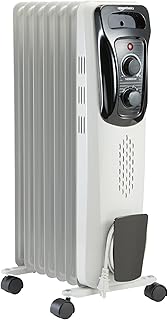
Features: Three heat settings—High (1500W), Medium (1000W), Low (600W)—for customizable warmth; seven oil-filled fins provide long-lasting heat; heats up to 144 sq ft; quiet operation with no fan noise. Best for small to medium rooms where silent operation is prioritized. Limitation: No built-in thermostat memory for wake/sleep routines is noted in the data.
Amazon Basics Portable Oil Space Heater – Black

Features: Adjustable thermostat and three heat settings—High (1500W), Medium (900W), Low (600W); seven oil-filled fins for quicker, more even heat dispersion; energy-sparing design by maintaining warmth after heating; ETL safety certification noted. Best for users who want a thermostat that fine-tunes room temperature. Caution: Some users may prefer a larger unit for bigger spaces beyond 144 sq ft.
DUMOS Oil Filled Radiator Heater
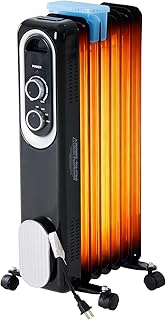
Features: 1500W with three heat settings (600W, 900W, 1500W) and an adjustable thermostat; ideal for 10-15㎡ spaces; energy-efficient with settings to curb energy use; safety includes overheat protection and tip-over switch. Best for bedrooms and home offices seeking rapid warmth with automatic shutoff on tipping. Limitation: Data emphasizes basic 10-15㎡ range; larger rooms may need a bigger unit.
De’Longhi Oil Filled Radiator Heater – EW7707CM
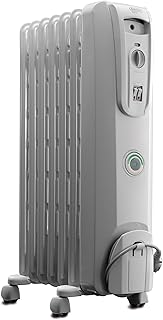
Features: Simple controls for power and temperature; ComfortTemp feature aims to maintain optimal temperature and power levels for up to 20% greater efficiency vs max thermostat settings; thermal slot design boosts heat flow while keeping surfaces cooler. Best for rooms where automatic temperature stabilization matters and where energy savings are a goal. Caution: ComfortTemp impact may vary with room insulation and external temperatures.
DREO Oil Filled Radiator Heater

Features: 1500W with 7 fins for fast, quiet heat dispersion; 360° warmth distribution noted with high efficiency; triple overheat protection, tilt protection, and ETL-listed safety checks enhance safety; eco mode and precise sensors provide steady warmth. Best for general living spaces and offices seeking even warmth with strong safety features. Limitation: Specification highlights safety features; room size suitability beyond general use is not explicit in the data.
Buying Guide: How to Choose a Portable Oil Radiator Heater
What size room will you heat? Oil heaters are efficient for small to medium rooms but can be less practical in larger spaces without higher wattage models. Consider the square footage and ceiling height when selecting a unit with enough BTUs or watts to maintain comfort without running continuously on high settings.
Do you need a thermostat and temperature control? Models with adjustable thermostats help you maintain a steady temperature and can save energy. Look for thermostatic control paired with multiple heat settings (600W, 900W, 1500W) for flexibility across seasons.
What safety features matter most? Features such as tip-over protection, overheat protection, ETL listing, tilt protection, and fire-resistant housings reduce risk in bedrooms and living areas. If children or pets are present, prioritize units with robust safety systems and cool-touch surfaces.
Is noise a priority? Oil-filled heaters operate with minimal noise since they do not use fans. If you need a completely silent environment (e.g., for sleep or study), this is a key advantage of these models.
How about energy efficiency and running costs? Look for units with long-lasting heat dispersion (seven fins or more) and features like Eco mode or ComfortTemp to minimize electricity use without sacrificing comfort. Heaters with heat retention after turning off may help reduce energy consumption in cool rooms.
What maintenance is involved? Oil-filled radiators generally require little maintenance beyond periodic cleaning of vents and ensuring the unit rests on a stable surface. Confirm that any model you choose is ETL-listed or has enhanced safety certifications for peace of mind.
Frequently Asked Questions
- What is the advantage of oil-filled radiators over ceramic heaters?
They retain heat longer, providing steady warmth even after the heater is off, which can improve energy efficiency in smaller spaces. - Do oil-filled radiators heat up quickly?
They heat slower initially compared to fan heaters but deliver consistent warmth once the oil warms, making them ideal for long-lasting comfort. - Are these heaters safe for bedrooms?
Yes, most listed units feature overheat and tip-over protection, ETL safety certification, and low surface temperatures to reduce burn risk. - Can I use these heaters in a poorly insulated room?
They can help, but performance depends on room size and insulation. Larger or poorly insulated spaces may require a higher-wattage model or supplemental heating. - How do I choose the right wattage for a room?
For small rooms (up to ~144 sq ft), 1500W models or equivalents typically suffice; for larger rooms, consider higher heat capacity or multiple units. - Is temperature stability important?
If yes, prioritize models with adjustable thermostats, Eco or ComfortTemp modes, and precise sensors to minimize fluctuations.