Transform indoor air quality by integrating ionizing and UV-enabled purifiers with your HVAC system. This guide highlights five Ionic/UV air purifiers that pair well with large rooms, offices, or duct installations, helping to reduce dust, odors, and airborne contaminants. Each option features ionization or UV-C technology designed to complement central air systems while delivering quieter, low-maintenance operation. Read on to compare capabilities, installation notes, and key considerations for choosing the right purifier for your space.
| Product | Brand | Key Benefit |
|---|---|---|
| AZEUS True HEPA Air Purifier | AZEUS | Large-room coverage with UV and Ionic generator |
| OION Technologies B-1000 | OION Technologies | Low energy, filterless purification with ozone management |
| Qualirey 26W HVAC UV Light | Qualirey | Inline UV-C for ducts and furnaces |
| Air Health Haven HVAC Purifier | air+health | 16″ UV-C in duct for coil cleaning |
| LabCharge Small Ionic Purifier | Lab Charge | Compact ionic purifier for rooms with no filters |
Note: This article focuses on products that emphasize ionic or UV-C technology with potential applicability to HVAC environments. Always consult a professional before installing any device directly into a central air system.
AZEUS True HEPA Air Purifier For Large Rooms

AZEUS offers a 5-in-1 filtration system designed to capture 99.97% of dust, pollen, smoke, and pet dander. The device includes UV light and an ionic generator, which can complement centralized filtration by attacking contaminants that pass through or around standard filters. It is capable of handling spaces up to 2160 sq ft in 90 minutes, with faster performance in smaller rooms. The product provides 24/7 chat support and emphasizes customer satisfaction with a replacement guarantee, making it a practical choice for large living areas and commercial spaces seeking enhanced air quality without frequent filter changes.
Key features include a centrifugal wheel for stronger airflow, coverage claims for big rooms, and a multi-filtration approach. While its near-room performance is strong, users should monitor ion generation around sensitive occupants and verify compatibility with any HVAC retrofit plans. The UV and ionic components should be considered as a supplementary air-cleaning layer, not a standalone replacement for all central filtration.
OION Technologies B-1000 Ionic Purifier Pro
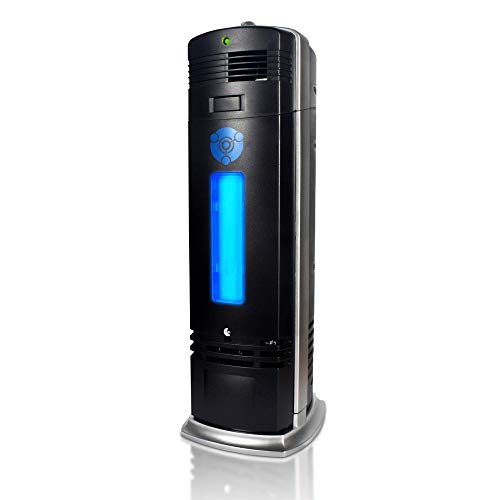
The OION B-1000 emphasizes energy efficiency and a filterless design, reducing ongoing maintenance costs. With a compact form factor and low energy consumption (7.5W), it lowers operating costs while providing ionization to reduce airborne particulates and odors. A notable feature is its carbon filtration and ozone management, with O3 levels kept below 0.05 ppm, making it suitable for occupied spaces where odor reduction is desired. Night light and quiet operation enhance suitability for bedrooms, offices, and other low-noise environments.
When integrating with HVAC, consider that an ionizer alone does not remove particulates as effectively as a full filtration system. Use it as a supplementary layer, ensuring proper room circulation and avoiding direct exposure to occupants with ozone sensitivity. The unit’s compact performance makes it a candidate for smaller zones or rooms adjacent to central systems rather than a full-house installation.
Qualirey 26W HVAC UV Light For Ducts

Qualirey presents a dedicated UV-C solution designed for duct and furnace installation, offering 26W of UV output at 253.7 nm. The unit is described as compatible with several UV-C lamp models and capable of treating 1-5 ton systems depending on installation. By targeting microbial contaminants in the airflow, it aims to reduce odors and potential health concerns linked to mold, bacteria, and fungi within HVAC ducts. The installation process is outlined as straightforward, with templates and connectors included to facilitate mounting and wiring.
Consider this option for centralized purification strategies where duct-mounted UV-C can work alongside existing filtration. Important considerations include ensuring proper electrical safety, ensuring the UV-C lamp is shielded from occupants, and confirming compatibility with your HVAC’s airflow rate and dimensions. UV-C can reduce microbial load, but it should be part of a multi-layer approach that includes filtration and regular HVAC maintenance.
LabCharge Small Ionic Air Purifier (Pack of 5)

The LabCharge ionic purifier family emphasizes a no-filter, ion-based approach intended for room use rather than centralized ductwork. It is marketed as a quiet, compact option that can refresh air in bedrooms, offices, kitchens, and other living spaces. The emphasis on “no filters or maintenance” is attractive for maintenance-free operation, though the absence of a physical filter means the device relies on ionization to reduce airborne particles. The pack-of-five format suggests a budget-friendly way to outfit multiple rooms or zones that rely on localized purification rather than a full HVAC retrofit.
For HVAC-adjacent use, consider deploying multiple LabCharge units in zones with higher exposure to smoke or pet dander, while continuing to rely on your central filtration system. Ensure occupants with ion sensitivities are accommodated, and avoid placing ionizers in direct airflow from sensitive equipment or medical devices where ozone generation is a concern.
Buying Guide: Key Purchase Considerations For HVAC-Related Ionizers
- Purification approach: Ionic generators, UV-C lamps, and HEPA filtration each address different contaminants. In HVAC contexts, a multi-layer strategy often yields the best results—primary filtration in the central system, with supplementary ionization or UV-C in ducts or rooms.
- HVAC compatibility: Assess airflow rates, duct dimensions, and installation feasibility. Inline UV-C kits and duct-mounted purifiers should align with system tonnage (e.g., 1-5 tons) and electrical considerations. Professional installation is advised for duct integrations.
- Safety and ozone considerations: Some ionic devices can emit trace ozone. Confirm ozone output is within safe limits for occupied spaces (typically below 0.05 ppm for many models) and follow local regulations. In duct applications, shielding UV-C and ensuring proper shielding of ionizers is important.
- Maintenance and operating costs: Filterless ionic purifiers reduce ongoing replacement costs but may require periodic cleaning or replacement of UV-C tubes. Consider energy usage, especially for units marketed as energy-efficient.
- Coverage and performance claims: Large-room or duct-based claims should be interpreted in context. Real-world performance depends on existing filtration, air exchange rates, and room layout. Look for independent testing or AHAM VERIFIDE ratings where available for room purifiers; for HVAC-specific solutions, evaluate installation practicality and professional guidance.
- Noise and comfort: In-bedrooms or office spaces, select models with quiet operation. Night-light features can be a plus for bedrooms, while high airflow is often more noticeable in larger living areas.
- Occupant health considerations: For households with respiratory sensitivity, pets, or children, prioritize products with validated filtration or proven microbial reduction. UV-C and ionization should supplement, not replace, standard filtration and routine HVAC maintenance.
- Installation scope: Decide between room-based units and duct-mounted solutions. For true HVAC integration, enlist professional advice to ensure safety, compatibility, and compliance with warranty terms.
These considerations help in evaluating how each product fits your space, whether you want to add targeted purification to specific rooms or pursue broader duct-based improvements. Always verify product specifications against your HVAC system’s requirements and seek expert installation guidance when needed.