The best radiant heater for RVs combines compact design, dependable heat, and safety. This guide spotlights five top options suited for different RV living needs, from compact campers to larger models. The top picks target different buyers: occasional weekend travelers; full-time RV residents; and those who want quiet operation or fast heat. Below is a quick summary table to help you compare core features at a glance.
| Product | Best For | Key Feature |
|---|---|---|
| Mr. Heater 9,000 BTU Portable Buddy | Occasional travelers needing rapid warm-up | Portable propane radiant heat |
| DREO Oil Filled Radiator 1500W | Quiet, whole-room warmth for larger spaces | Oil-filled with safety features |
| Amazon Basics Portable Oil Radiator | Budget-friendly, steady heat for mid-size rooms | Three settings, seven fins |
| Radiant Space Heater by SONBION | Small, portable warmth with quick heat | Infrared quartz heating |
| DREO 1500W Oil Filled Radiator | Balanced heat and safety for family use | Eight fins, ETL listed |
Mr. Heater 9,000 BTU Portable Buddy Radiant Propane Heater

Best for: RV users who want quick, portable heat without relying on shore power. This unit emits 4,000 or 9,000 BTU of radiant heat and is designed for indoor and outdoor use, making it versatile for frigid evenings in campgrounds or chilly mornings inside the RV. It heats up to about 225 square feet, suitable for mid-sized RVs or sheltered spaces. Safety notes: ensure fresh air ventilation as propane heaters require proper clearance and monitoring. A potential limitation is fuel availability and handling in remote sites. This option is preferred when you need rapid heat on demand and have access to propane.
DREO Oil Filled Radiator Heater, Electric Heaters for Indoor Use Large Room

Best for: RV dwellers seeking quiet, energy-efficient electric heat for larger spaces. The DREO model emphasizes 360° heat distribution with 1500W and seven fins for rapid warmth and efficiency. It features triple overheat protection, a fire-resistant shell, and tilt protection for added safety. It’s well-suited for staying warm in living areas or bedrooms without noise disruption. Limitation: it depends on electrical access and may use more energy on higher settings. Choose this for consistent, long-duration warmth when power is available.
Amazon Basics Portable Oil Radiator Heater
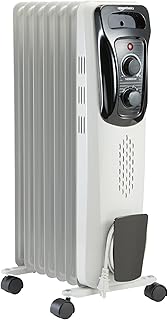
Best for: RV users seeking a budget-friendly, low-noise option with dependable long-lasting heat. It features three heat settings (1500W, 1000W, 600W), seven oil-filled fins, and 144 sq ft heating coverage. It remains quiet, making it suitable for bedrooms or offices within an RV. Caution: energy use can be higher on the top setting, and movement should be careful to avoid tipping. This is a solid all-around pick when you want steady warmth without added features.
Radiant Space Heater by SONBION

Best for: RV use where a compact, quick-heating infrared option is desirable. The SONBION heater uses quartz infrared elements for fast warmth and has a foldable holder for easy storage. It includes overheat protection, an anti-tip switch, and CE/ROHS certification for safety. Limitation: infrared heat can feel uneven on very large open spaces, making it ideal for smaller living areas or personal zones within the RV. This choice suits users who want fast, directed heat to personal work areas or small cabins.
DREO Radiator Heater, 1500W Oil Filled

Best for: RVs needing broad room heat with high safety standards. This DREO model uses eight M-shaped fins for 59.5% higher heat dissipation area, promoting wide and even warmth. It provides rapid heat distribution at 1500W, maintaining surface temperatures at safe levels. It includes tip-over protection, ETL listing, triple overheat protection, and a safety plug. Use this if you prioritize even heat in larger living spaces and strong safety features. Limitation: heat may take a little longer to reach the far corners of very large rooms.
Buying Guide: Key Considerations For RV Radiant Heaters
What type of heater fits your RV lifestyle? Radiant heaters can be propane-powered, electric oil-filled, or infrared. Consider power availability, fuel access, space, and noise when choosing.
- Power source: Do you have reliable shore power, a propane system, or both? Electric models need an outlet; propane units require safe venting and fuel supply.
- Heat distribution: Oil-filled radiators provide steady, long-lasting warmth; infrared units heat spaces quickly but can bias warmth to nearby areas. For open floorplans, oil-filled or multiple small heaters might be best.
- Safety features: Look for overheat protection, tip-over switches, ETL or CE certifications, and flame-retardant materials for propane or electric units.
- Size and footprint: Measure your RV’s living area. Choose a unit that fits safely without blocking exits or vents.
- Noise and stability: Quieter electric models suit bedrooms; choose wide bases or anti-tip designs to prevent movement on the move.
- Maintenance and durability: Oil-filled radiators require little maintenance; propane models need proper fuel handling and storage considerations.
How To Choose For Different RV Scenarios
- Weekend camping in cool climates: A portable propane radiant heater offers quick warmth without relying on electric hookups.
- Full-time RV living: An electric oil-filled radiator with multiple fins provides stable warmth with low noise.
- Small campers or tight spaces: A compact infrared heater can heat personal zones rapidly without heating the entire space.
- Large RV interiors: Look for models with multiple fins or higher wattage that distribute heat more evenly.
Installation And Safety Tips
- Place heaters on stable, non-flammable surfaces away from curtains, furniture, and bedding.
- Avoid blocking vents or air intakes; ensure adequate ventilation when using propane units.
- Follow manufacturer guidelines for maintenance, replacement parts, and electrical compatibility.
- Use detectors for carbon monoxide and smoke when operating fuel-based heaters inside an RV.
FAQ
- What type of heater is safest for RV use? Electric oil-filled radiators and propane radiant heaters with proper ventilation are commonly used. Safety certifications and built-in protections are essential.
- Can I run these heaters while driving? Propane heaters can be hazardous while moving due to fuel and ventilation requirements. Many RV owners prefer to use heaters when parked and stabilized.
- How do I size a heater for my RV? Consider the cabin size in square feet, insulation quality, and ceiling height. A unit with higher BTU for propane or higher wattage for electric is necessary for larger spaces.
- Do infrared heaters use less electricity? Infrared heaters heat objects directly, potentially reducing load on the HVAC system but may feel less even than oil-filled models in large rooms.
- Are these heaters energy efficient? Oil-filled and infrared heaters typically provide efficient warmth with lower noise. Efficiency depends on usage and space.
- What maintenance is needed? Electric heaters usually require minimal upkeep, while propane units need regular fuel checks and venting compliance.