Electric baseboard heating costs depend on heater type, wattage, and usage habits. This guide highlights five suitable options, from basic convection bases to smart thermostats, to help you choose cost‑effective solutions for a variety of spaces. The top picks cover different needs: high heat output for larger rooms, programmable controls for energy savings, and safety features for bedrooms or offices. The following product table summarizes why each item may be the best choice for specific buyers.
| Product | Best For | Key Cost-Effectiveness Feature |
|---|---|---|
| Cadet F Series 36″ Electric Baseboard Heater | Mid‑to‑large rooms needing steady convection heat | Flexible wattage (750/563 W) for 240/208 V systems |
| Mysa Smart Thermostat LITE | Smart control and schedule-driven savings | WiFi app control; 7‑day scheduling; works with voice assistants |
| Comfort Zone CZ600 Electric Baseboard Heater | Budget-friendly, medium rooms with safety features | Two heat settings; stay-cool body; tip-over and overheat protection |
| Cadet F Series 24″ Electric Baseboard Heater | Smaller spaces or supplemental heat | Compact footprint with adjustable wattage options |
| DREO Smart Wall Heater | Bedroom or living areas needing quiet operation | Smart features and space-saving wall installation |
Who should read this guide: homeowners comparing installation costs for electric baseboard heating, renters seeking energy-aware options, and property managers evaluating safer, programmable solutions. Each product below is described with its best-use scenario, so you can quickly map choices to your space and budget.
Cadet F Series 36″ Baseboard Heater

Model and size: Cadet F Series 36″ with 3F750W/09952 part. It operates at 240/208 V and provides 750 W or 563 W depending on wiring. This heater uses convection heat to circulate warm air across a room, making it a solid choice for consistent ambient warmth in living rooms or home offices. Best for buyers who need a reliable, straightforward install and predictable heat output.
Who it’s best for: Homeowners needing steady room heat with simple wiring. Why chosen: multi-watt capability offers flexibility for different electrical setups. Caution: ensure your circuit can handle 750 W with your existing panel to avoid overload.
Mysa Smart Thermostat LITE for Electric Baseboard Heaters

Smart thermostat for baseboard heating. Works with 120V-240V systems and connects directly to WiFi for remote control. Features include scheduling that can help reduce heating costs by lowering temperature when away and increasing it before you return. Voice assistant compatibility adds convenience for daily routines. Best for buyers seeking programming and remote management to optimize energy use.
Who it’s best for: Tech-savvy homeowners who want app-based control and energy savings. Why chosen: potential to cut electric‑heat bills with schedules. Caution: needs stable WiFi for full functionality; no standalone offline mode if the network is down.
Comfort Zone CZ600 Electric Baseboard Heater

This 1500 W convection heater targets medium-sized rooms with two heat settings and an adjustable thermostat. It emphasizes safety with a tip-over switch, stay-cool body design, and overheat protection. Whisper-quiet operation minimizes disruption in bedrooms or study spaces. Best for buyers prioritizing safety and simple, reliable performance over advanced smart features.
Who it’s best for: Households needing strong heat with reliable safety features. Why chosen: strong safety system and quiet operation. Caution: higher wattage may increase electricity use if left on for long periods without a heater management plan.
Cadet 2F350W Baseboard

Model: 2F350W, 1195/895 BTU, 240/208 V, 350/262 W. Suitable for smaller spaces or as an add-on heat source. Best for buyers needing a compact, cost-conscious option that can supplement existing heating. Caution: lower wattage means less heat output in very cold rooms, so plan for space and climate accordingly.
DREO Smart Wall Heater
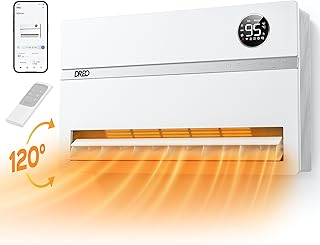
Model: White, 1500 W, space-saving wall installation. Designed for bedrooms or living areas needing quiet operation and steady heat. Best for buyers seeking a wall-mounted, low-profile heater with smart capabilities. Caution: installation on wall requires clearance and mounting considerations.
Buying Guide
Key considerations when evaluating electric baseboard heating costs:
- Room size and heat needs: Larger rooms require higher wattage or multiple units for even warmth. Pair baseboards with proper insulation for efficiency.
- Wiring and electrical capacity: Check service panel capacity and circuit limits before selecting wattage. Higher wattage units may require dedicated circuits.
- Operation method: Convection bases provide even heat; radiant elements heat space quickly but may be less uniform. Choose based on room layout and use patterns.
- Controls and scheduling: Thermostats and smart controls can reduce energy use. Consider whether you want WiFi, voice control, or offline operation.
- Safety: Look for tip-over switches, overheat protection, and stay-cool surfaces, especially in bedrooms or children’s spaces.
- Installation ease: Pre-punched knockouts and straightforward wiring speed up installation. Consider whether you prefer floor-mounted or wall-mounted units.
FAQ
- What increases electric baseboard heating costs?
– Higher wattage, longer run times, and poor insulation raise costs. Using programmable thermostats or schedules can help reduce energy use. - Are smart thermostats worth it for baseboard heaters?
– Yes for many users, as scheduling and remote control can lower daily consumption without sacrificing comfort. - Is baseboard heating safe for homes with kids?
– Most units include safety features like tip-over switches and stay-cool exteriors; proper placement and clearance are still important. - Can I mix baseboard heaters with other heating types?
– Yes, but balance heat output and electricity use to avoid overloading circuits and ensure even comfort. - How do I estimate operating costs?
– Multiply the heater’s wattage by expected hours of use, divide by 1000 to get kWh, and multiply by your electricity rate. - What should I consider for apartment dwellers?
– Look for compact units with easy installation and smart controls to manage costs without permanent modifications.