Planning comfort on the road means selecting an RV air conditioner that fits your trailer and energy setup. This guide reviews five reliable rooftop units designed for trailers, campers, and travel trailers, highlighting cooling power, energy efficiency, installability, and noise levels. Whether you’re off-grid or plugged in, these options balance performance and reliability for American RV enthusiasts.
| Product | Brand | BTU / Heating | Power Type | Best For |
|---|---|---|---|---|
| RV Air Conditioner 12V 10000 BTU Rooftop | outequip | 10,000 BTU cool / 4,500 BTU heater | 12V DC | Compact spaces, quick cooling |
| RecPro 15K Ducted / Non-Ducted | RecPro | 15,000 BTU | 110-120V | All-in-one, quiet operation |
| Treeligo 12V RV Air Conditioner | Treeligo | 7,900 BTU cooling / 3,000 BTU heating | 12V DC | Ultra-quiet, off-grid ready |
| FOGATTI InstaCool 13,500BTU | FOGATTI | 13,500 BTU | 115V AC + 12V DC | High cooling power, easy install |
| Furrion Chill Cube 18k BTU | Furrion | 18,000 BTU | DC + AC compatible | High capacity, efficient cooling |
Note: The table above summarizes key attributes. Each unit has unique installation requirements and power needs. See product sections for details, images, and features.
RV Air Conditioner 12V 10000 BTU Rooftop — Outequip

Features include efficient cooling with a 10,000 BTU capacity that can cool an RV in about 15 minutes, plus a 4,500 BTU PTC heater for mild warmth in smaller spaces. It’s built with UV-stabilized ABS materials, an EPDM foam gasket, and a zinc-coated condenser to withstand harsh weather. The unit is designed for quiet operation and durability in mobile environments, making it suitable for campers, trucks, vans, and trailers that require reliable performance in various climates.
RecPro 15K Ducted or Non-Ducted — Quiet AC

This all-in-one unit offers 15,000 BTU cooling with optional ducted or non-ducted configurations, making it adaptable to many RV layouts. It features low amp draw for energy efficiency, UV-resistant durable construction to resist road wear, and a whisper-quiet operation (around 55.4 dB). The design aims to balance cooling power with long-term reliability, ideal for off-grid setups or solar-powered campsites while minimizing electrical load on the system.
Treeligo 12V RV Air Conditioner
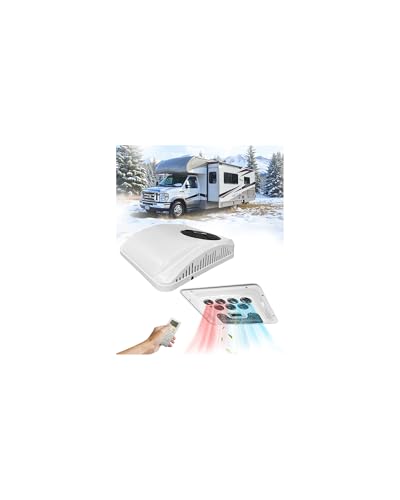
Treeligo’s unit delivers 7,900 BTU of cooling paired with a 3,000 BTU heating function, suitable for year-round comfort when parked. It runs on a 12V DC scroll air compressor, reducing fuel use and enabling battery operation for off-grid scenarios (note: not recommended for starter batteries). The roof-mounted design fits standard RV skylights and can be installed on a range of roof sizes, offering a balance of quiet operation and energy efficiency for campers and travel trailers.
FOGATTI InstaCool 13,500BTU RV AC
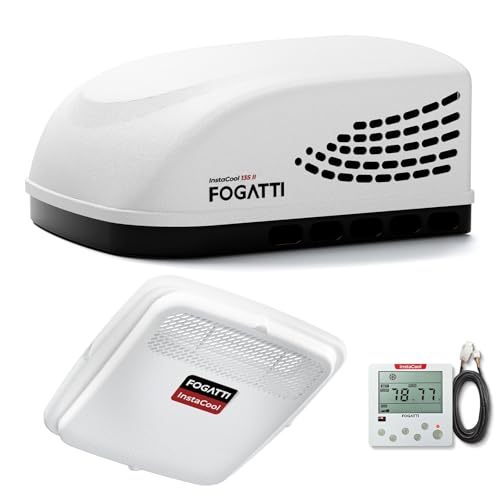
FOGATTI InstaCool provides 13,500 BTU of cooling via a dual high-efficiency compressor system with an all-in-one design. It requires both 115V AC power and 12V DC power for operation and uses eco-friendly R32 refrigerant. The unit emphasizes rapid cooling, smart energy savings, and an efficient balance between cooling capacity and energy use, making it suitable for campers and trailers that connect to both shore power and battery systems.
Furrion Chill Cube 18k BTU RV Rooftop

The Furrion Chill Cube 18K RV rooftop air conditioner uses variable-speed compressors to move cool air efficiently and quickly. It provides more than one ton of cooling power and is noted for higher capacity and improved battery/runtime performance during off-grid use. It’s designed as a ducted system with quiet operation and energy-conscious features, suited for larger trailers or campervans needing robust cooling without excessive power draw.
Buying Guide: Key Purchase Considerations
- Power Source and Availability: Determine whether you’ll rely on shore power, a generator, or a battery bank. Some units are 12V DC powered, while others require 110-120V AC; mixed POWER systems like dual-tower units can support both, but installation can be more complex.
- BTU Range and Space Fit: Choose BTU ratings that align with your trailer size and insulation. Higher BTU units cool larger interiors but demand more power and may require ducting (for ducted models).
- Ducted vs Non-Ducted: Ducted systems distribute air more evenly but may require more extensive installation. Non-ducted units are typically easier to install and may suffice for smaller spaces.
- Energy Efficiency: Look for units with low amp draw and efficient compressors. Off-grid setups benefit from models designed to minimize power consumption while delivering steady cooling.
- Noise Levels: Quieter units (under ~60 dB) improve comfort for sleeping and working inside the RV. Noise specs vary by model and installation.
- Installation Considerations: Roof size, skylight dimensions, and mounting hardware affect compatibility. Some units include step-by-step install guides, while others may require professional installation.
- Heat and Cold Versatility: If you need heating capabilities, verify whether the unit offers integrated heating or if separate heating solutions are necessary. Some models provide auxiliary heat but are not primary heat sources for extreme cold.
- Durability and Weather Resistance: UV-stabilized plastics, seals, and corrosion-resistant components help RV units withstand travel, sun exposure, and road conditions.
- Refrigerant Type: Modern RV air conditioners often use eco-friendly refrigerants like R32. Consider environmental impact and local regulations when choosing.
- Warranty and Support: Check manufacturer warranties and the availability of parts and service centers in your area for long-term reliability.
For readers planning extended trips, aligning an air conditioner with a compatible power strategy—whether solar, generator, or grid-connected—will maximize comfort without overtaxing the electrical system. Each unit above offers a distinct balance of cooling power, installation complexity, and energy considerations to fit various trailer configurations and travel styles.