Finding the right air conditioner for a camper or RV can unlock comfortable travel in extreme weather. This guide highlights five well-regarded rooftop units, focusing on cooling capacity, energy use, and ease of installation. Below you’ll find quick specs and a buying guide to help compare options for diverse RV sizes and power setups.
| Product | BTU / Heating | Key Benefit | Ideal For |
|---|---|---|---|
| RV Air Conditioner, 12V 10000 BTU Rooftop (outequip) | 10,000 BTU cooling; 4,500 BTU heater | Fast cooling; compact and weather-ready | Smaller RVs, mild climates |
| Furrion Chill Cube 18k BTU | 18,000 BTU | High efficiency; quiet, variable speed | Mid-to-large campers, off-grid |
| TOSOT 16000 BTU GO Cool | 16,000 BTU cooling; 12,500 BTU heating | Smart control; wide temperature range | Medium or larger RVs, WiFi control |
| RecPro 15K Ducted/Non-Ducted | 15,000 BTU | Low amp draw; quiet operation | Off-grid with solar or generator |
| Treeligo 12V Rooftop AC | 7,900 BTU cooling; 3,000 BTU heating | 12V operation; easy install | Small to mid-sized RVs, battery power |
RV Air Conditioner, 12V 10000 BTU Rooftop (outequip)

This 10,000 BTU rooftop unit is designed for RVs, trucks, and campers seeking quick cooling. It includes a 4,500 BTU heater for mild-weather warmth, though not suitable as a primary heat source in extreme cold. Built with UV-stabilized ABS and a zinc-coated condenser, it aims to withstand harsh outdoor conditions. Ideal for compact to mid-sized campers that need fast cooling with reliable durability.
Furrion Chill Cube 18k BTU

The Chill Cube 18K rooftop AC uses variable speed compressors for efficient cooling and faster air movement. It is designed for campers with a ducted system and offers quiet operation, high capacity, and energy efficiency. Installation is straightforward with a bolts-on process, though the unit is sold as AC unit only, with mounting and installation components available separately. Best suited for larger campers or those prioritizing efficiency during long trips.
TOSOT 16000 BTU GO Cool

The TOSOT GoCool system delivers 16,000 BTU of cooling and 12,500 BTU heating, suitable for RVs up to about 600 square feet. It features WiFi control via the Gree+ app for convenient, remote operation. It’s built to handle outdoor temperatures from 23°F to 115°F and indoor ranges of 61°F to 86°F, offering flexible performance across varied climates. This unit is ideal for larger RVs seeking smart control and wide climate coverage.
RecPro RV Air Conditioner 15K (Ducted/Non-Ducted)

RecPro’s 15,000 BTU AC unit is designed for low amp draw and rugged travel. It offers both ducted and non-ducted options, built with UV-resistant plastic to withstand road conditions. The unit operates quietly at about 55 dB, providing a comfortable indoor environment without excessive noise. It’s well-suited for RVs that require energy efficiency, long-term durability, and compatibility with various roof designs.
Treeligo 12V RV Air Conditioner
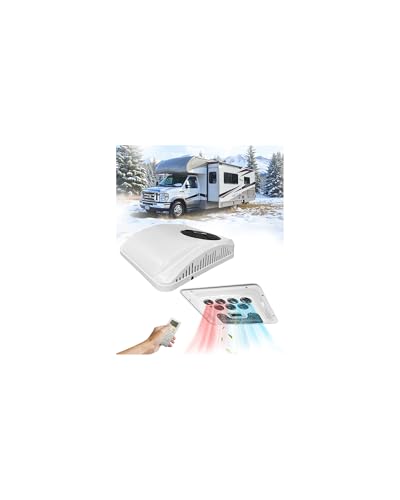
The Treeligo unit is a compact 12V rooftop AC designed for off-grid power. With 7,900 BTU cooling and 3,000 BTU heating, it prioritizes battery-powered operation and simple installation. It is particularly suitable for smaller campers or travel trailers where weight, space, and battery capacity are important considerations. The product emphasizes energy efficiency and straightforward roof installation for quick setup on your next trip.
Hiberry Rooftop A/C 10K

This 10,000 BTU rooftop unit balances cooling performance with a 12V DC operation and a brushless compressor. It emphasizes ultra-quiet operation and a weatherproof ABS outer shell designed to endure sun and weather. The unit is suitable for truck, camper, or motorhome setups where reliable cooling is needed without heavy power draw.
Buying Guide: Key Purchase Considerations
- RVT size and climate: The RV’s length and interior square footage determine whether you need 10K–18K BTU, or a larger, ducted system for even airflow.
- Power and energy sources: Consider the available electrical supply, solar capacity, and whether the unit’s amp draw fits your generator or battery bank. 12V units are lighter on power but may offer less cooling for larger spaces.
- Install type: Ducted versus non-ducted affects installation complexity and ceiling space. Some units offer flexibility for retrofits on older RVs.
- Smart features: WiFi or app control can simplify temperature management when you’re off-grid or parked in remote spots.
- Durability: Weather resistance and UV-stable plastics extend unit life in harsh outdoor environments.
- Noise levels: Quieter units (below 60 dB) reduce nighttime disturbance and improve comfort during rest or work inside the RV.
- Heating capability: If winter usage is common, units with heating or heat pump capabilities offer year-round climate control, though heating capacity varies widely.
- Maintenance and parts availability: Look for brands with accessible replacement components and clear installation guides.
Each option above targets different camp styles, from off-grid adventures to full-hookup travels. When selecting, balance BTU capacity with power availability, roof space, and your preferred control methods to ensure reliable comfort on the road.