Best AC for Grow Room: Indoor Climate Solutions
Choosing the right climate control for a grow room is essential for steady plant health and consistent yields. This guide highlights top air conditioning options designed for grow environments, including smart cooling, humidity management, and noise-conscious operation. Explore five reliable units that balance power, efficiency, and grow-focused features to help you maintain ideal temperatures and VPD (vapor pressure deficit).
Summary of selected products:
| Product | Brand | Key Benefit | Type |
|---|---|---|---|
| VIVOSUN AeroLush C08 Smart Air Conditioner | VIVOSUN | 4-in-1 climate control with sensors for grow environments | Smart window/portable unit |
| Dreo 12,000 BTU AC515S | Dreo | High cooling power with quiet operation and app/voice control | Portable AC |
| GE Window Air Conditioner 5,000 BTU | GE | Compact cooling for small grow spaces with easy install | Window AC |
| AC Infinity CLOUDFORGE T3 | AC Infinity | Grow tent humidification with VPD precision | Environmental heater/humidifier |
| COOLECH Windowless Evaporative Cooler | COOLECH | Waterless alert system and multiple modes for dry climates | Windowless evaporative cooler |
VIVOSUN AeroLush C08 Smart Air Conditioner

The VIVOSUN AeroLush C08 is designed for grow spaces that require precise climate control. It features an 8000 BTU compressor and Sensirion sensors that monitor temperature, humidity, and vapor pressure deficit (VPD) in real time. The 4-in-1 operation includes cooling, drying, heating, and a fan mode, allowing flexible management of day-to-day conditions in a grow room. Smart remote control and app connectivity enable monitoring and adjustments from anywhere, integrating with the VIVOSUN Smart Grow System for automated environmental synchronization.
For grow environments, the ability to monitor humidity and temperature with sensor probes helps keep plants in their optimal comfort range. The unit supports year-round operation, adapting to seasonal changes. Noise levels are not specified, but the model focuses on precise climate tracking that growers value when maintaining stable conditions across cycles. This makes it a strong option for medium-sized grow spaces needing reliable, configurable climate control.
Dreo 12,000 BTU AC515S Portable Air Conditioner

The Dreo AC515S delivers robust cooling power with 12,000 BTU ASHRAE capacity and a 65–86°F adjustable range. It includes a 3-in-1 mode (cooling, dehumidifying, fan) for adaptable climate control, plus a quiet operation profile around 46dB. Smart features include APP, voice, and remote control, plus a 24-hour timer. With a broader reach of up to 16 feet, this model supports larger room layouts typically found in grow spaces that demand strong cooling and flexible scheduling.
Grow rooms often require tight temperature control during peak light cycles. The AC515S’s combination of strong cooling, quiet operation, and multi-mode versatility makes it well-suited for challenged spaces where external heat load and humidity can swing. However, it is portable, so placement and efficient ducting should be planned to maximize performance in a dedicated grow area.
GE Window Air Conditioner Unit 5,000 BTU

The GE 5,000 BTU window unit is designed for smaller grow spaces up to 150 square feet. It includes a straightforward installation kit and cooling settings suitable for compact rooms. Its low-noise operation makes it favorable for nocturnal growth cycles where quiet performance matters. While not the most feature-rich option, its compact form factor can fit window setups in tight grow rooms or tents that require a reliable, simple cooling solution without the need for ducting or external units.
AC Infinity CLOUDFORGE T3

The CLOUDFORGE T3 from AC Infinity is a grow-tent heater with VPD humidity controls. It pairs a 10-level PTC heating system with smart onboard controls and a corded sensor probe for precise trigger points. Timers and cycles help maintain stable humidity and temperature, reducing plant stress associated with fluctuating conditions. The unit’s water-resistant seal design addresses moisture exposure, extending device life in humid grow environments. It can serve as a reliable source of supplementary heat when ambient conditions dip, particularly in tents and small greenhouses.
COOLECH Windowless Evaporative Cooler
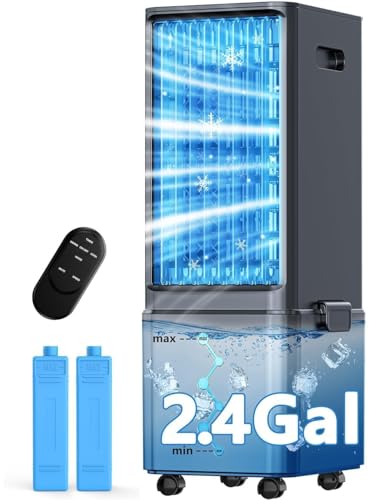
The COOLECH evaporative cooler offers three modes and four cooling options with a waterless alert system, designed to prevent operation when water is low. It features a 2.4-gallon tank and a 20-hour timer, with a 70-degree auto-swing feature to distribute air evenly. This option is particularly suitable for drier climates where evaporative cooling can efficiently reduce ambient temperatures while adding moisture to the air—potentially beneficial for some plant varieties that tolerate higher humidity levels or where traditional AC is impractical due to power or ducting constraints.
Buying Guide: Key Considerations For Grow Rooms
- Room size and BTU requirements: Calculate the size of your grow space (length x width x height) and match BTU capacity accordingly. Over- or under-sizing can lead to inefficient cooling and humidity swings.
- Humidity and VPD management: Look for integrated humidity sensing or a compatible humidifier/dehumidifier. Consistent VPD improves plant transpiration and nutrient uptake.
- Sensor integration and smart features: Apps, remotes, and compatibility with grow automation systems help maintain stable conditions with less manual intervention.
- Energy efficiency and noise: In grow rooms, quieter units and energy-saving models reduce distraction and operating costs over time.
- Ventilation and ducting: Window, through-wall, or portable units each have different installation needs. Plan duct routing and airflow patterns to prevent hot corners.
- Reliability and maintenance: Consider units with durable seals, easy access for filter changes, and reputable customer support. Heater components or water-resistance features can extend life in humid environments.
- Backup and redundancy: For professional setups, having a backup cooling option or a secondary system prevents climate disruptions during failures or maintenance windows.
- Cost of ownership: Beyond purchase price, factor energy consumption, filter replacements, and potential replacement parts into the overall cost.