When cooling server rooms or small data centers, reliability, quiet operation, and drainage-free setups matter most. The following five portable and windowless or compact units are among the best-suited options to maintain stable temperatures without complex plumbing. Each selection prioritizes low noise, energy efficiency, and user-friendly controls to support continuous equipment performance.
| Product | BTU (ASHRAE) | Type | Notable Benefit |
|---|---|---|---|
| Dreo AC515S (12,000 BTU) | 12,000 | Portable | Drainage-free cooling with 3-in-1 mode |
| Dreo 10,000 BTU (AC Unit) | 10,000 | Portable | Low noise isolation system |
| COOLECH Windowless Evaporative Cooler | Not standard BTU | Windowless evaporative | 4 modes, waterless alert system |
| Midea 8,000 BTU Window Unit (Heat & Dehumidify) | 8,000 | Window | Heat option and energy saver |
| Dreo 12,000 BTU (AC515S New) | 12,000 | Portable | Self-evaporating drainage-free system |
Dreo AC515S 12,000 BTU Portable AC

The DREO AC515S delivers 12,000 BTU ASHRAE cooling capacity with an extended reach up to 16 ft. This makes it suitable for mid-sized server rooms or network closets. A key feature is the drainage-free operation via a patented self-evaporating system, reducing maintenance by eliminating routine drainage in humidity conditions typical to data spaces. The unit supports a temperature range from 65°F to 86°F and includes app, voice, and remote controls for flexible management. With a quiet operation level around 46dB, it minimizes acoustic disruption in server environments.
Designed for multiple modes, it integrates cooling, dehumidifying, and fan-only options in a single chassis. Its noise isolation around the compressor helps maintain a quieter interior, which is beneficial when sensitive equipment and personnel are nearby. The unit is constructed to be compact yet powerful, balancing space constraints with cooling demand. Energy efficiency is aided by smart cycling features and precise temperature controls, enabling consistent temperatures without excessive power draw.
Dreo 10,000 BTU Portable AC for Rooms

This 10,000 BTU unit provides effective cooling for spaces up to roughly 14 feet of reach. It combines a robust cooling capability with a patented noise isolation system that minimizes compressor and turbulence noise to around 45dB. For server rooms, this translates to reduced audible impact while maintaining reliable temperatures in nearby equipment racks. The model supports drainage-free operation in humid indoor environments, leveraging automatic moisture management to limit maintenance needs. Temperature adjustments range broadly from 61°F to 86°F, offering fine control for maintaining optimal server-room conditions.
Operational controls include app-based and voice-enabled interfaces, and a 24-hour timer that helps align cooling cycles with workload patterns or after-hours maintenance windows. The unit’s compact form and easy setup make it a flexible option for offices or small data spaces where ductwork is impractical. As with any portable unit used near critical equipment, planning for proper venting and air distribution remains important to prevent hot spots and ensure even cooling across racks.
COOLECH Windowless Evaporative Air Cooler
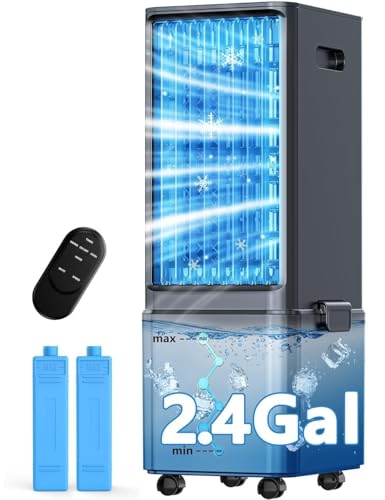
The COOLECH evaporative cooler is a 4-mode, 3-speed portable unit designed for dry, hot environments often found in southern or arid regions. It operates without a traditional water reservoir drain by using a waterless alert system that prompts refilling only when necessary, minimizing downtime. The device adds humidity to the air, which can be advantageous in data rooms where overly dry air can affect equipment performance and static electricity. The unit is especially suitable for spaces where typical air conditioning can be too resource-intensive or where clean ducting is unavailable.
With four modes—Cooling, Normal, Natural, and Sleep—and multiple fan speeds, it provides flexible comfort control across different staff activity levels. While evaporative cooling typically requires higher humidity, this model’s smart management helps avoid over-humidification, making it a practical option for small server enclosures or adjacent server rooms that benefit from steady, moderate cooling without heavy installation requirements.
Midea 8,000 BTU Window Unit With Heat

The Midea 8,000 BTU window unit combines cooling and heating with an energy-saver inverter technology. It is rated for spaces up to 350 square feet, a common size for compact server rooms or equipment closets. The heat function is available when outdoor temperatures exceed 41°F, offering year-round climate control. It includes an LED display and multiple modes (Heat, Auto, Cool, Dry, Fan) plus a 24-hour timer for scheduling. Wireless control via SmartHome app, plus Alexa and Google Assistant compatibility, enables remote adjustments, which is useful for maintaining stable server conditions during variable workloads.
Inverter technology supports energy efficiency by modulating compressor output rather than on/off cycling, which can help keep temperatures steadier and reduce peak electrical load. The system also features a washable front-access filter for straightforward maintenance, contributing to longer unit life in a data environment where reliability is essential. This window unit is well-suited to larger server rooms where ducted central cooling is impractical or cost-prohibitive.
Dreo 12,000 BTU Portable AC515S New

The Dreo AC515S New model expands to 12,000 BTU ASHRAE (8,000 BTU SACC) with a 16 ft coverage range, delivering rapid cooling for mid-sized server spaces. It includes a true drainage-free design using a self-evaporating system, reducing ongoing maintenance responsibilities in humid environments. The unit minimizes noise with a patented isolation system around the compressor, achieving around 45dB in cruising operation—important for preserving an environment conducive to sensitive equipment. Temperature range controls span from 61°F to 86°F, enabling precise climate management in data-area workflows.
With app, voice, and remote controls, administrators can fine-tune cooling before or after on-site visits. It supports a 24-hour timer for scheduling and integrates cooling, dehumidification, and fan modes for flexible operation. The compact footprint and drainage-free design make it a favorable option for server rooms that require reliable, unobtrusive cooling without complex plumbing or drainage setups.
Buying Guide: Key Considerations When Choosing An AC Unit For Server Rooms
- Cooling capacity and coverage: For server rooms, select units capable of even cooling across racks without creating hot spots. Look for higher BTU ratings relative to room size and consider zoned airflow options.
- Drainage and maintenance: Drainage-free designs reduce maintenance downtime. If drainage is required, plan for a simple drain line or condensate pump to prevent water from accumulating near equipment.
- Noise levels: Choose models with low decibel operation to minimize disturbances to adjacent staff and sensitive equipment.
- Controls and automation: App, voice, and remote controls enable remote climate management, which is helpful for server room oversight during off-hours.
- Energy efficiency: Inverter or variable-speed options reduce energy use and help maintain stable temperatures, which protects server hardware and reduces power costs.
- Ventilation and air distribution: Proper venting, ducting, or strategic placement around racks is essential to prevent hot spots. Consider units with adjustable air outlets or directional airflow features.
- Humidity management: Some units add humidity (evaporative models) or dehumidify, which can influence static control and equipment reliability. Balance humidity with room requirements.
- Installation footprint: Space constraints in server rooms may limit the choice to portable or windowless devices. Ensure clearance for venting and maintenance access.
- Reliability and maintenance support: Look for brands with solid service networks and replacement part availability to minimize downtime during failures or routine service.
When evaluating options, column-by-column comparisons across cooling capacity, energy efficiency, noise, and drainage requirements will help identify the best fit for a specific server room footprint. This approach supports maintaining stable, consistent temperatures while minimizing operational disruptions.