Finding the right air conditioner for a trailer or RV can be challenging when temperatures rise on summer trips or during off-grid adventures. The following selections are rooftop units designed for RVs, campers, and travel trailers, focusing on energy efficiency, quiet operation, and reliable cooling performance. Below you’ll find five models with key features to compare at a glance, helping you choose a unit that fits your space, power setup, and travel style.
| Product | Brand | BTU / Heating | Notes |
|---|---|---|---|
| RV Air Conditioner, 12V 10000 BTU Rooftop | outequip | 10,000 BTU cooling; 4,500 BTU heater | Low profile, battery powered option |
| RecPro RV Air Conditioner 15K | RecPro | 15,000 BTU | Heat pump; ducted option available; quiet operation |
| FOGATTI InstaCool 13,500 BTU | FOGATTI | 13,500 BTU | All-in-one, requires 115V and 12V power |
| TOSOT 16,000 BTU GO Cool | TOSOT | 16,000 BTU cooling; 12,500 BTU heating | WiFi control; wide operating range |
| Vlim RV Air Conditioner 9,500 BTU | vlim | 9,500 BTU cooling | Inverter, energy efficient; quiet |
RV Air Conditioner, 12V 10000 BTU Rooftop (Outequip)

The Outequip 12V Rooftop AC delivers 10,000 BTU of cooling in a compact, low-profile design, ideal for trailers and smaller RVs. Cooling is fast, with an estimated 15-minute start-to-comfort period. A built-in 4,500 BTU PTC heater offers supplementary warmth for mild conditions, though it is not intended as a primary heat source in very cold weather. The unit uses UV-stabilized ABS materials, an EPDM foam gasket, and a zinc-coated condenser for weather resistance and durability in harsh outdoor environments. This model emphasizes quick cooling, versatility, and rugged construction for on-the-road use.
RecPro RV Air Conditioner 15K (Ducted/Non-Ducted)

RecPro’s 15,000 BTU rooftop unit offers both ducted and non-ducted installation options, making it compatible with a range of RV layouts. It is designed for energy efficiency with low amp draw, enabling multiple RV appliances to run without overloading the system—ideal for off-grid or generator setups. The rugged, UV-resistant housing helps the unit endure outdoor exposure, and the design emphasizes quiet operation (approximately 55 dB), allowing comfortable use during sleep, work, or relaxation. This model suits larger RVs that need robust cooling with flexible installation choices.
FOGATTI InstaCool 13,500 BTU RV A/C
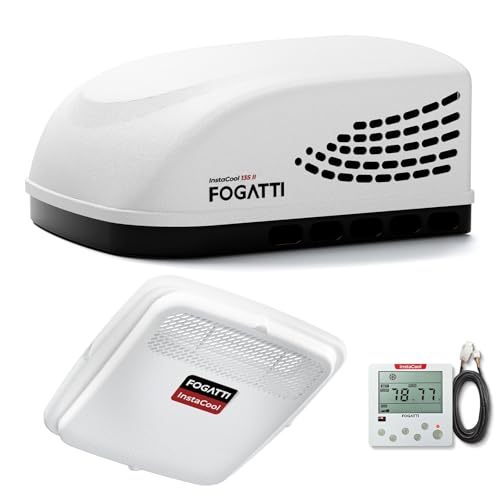
FOGATTI InstaCool 13,500 BTU rooftop unit provides rapid cooling with dual high-efficiency compressors and eco-friendly R32 refrigerant. It is designed for all-in-one operation, requiring 115V AC power alongside 12V DC power. The unit emphasizes quick chilling, energy savings, and smart regulation of cooling output through an advanced fan system and temperature control. This model is suitable for mid-sized RVs and trailers needing efficient performance in varied climates while maintaining a relatively compact footprint.
TOSOT 16000 BTU GO Cool RV A/C

The TOSOT GoCool 16,000 BTU unit is built for larger campers and trailers, with 12,500 BTU heating capacity for cold months. It features WiFi connectivity via the Gree+ app for flexible control, and a broad operating temperature range to handle extreme outdoor conditions. The unit’s design supports cooling spaces up to about 600 square feet, making it a strong option for longer RVs or family trips where robust climate control is essential. The combination of power, control, and coverage helps maintain comfort across seasons.
Vlim RV Air Conditioner 9,500 BTU

Vlim’s 9,500 BTU inverter RV air conditioner emphasizes efficiency and quiet operation, making it well-suited for smaller trailers or users prioritizing energy savings. Inverter technology helps adjust cooling output to the demand, reducing energy waste and extending battery life during off-grid trips. The unit’s design focuses on delivering steady cooling with low noise, contributing to a comfortable sleeping environment and a more pleasant living space inside the RV.
Buying Guide: Key Purchase Considerations For RV AC Units
- BTU and space: Match the unit’s BTU rating to your trailer size. Larger RVs often require 15,000–16,000 BTU units or higher, while smaller trailers may be adequately cooled by 9,500–12,000 BTU models.
- Power sources: Decide between 115V AC (standard shore power) and 12V DC (for off-grid or battery-powered setups). Some models offer dual power options, which can be advantageous for off-grid adventures.
- Non-ducted vs. ducted: Ducted systems distribute cool air through multiple vents and are typically used in larger RVs; non-ducted units are simpler, often easier to install on rooftops, and suitable for smaller campers.
- Energy efficiency: Look for inverter technology or advanced regulation to minimize amp draw and maximize battery life when off-grid. Noise level is important for comfort during sleep and work.
- Heating capabilities: If you need heating, check whether the unit includes a heat pump or auxiliary heater, and confirm its suitability for your climate and space.
- Installation: Consider roof size, mounting requirements, and compatibility with existing wiring and controls. Some units include WiFi or remote controls for convenient management.
- Durability: Weather resistance and materials should be chosen for outdoor exposure, with UV protection and corrosion-resistant components recommended for longevity.
- Warranty and service: Review warranty terms and available service networks to minimize downtime on the road.
- Weight and balance: Heavier units affect roof load; ensure your roof can support the weight and that installation does not compromise vehicle handling.
Choosing the right RV air conditioner involves balancing space, power options, climate expectations, and installation constraints. The five models listed here provide a range of BTU capacities, heating options, and control features to fit many trailer setups. When comparing, weigh how often you’ll be off-grid, the typical temperatures you encounter, and whether you prefer ducted airflow or a simpler roof-mount solution.