Choosing the right air conditioner for an RV can impact comfort, battery life, and energy use during off-grid trips. This guide highlights five top-rated RV AC units designed to cool compact living spaces, with options for ducted and non-ducted configurations, heat pump capability, and 12V or standard 110V operation. Each product listed aligns with common RV layouts and power setups, helping you compare performance, installation, and efficiency at a glance.
| Product | BTU/Capability | Key Feature | Connect |
|---|---|---|---|
| Furrion Chill Cube (Blue) | 18,000 BTU | Variable speed, ducted, high efficiency | FACR18VSSA-BL-AM |
| TOSOT GoCool 16K | 16,000 BTU cooling, 12,500 BTU heat | WiFi app control, heat pump | B0BTRV37RN |
| RecPro 15K Ducted/Non-Ducted | 15,000 BTU | Low amp draw, quiet operation | B08LZX88JM |
| FOGATTI InstaCool 13.5K | 13,500 BTU | All-in-one, dual compressors | B0FJR2VW21 |
| TURBRO 15K with Heating | 15,000 BTU cooling, 1,500W heat | Remote, WiFi control, atmosphere lamp | B0D73GJ6ZW |
Furrion Chill Cube 18k BTU (Blue) — Rooftop AC Unit

The Furrion Chill Cube 18K RV rooftop air conditioner delivers robust cooling with a variable speed compressor for rapid, efficient airflow. It is designed for ducted RV setups and offers high capacity, helping extend battery runtime during off-grid trips. Installation is bolt-on with a clear guide, and the unit is advertised as lightweight for easier handling on rooftop installs. Note that this listing is for the AC unit only; necessary installation components may be sold separately.
TOSOT 16000 BTU Go Cool RV AC — Heat Pump and WiFi

This 16,000 BTU cooling unit includes a 12,500 BTU heat pump, making it suitable for cooler seasons. The GoCool series supports smart WiFi control via a mobile app, enabling remote temperature adjustments. It covers larger RV spaces up to around 600 sq ft and is built to operate across a broad outdoor temperature range. It’s a versatile option for campers seeking year-round comfort with modern connectivity.
RV Air Conditioner, 12V 10,000 BTU — Low Profile

This 10,000 BTU unit targets smaller RVs or vans, cooling efficiently in about 15 minutes. It includes a 4,500 BTU heater for mild warmth and operates as a low-profile rooftop option. Durable construction supports outdoor use with weather-resistant materials, making it suitable for off-grid or long-travel scenarios where weight and space are concerns.
RecPro 15K Ducted or Non-Ducted — Quiet All‑in‑One

RecPro’s 15,000 BTU unit offers both ducted and non-ducted configurations with a focus on energy efficiency and quiet operation. The design uses UV-resistant plastics with an aerodynamic profile for reduced drag and broad compatibility with many RV layouts. It is positioned as a robust, travel-ready option suitable for campers and fifth wheels seeking a balance of performance and durability.
FOGATTI InstaCool 13,500 BTU RV AC
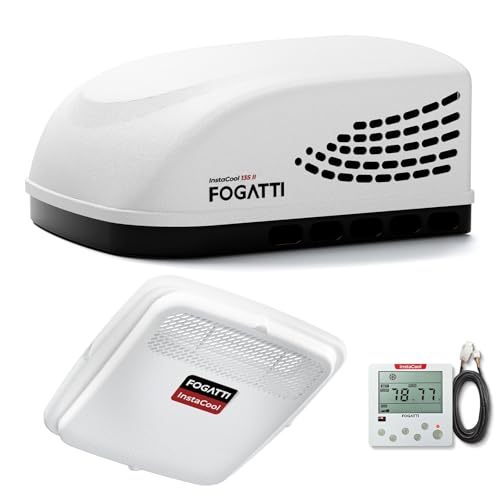
FOGATTI InstaCool integrates a compact, all-in-one rooftop design with 13,500 BTU cooling. It uses dual high-efficiency compressors and eco-friendly refrigerant to balance quick cooling with energy savings. Installations require both AC power and a 12V supply, making it a practical pick for campers who want efficient performance with straightforward setup and modern cooling control.
TURBRO 15K BTU RV AC With Heating

TURBRO’s 15,000 BTU unit pairs cooling with 1,500W electric heating, offering year-round comfort. It supports remote and WiFi control, and includes an atmosphere lamp to enhance the RV interior ambiance. The model emphasizes quiet operation with a lower noise profile and a user-friendly ceiling installation that appeals to new RV owners upgrading their climate control system.
Buying Guide: Key Considerations For RV Air Conditioners
- RV size and ducting: Match BTU to your RV length and whether you plan to use a ducted or non-ducted system. Larger spaces need higher cooling capacity; ducted setups distribute air more evenly but may require more complex installation.
- Power source and efficiency: Evaluate whether you rely on shore power, a generator, or off-grid solar. Energy efficiency, low amp draw, and heat pump capability can extend battery life and reduce generator runtime.
- Climate versatility: If you experience both hot summers and cool nights, look for units with heat pump support or auxiliary heating, as well as wide operating temperature ranges.
- Installation considerations: Some units are “AC unit only” and require separate components for installation. Ensure compatibility with your roof height, mounting space, and existing electrical system.
- Noise and comfort: Quieter models improve sleep and daily living inside the RV. Check decibel ratings and consider the overall cabin sound environment when choosing.
- Smart features: WiFi or app control provides convenient temperature management from inside or remotely. Consider compatibility with your mobile devices and existing smart home setups.
- Durability and weather resistance: RV roofs endure sun, rain, and vibration. Look for UV-stable housings, gasket quality, and robust materials designed for road travel.
- Maintenance and service: Availability of replacement parts, ease of service, and manufacturer support influence long-term reliability and uptime during trips.