Best Windowless Air Conditioners for Basements Without Windows
Finding cooling for a basement that lacks windows can be tricky, but windowless or portable evaporative air conditioners offer practical options. This guide highlights five effective choices, focusing on models designed to cool without traditional window setups. Each section covers features, performance, and suitability for basement environments, helping you compare options at a glance.
Summary of Selected Products
| Product | Brand | Type | Key Benefit |
|---|---|---|---|
| Midea RMW05MWB (Renewed) 5,000 BTU | Midea | ||
| Dreo Portable Air Conditioners, 12000 BTU | Dreo | ||
| COOLECH 42 INCH Windowless Portable AC | COOLECH | ||
| FANCOLE Windowless Air Conditioner | FANCOLE | ||
| MYICY Evaporative Air Cooler, 35″ | MYICY |
Dreo Portable Air Conditioners 12000 BTU For Rooms

Dreo’s 12000 BTU portable air conditioner is designed for rooms and can function without a fixed window, making it suitable for basements that lack traditional openings. It combines cooling, fans, and a dehumidifier to create a comfortable environment. The unit supports wireless control, voice commands, and remote operation for convenient use from across the space. Quiet operation helps minimize disruption in living areas adjacent to the basement. The 8000 BTU DOE rating ensures efficient cooling power with adaptable fan speeds and a range of temperature settings to tailor comfort.
COOLECH 42 In Windowless Portable AC
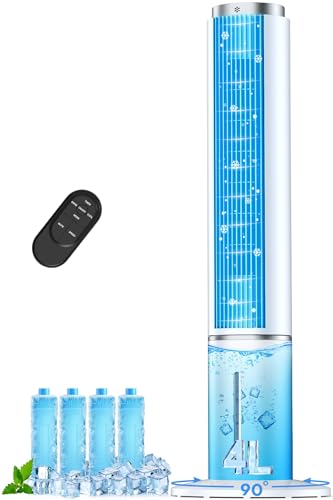
This COOLECH model is engineered as a windowless evaporative cooler with 4 modes and 3 speeds, delivering targeted cooling for basements without windows. It offers a broad cooling range, a wide 90° oscillation, and a substantial airflow reach to keep larger basement areas comfortable. With a focus on energy efficiency and flexible control, you can switch between cooling, normal, sleep, and nature modes to match daytime use or quiet nighttime cooling. Its 1400 CFM airflow supports rapid temperature adjustments in open basement layouts.
FANCOLE Windowless Air Conditioner

FANCOLE offers a windowless evaporative air conditioner with a large-capacity configuration that includes three ice packs and a 7-hour timer. This unit emphasizes long-running cooling for spaces like basements that need extended operation without frequent refills. It uses a high-capacity blower to push air across the room and supports portable installation, allowing you to position it away from direct heat sources. The top-fill water tank and drain-free operation help simplify maintenance and daily use.
MYICY Evaporative Air Cooler, 35″

MYICY presents a tall, windowless evaporative cooler designed for compact rooms and basements without windows. Its ergonomic 35-inch height makes it easy to place without bending, with two cooling modes and three fan speeds to customize comfort. A removable water tank simplifies refilling and cleaning, and the built-in timer supports extended operation. The slim profile helps integrate the unit into narrower basement layouts while delivering steady airflow across a wider area.
Midea RMW05MWB Renewed 5,000 BTU
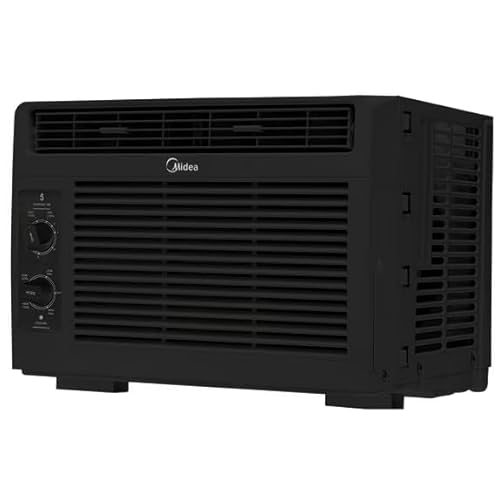
This renewed Midea option provides compact cooling with two cooling modes and two fan speeds, plus seven temperature settings to fine-tune comfort. While traditional window units require an opening, this model can be suited for basements in certain configurations where a windowless setup is feasible (for example, through a transfer of conditioned air from adjacent rooms). Its lighter BTU range makes it ideal for smaller spaces or supplemental cooling alongside other cooling methods in a basement environment.
Buying Guide: Key Considerations For Windowless Basements
- Cooling method and space size: Windowless units rely on evaporative cooling or portable refrigeration. Measure the basement room and compare BTU ratings to ensure adequate coverage. For larger spaces, prioritize higher BTU portable models with oscillating outlets.
- Airflow pattern and placement: Look for models with wide-angle oscillation, long air throws, or adjustable louvers. Placing the unit across from the main living area can distribute cool air more evenly.
- Humidity management: Evaporative coolers add moisture to the air, which is beneficial in dry basements but may cause dampness in humid environments. Consider a model with dehumidification capabilities or pairing with a dehumidifier if needed.
- Energy efficiency: Windowless units often feature energy-saving modes and timers. Check for energy efficiency ratings, inverter technology, and programmable schedules to minimize electricity use.
- Maintenance: Top-fill tanks, removable water reservoirs, and built-in filters simplify upkeep. Ensure models offer easy cleaning access and leak prevention features.
- Noise and comfort: In basements that double as living spaces, choose quieter fans and low-dB operation settings. Temperature control options, such as precise thermostat ranges, help maintain a steady climate.
- Drainage and humidity considerations: Some evaporative units require water, while others are waterless or self-evaporating. Assess local humidity levels to choose the best fit for your basement.
- Installation flexibility: Windowless and portable designs provide varying degrees of mobility. Consider wheel assemblies, handles, and weight when planning repositioning.
- Safety features: Look for automatic shutoff, tip-over protection, and water level indicators to avoid spills and accidents in crowded basement spaces.
Comparison At A Glance
- Dreo Portable AC515S: High cooling capacity with app/voice/remote control; best for mid-to-large basements.
- COOLECH 42 Inch Windowless: Large airflow with 90° oscillation; strong coverage in open layouts.
- FANCOLE Windowless: Ice packs and long runtime; strong option for extended cooling periods.
- MYICY 35″ Evaporative Cooler: Slim profile, easy reach, versatile for tight spaces.
- MYIDEA Renewed Midea (RMW05MWB): Compact and budget-friendly; suitable for smaller zones.