Finding the right air conditioning solution for a sailboat involves balancing space, power, and durability against the marine environment. The following selections include marine-specific units and versatile portable options that perform well in compact, saltwater settings. This guide highlights five models with features like corrosion-resistant components, quiet operation, and energy efficiency to help you stay comfortable on deck and below.
Summary of chosen products
- MarinAire 16,000 Btu/h Self Contained Marine A/C & Heat Pump
- MarinAire 6,000 Btu/h Self Contained Marine A/C & Heat Pump
- SEALAND ECD16K-HV A/C Retroft Kit
- TOSOT GoCool 16,000 BTU RV Air Conditioner with Heat Pump
- FancoLE Windowless Evaporative Air Cooler (Windowless, suitable for shaded cabin areas)
MarinAire 16,000 Btu/h Self Contained Marine Air Conditioner and Heat Pump

MarinAire’s 16,000 Btu/h marine air conditioner is designed for boats where space and reliability matter. The unit features a sound cover that reduces operational noise by about 60%, helping to maintain a peaceful onboard environment. The corrosion-resistant titanium coil provides robust protection in harsh marine conditions, especially when bonded to a sacrificial anode. With an energy-efficient R410A refrigerant and a lightweight design, the Integra system aims to balance cooling performance with power usage. This model is well-suited for mid-to-large cabins on sailboats that require consistent cooling and reliable heat pump functionality for shoulder-season comfort.
- Quiet operation thanks to an effective sound cover
- Titanium coil offers corrosion resistance in marine environments
- Energy-efficient refrigerant with a lightweight design
MarinAire 6,000 Btu/h Self Contained Marine A/C & Heat Pump

This 6,000 Btu/h unit provides compact cooling suitable for smaller cabins or pilot houses on sailboats. It includes a marine-grade build with components chosen for durability in saltwater environments. While delivering lower cooling capacity than larger models, it remains an excellent option for boats with tight spaces or where energy draw must be minimized. The unit’s self-contained design simplifies installation, and its corrosion-resistant construction helps extend service life in marine settings.
- Compact size for smaller cabins
- Corrosion-resistant, marine-grade construction
- Self-contained with straightforward installation
SEALAND ECD16K-HV A/C RETROFT KIT 410A
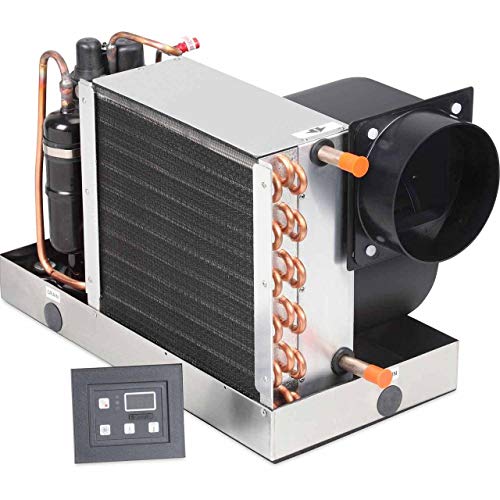
The ECD16K-HV retrofit kit by SEALAND provides a solution for upgrading existing hull-mounted cooling systems. While the product listing is a retrofit kit rather than a complete self-contained unit, it enables marine applications to modernize and improve efficiency and operation with a recognized marine brand. This option suits boats needing a refurbishment or upgrade to enhance performance without a full system replacement. Compatibility with 410A refrigerant is noted in its listing.
- Retrofit option for existing marine systems
- Compatible with standard 410A refrigerant
- Designed for marine durability and performance
TOSOT 16000 BTU GO Cool RV Air Conditioner

The TOSOT GoCool RV air conditioner provides 16,000 BTU of cooling and a built-in heat pump for RVs and campers, with smart Wi-Fi control via an app. While primarily marketed for RV use, this unit’s performance characteristics (cooling capacity, weather tolerance, and remote management) can make it a candidate for sailboat use in larger, well-ventilated cabins or as a transportable, vehicle-compatible cooling option. It supports a broad outdoor-operating range, making it adaptable to varying maritime climates when space and installation permit.
- 16,000 BTU cooling with integrated heat pump
- Smart Wi-Fi control for remote management
- Designed for versatile, mobile installations
Slkdrft Large Windowless Portable Air Conditioner

This large, windowless portable evaporative cooler operates as a three-in-one unit: a cooler, humidifier, and fan. It includes an 8-gallon water tank and can run in multiple modes with a 100-degree horizontal and 120-degree vertical oscillation. While not a traditional marine air conditioner, this model can provide relief in larger cabins or crew areas of sailboats where a windowless setup is practical and weight/space constraints drive choice. It ships with ice packs to boost cooling capacity and offers extended runtime in evaporative mode.
- Three-in-one evaporative cooling with humidification
- Large water tank for extended operation
- Wide air distribution for broad area coverage
FANCOLE Windowless Air Conditioner

The FANCOLE windowless evaporative cooler is designed for room, garage, or patio environments where a windowless installation is feasible. It offers 1-second cooling performance claims with a 2025 motor design and 24-hour cooling with a top-filling water tank. The unit ships with four ice packs and three-speed options to tailor cooling intensity. This model is best suited for cabins or areas where a traditional fixed air conditioner is impractical or unnecessary, offering portable, low-profile relief from heat in demanding marine settings when space prohibits larger units.
- Fast-cooling capability with advanced motor design
- Top-fill water tank for easy operation
- Ice packs for enhanced cooling performance
outequip RV 12V Rooftop A/C with Heater

This 12V rooftop air conditioner with a heater option is targeted at mobile living spaces, including RVs and similar setups. For sailboats, the 12V power compatibility and compact footprint may align with vessels that have consistent power systems and suitable mounting areas. The unit promises efficient cooling with a built-in heater, UV-stabilized materials, and rugged construction to withstand outdoor marine conditions when properly installed and bonded to a proper frame.
- 12V operation suitable for mobile vessels
- Integrated heater for shoulder seasons
- Durable, weather-resistant design
Buying Guide: Key considerations for sailboats
Choosing the right air conditioning solution for a sailboat involves more than cooling capacity. The following factors help balance comfort, energy use, and installation practicality on vessels:
- Space and layout: Measure cabin dimensions, headroom, and available mounting surfaces. Marine units and windowless coolers offer compact fits, but you must ensure proper ducting or placement for even airflow.
- Power supply and energy efficiency: Consider generator capacity, shore power availability, and battery automation for 12V or 24V systems. Look for models with energy-efficient refrigerants and low starting-current designs where possible.
- Corrosion resistance: Salt air demands corrosion-resistant coils, fans, and hardware. Titanium coils and marine-grade housings can extend service life in harsh environments.
- Noise levels: A quieter unit improves comfort below deck, especially during night operations. A sound cover or insulated cabinet can significantly reduce perceived noise.
- Heat pump capability: In cooler seasons, a built-in heat pump adds year-round usability, reducing the need for separate heating sources.
- Ventilation and air distribution: Ensure even cooling with properly positioned return air and supply vents. Windowless or compact evaporative units may supplement airflow where traditional AC cannot reach.
- Installation and maintenance: Self-contained marine systems simplify installation, but retrofits or retroft kits may be needed for older boats. Regular inspection of seals, condensate drainage, and electrical connections is essential.
- Cost of operation: Factor in running costs, energy consumption, and potential fuel use if generators power cooling on extended voyages.