Airborne microbes, odors, and moisture can impact indoor air quality. This article highlights antimicrobial coating options for ductwork and related sealing products that help inhibit microbial growth, promote cleaner HVAC surfaces, and improve system performance. The selections focus on products with active antimicrobial claims and compatible sealing solutions for various duct types and environments.
| Product | Brand | Key Benefit | Notes |
|---|---|---|---|
| PermaSafe Shield | PERMASAFE PROTECTIVE COATINGS | Up to 3 months of antimicrobial protection | Surface protectant for a wide range of materials |
| PermaSafe HVAC Solutions, All Surface Antimicrobial SHIELD | PermaSafe Surface & Air Sanitation System | Microbiostatic barrier on HVAC surfaces | EPA-registered; compatible with HVAC components |
| Red Devil 0841DX F-Seal 181 Duct Seal | Red Devil | Fiber-reinforced duct sealant for leak-free systems | UL 181 A-M & B-M certified |
| Red Devil 0846DS RD-DS 181 Acrylic Latex Duct Sealant | Red Devil | Permanently flexible duct sealant | Interior/exterior use |
| DP1010 Premium Grade Water Based Duct Sealant | Design Polymerics | Zero VOC water-based sealant | Premium grade duct sealing option |
PermaSafe Shield, 90-Day Antimicrobial Surface Protectant

PermaSafe Shield forms an invisible shield on treated surfaces, inhibiting the growth of microorganisms and helping prevent bacteria spread for up to three months. It is designed to keep indoor and outdoor surfaces—across a wide range of materials—free from mold, mildew, algae, and fungi for that period. The coating is waterproof and weatherproof and maintains its protective qualities through routine cleaning and maintenance.
Applications for ductwork include treated interior surfaces of ducts, registers, and related components where microbial control is desired without frequent reapplication. The product is positioned as a long-lasting preventive coating that can complement mechanical filtration and cleaning protocols in occupied spaces.
PermaSafe HVAC Solutions, All Surface Antimicrobial SHIELD
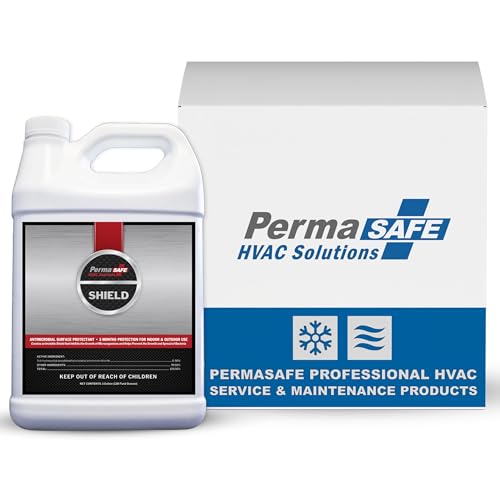
PermaSafe HVAC Solutions creates a durable microbiostatic, bacteriostatic, fungistatic, and algaestatic barrier on treated surfaces. It inhibits microbial growth and helps prevent the spread of bacteria for up to three months. EPA-registered and suitable for use on all HVAC components across different system types, this coating aims to support cleaner air and easier maintenance by reducing surface-level microbial activity.
For ductwork and related surfaces, this product can be applied to shared interior surfaces where a microbiological control layer is advantageous. As with any antimicrobial coating, it should be used as part of a broader air quality strategy that includes filtration, cleaning, and system design considerations.
Red Devil 0841DX F-Seal 181 Duct Seal
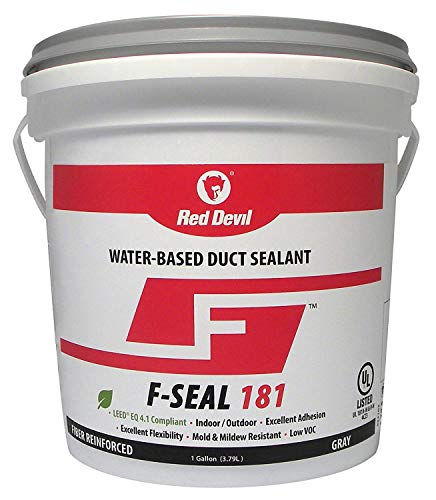
Red Devil F-Seal 181 is a fiber-reinforced water-based duct sealant designed for leak-free HVAC systems. It is suitable for a wide range of duct types, including metal, fiberglass, and flexible ducts, and provides reliable sealing to improve energy efficiency and performance. The product is formulated for both indoor and outdoor durability, making it adaptable to various installation environments.
While not antimicrobial in nature, robust sealing helps minimize moisture intrusion and microbial habitats by reducing leak paths where humidity could promote microbial growth. It complements antimicrobial coatings by addressing the physical integrity of ductwork.
Red Devil 0846DS RD-DS 181 Acrylic Latex Duct Sealant

Red Devil 0846DS RD-DS 181 Acrylic Latex Duct Sealant provides permanent flexibility with strong water resistance and is suitable for interior and exterior use. It delivers a tough bond on metal-to-metal connections and performs well in sealing joints within duct systems. As part of a sealing strategy, it helps control moisture and potential microbial growth in vulnerable areas by reducing moisture ingress.
Hardcast 304156 1 Gallon Duct Seal 321

Hardcast 304156 1 Gallon Duct Seal 321 is a water-based sealant used for sealing ductwork. The DS-321 Gray formulation is designed for reliable adhesion and durable performance. While not antimicrobial, a well-sealed system reduces moisture pathways that could support microbial growth inside ducts, supporting overall air quality and system efficiency.
DP1010 Premium Grade Water Based Duct Sealant

Design Polymerics DP1010 Premium Grade Water Based Duct Sealant is a zero-VOC option for sealing ductwork. It provides a clean, environmentally friendly method to seal joints and leaks. Like other sealants in this list, it does not claim antimicrobial properties, but it helps mitigate moisture intrusion, which can indirectly support a healthier duct environment when used as part of comprehensive air quality practices.
Buying Guide
Key considerations when choosing antimicrobial coatings or duct sealing solutions for ductwork include effectiveness, compatibility, and system impact. The following perspectives help frame decisions:
- Scope of antimicrobial protection: Look for products with explicit antimicrobial claims, documented performance durations, and EPA registrations where applicable. Consider whether you need surface protection, air-side protection, or both.
- Material compatibility: Ensure coatings are suitable for the materials in your ducts (metal, fiberglass, plastics, coatings, etc.). Some products are designed for all HVAC components, while others target specific substrates.
- Application and maintenance: Evaluate ease of application, required surface preparation, and reapplication intervals. Consider how coatings interact with routine cleaning and filter changes.
- Seal integrity: For duct sealing products, assess adhesion, elasticity, weather resistance, and suitability for interior vs. exterior use. A well-sealed system reduces moisture ingress that can promote microbial growth.
- Environmental and safety considerations: Zero-VOC formulations and low-toxicity options may be preferred in occupied spaces. Check safety data sheets and local regulations for compliance.
- System compatibility: Some antimicrobial coatings may affect sensor readings or sealants’ compatibility with downstream components. Consult manufacturer guidelines when combining products.
- Cost and maintenance planning: Weigh upfront product costs against replacement or reapplication frequency and potential HVAC maintenance reductions.
- Holistic air-quality approach: Combine antimicrobial coatings with high-efficiency filtration, regular duct cleaning, humidity control, and proper ventilation to maximize indoor air quality benefits.
In practice, selecting an antimicrobial coating for ductwork should align with the system’s design, use case, and environmental conditions. For critical environments such as healthcare facilities or moisture-prone spaces, prioritize EPA-registered antimicrobial products and professional consultation to ensure compatibility and effective long-term performance.