When keeping horses in a barn, maintaining a comfortable, safe environment is essential for health and performance. The right barn heater can provide steady warmth, reduce dampness, and extend living conditions during cold months. This article evaluates practical heaters designed for large spaces, focusing on reliability, energy efficiency, and ease of installation. Below you’ll find five vetted options that suit barns, stables, and other horse facilities, followed by a buyer’s guide to help you compare features and choose the best fit.
Summary of chosen products
| Product | Brand | Key Benefit |
|---|---|---|
| Shinic 2 Packs Electric Garage Heaters | Shinic | Dual quartz tubes, built-in halogen work light, 5 modes |
| Shinic Garage Heater | Shinic | Remote control, fast heating, 90° tilting |
| GiveBest Electric Wall Heater | GiveBest | WiFi and remote control, floor or wall mount, eco mode |
| Sundate Ceiling Electric Outdoor Heater | Sundate | Infrared, 1500W, weatherproof, remote and WiFi control |
| WORLEYX 600 Watt Large Range Heater | WORLEYX | Carbon fiber element, two-stage temperature control |
Shinic 2 Packs Electric Garage Heaters

The Shinic two-pack ceiling-mounted heaters deliver 1500W or 750W, with dual quartz tubes for rapid heating. They are designed for garages, workshops, and large rooms—common analogues to barn spaces that require quick warmth in zones. An integrated halogen work light adds practical visibility for stable chores. The 90-degree rotation allows directional heat toward feeding and tack areas, helping horses stay comfortable during cold periods. This setup supports spaces where ceiling mounting is feasible and traditional space heaters would be impractical.
Shinic Garage Heater With Remote
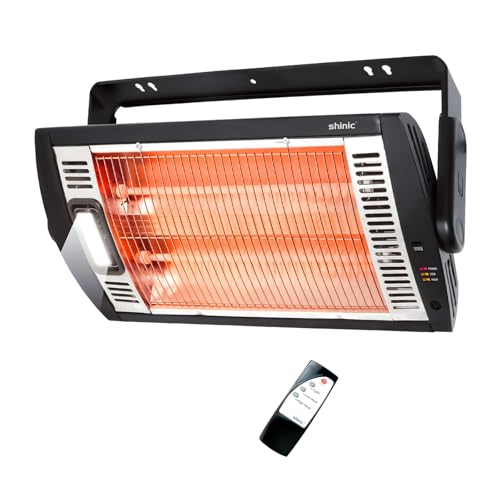
This Shinic model emphasizes remote operation and five heat modes, plus 90° tilting for precise heat targeting. It heats spaces up to 300 sq. ft. in a short time, which makes it suitable for smaller barn corners or partitioned stalls where horses frequent. The combination of rapid warming and adjustable heat direction can help owners create stepping zones of warmth near water troughs or feeding stations while keeping other areas cooler. It’s a solid option when you need flexible, quick-response heating in a barn environment.
GiveBest Electric Wall Heater

The GiveBest heater offers WiFi-enabled remote control and a choice of floor or wall mounting, facilitating installation in various barn areas such as tack rooms, feed rooms, or small offices within the barn complex. A precise thermostat and eco mode help conserve energy while maintaining a stable ambient temperature. This unit’s versatility makes it useful for barns needing a discreet, space-saving warming solution that blends with existing structures.
Sundate Ceiling Electric Outdoor Heater

This 1500W infrared ceiling heater is designed for both indoor and outdoor use, with weather resistance (IP65) for barns exposed to the elements. It includes remote and WiFi controls and can be mounted on walls or ceilings to direct warmth toward activity areas like horse walkways, paddocks, or outdoor stalls during colder days. Its durable construction makes it a practical choice for sheltered barns or feed barns where reliable outdoor heating is needed in the shoulder seasons.
WORLEYX 600 Watt Large Range Heater

This 600W heat lamp for coops and livestock features a professional carbon fiber heating element and two-stage temperature control. While marketed for poultry, its robust aluminum construction and evenly distributed heat can help maintain localized warmth in smaller barn zones—such as a quiet corner for horses to rest during cold snaps or near walls where drafts are common. It’s suitable as a supplementary heater rather than a primary whole-barn solution.
Buying Guide: Key Purchase Considerations And Comparisons
When selecting barn heaters for horses, consider space, safety, energy use, and installation logistics. Start by assessing the barn’s square footage, ceiling height, and insulation quality. Larger, well-insulated spaces may benefit from higher-output models with ceiling or wall mounting to maximize heat distribution without occupying floor space.
- Heat Output And Coverage: Match wattage to area; avoid undersized units that run constantly without delivering even warmth. For most barns, 1500W ceiling-mounted heaters or multiple smaller units placed strategically provide consistent comfort.
- Directionality And Zoning: Look for heaters with adjustable angles or mountable options so you can heat high-traffic areas (feeding, watering) while minimizing heat loss in unused zones.
- Energy Efficiency: Features like programmable thermostats, ECO modes, and WiFi or remote control help manage power consumption and maintain stable barn temperatures more efficiently.
- Durability And Weather Resistance: For outdoor or partially sheltered barns, select units with rust-proof housings, IP ratings, and rugged mounting hardware to withstand dust, moisture, and temperature fluctuations.
- Safety: Choose units with overheat protection, stable mounting systems, and safe distance guidelines from hay, bedding, and animals. In barns, plan for proper electrical outlets and cable management to avoid tripping hazards.
- Installation Flexibility: Ceiling, wall, and floor placement options increase adaptability. Consider whether you prefer plug-in solutions or hardwired installations for a long-term setup.
- Maintenance: Look for heaters with simple filterless designs or easy-clean surfaces, and check for available replacement parts or remote controls, as barns can be dusty environments.
In evaluating the five options above, barn owners should prioritize models that allow precise heat targeting, offer remote control or smart features for routine pre-warming before feeding, and provide robust construction suitable for stable conditions. While some units are designed for garages or workshops, their heat outputs and mounting flexibility can still be applicable to barn rooms, tie-stalls, or storage areas adjacent to horse spaces. Combining two or more heaters may provide the most even warmth across larger barns, reducing cold drafts and improving overall animal comfort during winter months.