Finding the right heating solution for in-floor systems centers on compatibility, ease of installation, and reliable performance. This guide highlights five top options that suit a range of spaces—from small bathrooms to larger living areas. Each product is evaluated for best-for scenarios, installation considerations, and practical limitations to help you choose with confidence. Suitable buyers include homeowners planning DIY floor heat, remodelers upgrading bath or kitchen floors, and builders seeking dependable underfoot comfort.
Below is a quick comparison table for the featured products to help you compare key aspects at a glance.
| Product | Best For | Coverage (sq ft) | Key Benefit | Limitations |
|---|---|---|---|---|
| LuxHeat 90sqft Floor Heating Cable Kit | Medium rooms, tile or laminate | 90 | Programmable thermostat, sensor, alarm | Knows should be embedded in leveling compound |
| 30 sqft Floor Heating Cable Set | Small rooms, irregular layouts | 30 | Flexible, loose-lay design | Limited to 120V, is a mat-free option |
| LuxHeat 100sqft Floor Heating Cable Kit | Mid-to-large spaces | 100 | Same LuxHeat features, larger area | Higher installation area requires planning |
| LuxHeat 40sqft Electric Radiant System | Bathrooms, small kitchens | 40 | Includes uncoupling membrane for tiles | More components, careful install needed |
| 10 sqft Heatwave Deluxe In-Floor System | Small baths, entryways | 10 | WiFi thermostat for smart control | Small footprint; limited space coverage |
LuxHeat 90sqft Floor Heating Cable Kit

Best for larger bathrooms or living areas where tile or laminate flooring is used. This 120V kit includes 90 square feet of heating cable, a programmable UDG4 touchscreen thermostat with GFCI, an alarm, a floor sensor, and strapping/guides. The kit supports individual room control for targeted comfort. Best for remodels where a complete electric floor solution is desired with strong monitoring during installation. Caution: Heating wires must be embedded in self-leveling underlayment or mortar; do not cut or shorten heater wire.
30 sqft Floor Heating Cable Set
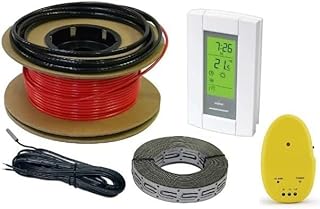
Best for small rooms or irregularly shaped spaces where a flexible, loose-lay cable design can snake around plumbing or fixtures. The kit includes 30 square feet of 120V heating cable and a 7-day programmable thermostat with a floor sensor. It offers simple setup with minimal mats and is suitable for bathroom vanities or compact kitchens. Limitation: Coverage scales with spacing; verify room layout to meet heating goals.
LuxHeat 100sqft Floor Heating Cable Kit

Best for mid-to-large spaces where uniform heat distribution is important. This 100-square-foot kit includes a programmable thermostat with GFCI, a floor sensor, alarm, and strapping/guides. The LuxHeat line emphasizes design flexibility and a 25-year warranty, making it a strong choice for projects prioritizing long-term reliability and room-by-room control. Caution: Wires must be embedded in a leveling compound—do not cut the heater wire.
LuxHeat 40sqft Electric Radiant Floor System

Best for bathrooms or small kitchens where tile is common. This kit adds a Prova Flex-Heat uncoupling membrane for crack prevention and waterproofing, along with a floor sensor and alarm. It uses a touchscreen thermostat with GFCI and offers a 7-day program. Choose this if you want a three-in-one underlayment solution, but be mindful of membrane installation requirements and the need to cover wires with a leveling compound.
10 sqft Heatwave Deluxe In-Floor System

Best for very small spaces like a compact bathroom or entryway where smart control is valued. This 10-square-foot mat delivers 120V operation with a 15-foot cold lead and a WiFi-enabled thermostat that can be controlled via app. The system emphasizes energy efficiency and ease of use for limited areas. Limitation: The small footprint may not meet broader heating needs in larger rooms.
Buying Guide
What should I consider when choosing an in-floor heating system?
- Room size and layout: Choose a kit with appropriate coverage; irregular shapes benefit from loose-lay cables.
- Installation method: Mats vs. loose-lay cables; uncoupling membranes add crack prevention and moisture protection in tile floors.
- Thermostat features: Look for programmable schedules, floor sensing, and safety protections (GFCI, Class A ratings).
- Power requirements: Confirm voltage (120V is common) and circuit capacity to avoid overloading existing circuits.
- Flooring compatibility: Some systems require leveling compounds or underlayment; tiles, laminates, and vinyl have different prep needs.
- Warranty and support: Longer warranties and reputable brands help with long-term reliability and service.
How to plan your installation
- Map the heated zones by room and subarea to prevent overheating in small spaces.
- Embed or mount heating elements according to manufacturer guidelines—never cut wires unless explicitly allowed.
- Test electrical connections with a qualified professional before final flooring installation.
- Choose a thermostat with floor sensing for accurate temperature control and comfort.
FAQ
- Q: What is the typical coverage for these in-floor kits? A: Coverage ranges from about 10 to 100+ square feet per kit, depending on the model, with most designed for specific zones or whole rooms.
- Q: Do these systems require professional installation? A: Some installations can be DIY with careful adherence to instructions, while others are best handled by a licensed electrician, especially when wiring and thermostats are involved.
- Q: Can I lay these under tile or laminate? A: Yes, many systems are designed for tile, laminate, or vinyl, but installation often requires a leveling compound or uncoupling membrane for tile floors.
- Q: How do I control energy use? A: Programmable or WiFi-connected thermostats with floor sensing help maintain comfort while minimizing energy use. Set schedules to heat only occupied times.
- Q: What safety features are important? A: Look for GFCI protection, Class A electrical ratings, and alarms to indicate faults during installation or operation.
- Q: How durable are these systems? A: Reputable brands offer extended warranties and robust warranties for performance, but follow installation guidelines to ensure lasting results.