Looking for the best electric tankless water heater to deliver instant hot water without a bulky tank? This guide compares five compact models that fit under sinks, in apartments, or in RV setups. Each option targets different needs—from low-flow setups to multi-fixture performance—so you can choose based on your hot-water demands, space, and electrical setup.
The following table summarizes the five selected products, highlighting ideal buyers and key strengths. Use it as a quick reference when deciding which unit to open in detail below.
| Product | Best For | Why It Stands Out |
|---|---|---|
| 110V Tankless Water Heater Electric, 3000W | Space‑constrained kitchens and baths | Low-profile, built‑in display, quick heat with compact design |
| Rheem 18kW 240V Tankless | High hot-water demand homes | Smart modulation, up to ~4.4 GPM with durable elements |
| Rheem 11kW Multi Fixture Tankless | Smaller homes with multiple fixtures | Compact size with up to ~2.68 GPM |
| Westinghouse 14kW 240V, Wifi | Smart-home enthusiasts | Wifi connectivity with ETL, reliable performance |
| 14kW Tankless 240V for Sink & Shower | Versatile under-sink or wall-mount | High efficiency, instant hot water for 1–2 points |
110V Tankless Water Heater Electric, 3000W
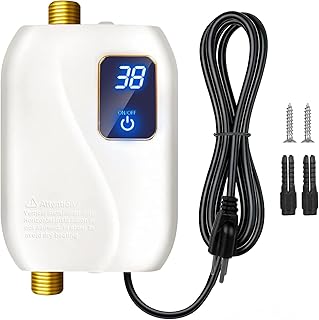
This 110‑volt unit is designed for compact spaces like under-sink installations in kitchens or bathrooms. It delivers rapid on-demand hot water with a 3000W heater core and a LED display for easy status checks. Best for users who need a simple, space-saving heater for low to moderate hot-water needs.
- Best for: small apartments, RVs, or camper setups with limited electrical loads.
- Why chosen: compact form factor and straightforward control suit limited spaces where quick warmth matters.
- Caution: 82°F rise at very low flow means higher flows may require more power or a larger unit.
Rheem 18kW 240V Tankless Electric Water Heater, Gray

This Rheem model uses external digital thermostatic control with an LED display and self-modulation to match hot-water demand. It employs durable copper immersion elements and is field serviceable. Capable of delivering up to 4.4 GPM, it is well-suited for moderate to higher hot-water needs in homes with a single installation point or multiple fixtures.
- Best for: households needing strong performance with adaptable power control.
- Why chosen: reliable modulation supports variable flow without oversizing the circuit.
- Caution: verify electrical requirements and proper installation by a professional to avoid overload.
Rheem 11kW Multi Fixture Tankless Electric Water Heater – 240V

This unit is sized for smaller homes with multiple fixtures but without high simultaneous demand. With up to 2.68 GPM, it offers efficient on‑demand hot water in compact spaces. It’s a practical choice where one to two points of use are typical at once.
- Best for: smaller homes or apartments needing multiple fixtures but limited capacity.
- Why chosen: balance of compact size and practical GPM for modest usage.
- Caution: ensure electrical supply matches the 240V, 11kW requirement before purchase.
Westinghouse 14kW 240V Tankless Water Heater

This 14kW unit adds Wi‑Fi capability and ETL certification, appealing to tech‑savvy buyers who want remote monitoring. It provides substantial heating capacity for simultaneous use at multiple fixtures, offering reliable on-demand hot water for kitchens and baths. It can be a solid fit where smart features matter and space is at a premium.
- Best for: homeowners who want smart features and dependable throughput.
- Why chosen: Wi‑Fi monitoring and strong thermal efficiency help manage heat delivery.
- Caution: ensure a compatible 240V circuit and home network setup for Wi‑Fi control.
14kW Tankless Water Heater Electric 240V, Sink & Shower
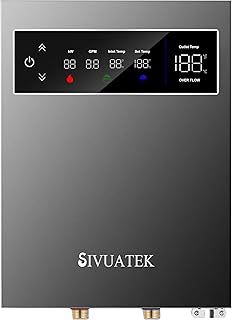
This model emphasizes energy efficiency and instant hot water delivery, with 14kW heating power and up to 99.8% thermal efficiency. It’s designed for under-sink or wall-mount installation and targets 1–2 simultaneous usage points. By eliminating standby losses, it can lower energy costs compared with traditional heaters.
- Best for: homes needing flexible installation and solid efficiency for 1–2 outlets.
- Why chosen: high efficiency and quick hot-water delivery suit shared kitchen/bath usage.
- Caution: requires a dedicated 60-amp circuit breaker; verify plumbing connections before install.
Buying Guide: How To Choose The Right Electric Tankless Water Heater
- Flow rate needs: Determine gallons per minute (GPM) for your hot-water fixtures. Multi-fixture setups demand higher kW units to maintain temperature.
- Electrical requirements: Check available amperage, service panel capacity, and voltage. Some units need 240V circuits and higher amperage; smaller homes may rely on 110V options but with lower GPM.
- Space and installation: Under-sink and compact wall-mount units save space. Consider whether your installation point supports direct plumbing and electrical access.
- Control features: Digital displays, self-modulation, and remote monitoring add convenience and energy management. Wi‑Fi or app features suit smart-home enthusiasts.
- Durability and materials: Copper heating elements and robust housings improve longevity. Look for models with protective features like dry-boil protection and leakage safeguards.
- Safety: Verify IP rating, water and electricity isolation, and overheating protection. Ensure proper venting (where required) and professional installation for high-power units.
Frequently Asked Questions
- What size tankless water heater do I need for a single bathroom? Answer: A unit offering 2–3 GPM often suffices for one bathroom, but consider simultaneous use like a sink and shower.
- Can I install a tankless water heater myself? Answer: Some models allow self-installation, but high-power 240V units typically require a licensed electrician and proper plumbing work.
- Are electric tankless heaters energy efficient? Answer: Yes, many models have high thermal efficiency and eliminate standby heat loss, reducing overall energy use when properly sized.
- Do all tankless heaters work with cold-water temperatures? Answer: Performance depends on incoming water temperature and the unit’s heating capacity; very cold climates may need higher kW units.
- What maintenance do these units require? Answer: Regular inspection of electrical connections and flushing to remove mineral buildup helps maintain efficiency and longevity.
- Is Wi‑Fi connectivity valuable for a tankless heater? Answer: It’s helpful for monitoring status and control, especially in smart-home setups, but not essential for basic hot-water delivery.