Direct fired water heaters provide quick, on-demand hot water for RVs, cabins, or compact living spaces. This guide highlights five reliable options and explains who each is best for. The selections favor durability, easy maintenance, and compatibility with generator or off-grid power. Ideal buyers include full-time RV travelers, weekend campers, small households, and anyone replacing a residential-style unit in tight spaces. The table below compares key features at a glance.
| Product | Tank Size / Type | Power Options | Best For |
|---|---|---|---|
| Suburban Advantage SW10DE | 10 gallon porcelain-lined steel | Gas DSI with optional electric element | Busy RV households needing reliable 10 gal capacity |
| Suburban SW6DE | 6 gallon porcelain-lined steel | Gas DSI with optional electric element | Compact RVs needing quick hot water |
| Suburban SAW6D Direct Fit | 6 gallon steel tank | DSI (and no-modification direct fit) | Upgrade without alterations |
| APUS 27kW Electric Tankless | Tankless, whole-home | Electric, self-modulating | Larger homes needing continuous hot water |
| 14kW Tankless Electric | Tankless, compact | Electric, self-modulating | Smaller spaces needing instant hot water |
Suburban Advantage RV Tank Water Heater SW10DE

The Suburban SW10DE is a 10-gallon porcelain-lined steel tank water heater with direct spark ignition (DSI) and an optional electric element. This design mirrors residential durability and aims to deliver dependable hot water in RV environments. Best for full-time RV travelers or families needing more hot water per cycle, the 10-gallon capacity reduces frequent cycling. A replaceable anode rod provides corrosion protection and doubles as a drain for maintenance, supporting longevity. Choose this if you want flexibility to heat via gas or electric power at camp or with a generator. Caution: electric element use requires appropriate electrical supply.
Suburban SW6DE 6-Gallon RV Water Heater

The Suburban SW6DE offers a compact 6-gallon porcelain-lined steel tank with DSI and optional electric heating. Its replaceable anode rod adds corrosion protection and doubles as a drain, simplifying routine maintenance. It is best for smaller RVs or campers needing quick, onboard hot water with a reliable, residential-style build. The 6-gallon size minimizes weight and space usage while still delivering adequate hot water for typical RV showers. Limitation: smaller capacity may require more frequent heating during high demand.
Suburban SAW6D Direct Fit 6-Gallon RV Water Heater

The Suburban SAW6D Direct Fit is designed for effortless replacement of 6-gallon aluminum tanks without RV sidewall modifications. It features a porcelain-lined steel tank for better longevity and a straightforward installation. Best for owners seeking a no-fuss upgrade path that preserves exterior aesthetics and avoids major interior modifications. Best for RVs where existing plumbing and space align with standard 6-gallon configurations. Advantage: direct-fit compatibility reduces installation complexity. Caution: ensure electrical supply and mounting space meet unit requirements.
APUS 27kW Electric Tankless Water Heater

This 27kW electric tankless unit provides up to 6.5 GPM, suitable for 3–4 simultaneous uses like showers, sinks, and laundry. It features digital controls with 1°F adjustability and a memory function for preferred settings. Self-modulating operation helps match power to demand, avoiding standby tank losses since there is no storage tank. Best for larger homes or multi-point needs where continuous hot water is a priority. Limitation: high electrical demand requires robust electrical service and proper wiring.
14kW Tankless Electric Water Heater
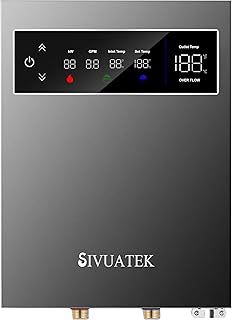
This 14kW electric tankless model offers instant heating with a compact footprint and LED display. It provides precise inlet/outlet temperature data and GPM/kW readouts for monitoring. Ideal for small spaces that require on-demand hot water with minimal standby. Better for bathrooms or kitchens where high efficiency and space savings matter most. Caution: lower GPM at cooler inlet temps may affect simultaneous usage.
Buying Guide: How to Choose a Direct Fired Water Heater
What capacity do you need?
Assess your typical hot-water demand per usage cycle. RVs and small homes often benefit from 6–10 gallon tanks for steady showers, sinks, and minimal laundry. Tankless options offer infinite hot water but require higher electrical or gas infrastructure.
What power source is available?
Gas direct-fired heaters with DSI work well in off-grid scenarios with propane or natural gas. Electric tankless models require robust electrical service and panel capacity. Consider generator compatibility if you travel to remote locations.
Is installation easy or requires modifications?
Direct-fit or replacement models minimize modifications. If you are upgrading from an aluminum 6-gallon unit, look for porcelain-lined steel tanks for longer life and easier maintenance.
What about maintenance and durability?
Models with replaceable anode rods provide corrosion protection and simplify drainage. Porcelain lining helps resist tank corrosion and extends lifespan. Verify ease of access for routine servicing and drainage.
What are space and mounting considerations?
Compact 6-gallon units are suitable for small RVs, while 10-gallon variants fit mid-sized setups. Tankless systems save space but require proper venting (gas) or electrical routing (electric).
Reliability and compatibility
Choose models with proven construction, straightforward maintenance, and widely available replacement parts. Direct-fit replacements reduce installation complexity and preserve exterior appearance in RVs.
FAQ
- What does direct fired mean? Direct fired water heaters heat water directly with combustion or electric elements without a storage tank relying on external heat sources.
- Do I need electricity for all direct-fired heaters? Gas-fired units often do not require electricity for operation, but some models with DSI or electric elements do depend on power.
- Which is better for an RV, gas or electric? Gas-fired and direct-fit options are common in RVs for independence from shore power; electric tankless units are best where electrical service is reliable.
- How do I maintain a porcelain-lined tank? Regularly inspect the anode rod, drain the tank per manufacturer guidance, and check for mineral buildup to prevent corrosion.
- Are tankless options more expensive to install? Tankless systems often require higher upfront electrical or gas infrastructure but save space and avoid tank recovery time.
- Can I replace a tank water heater with a tankless model in an RV? It depends on space, venting, electrical/gas capacity, and manufacturer compatibility; a direct-fit replacement is preferable when available.