The best dog house heat lamps provide safe, fast, and energy-efficient warmth for nearby kennels, cages, and coops. This guide helps American buyers choose the right heater for different pets and spaces. Top picks include compact wall-mounted units, thermostatically controlled lamps, and chew-resistant cords for playful dogs. Each option is evaluated for safety, heating efficiency, and suitability for various setups.
| Product | Best For | Key Feature | Limitations |
|---|---|---|---|
| TURBRO Neighborhood Dog House Heater | Small to medium kennels; outdoor shelters | 400W heating with internal fan; IPX4 controller | Requires external mounting; 100 ft³ coverage estimate |
| Dreyoo 600/300W Dog House Heater | Medium spaces; rooms with controlled heat | Thermostat-controlled; 600W max | Heats up to 105 sq ft; relies on wall placement |
| GIFANK Chicken Coop Heater Lamp | Coops, small animal housing | Two-level temperature; UL-certified cord | Primarily designed for poultry but adaptable |
| LUCKY HERP 150W Ceramic Heat Emitter (2-Pack) | Nighttime warmth without light | No light emission; standard E26 base | Lower wattage per unit; best for smaller or supplemental warmth |
| briidea 400W Dog House Heater | Small to medium spaces; quick heat | PTC technology; 3-second heat; chew-resistant cord | Requires space for fan distribution |
Buyer profile by product: homeowners with wood or metal dog houses; people who need a thermostat-controlled unit; caretakers seeking chew-proof cords; pet owners who value rapid warmth with safety protections; and those who want a low-noise option for overnight use. The following sections compare five top options to help you decide quickly.
TURBRO Neighborhood Dog House Heater

- Features: 400W heating with built-in fan circulates warm air for up to 100 ft³. Low (200W) or high (400W) heating levels. 9.8 ft chew-proof power cord. IPX4 waterproof controller. Built-in overheating protection. UL tested.
Best for: small to medium dog houses or outdoor kennels that need quick warmth with external control. The external controller and UL testing support safer exterior setup. Limitations: Coverage is approximate and depends on enclosure tightness; ensure proper mounting and ventilation.
Dreyoo 600/300W Dog House Heater
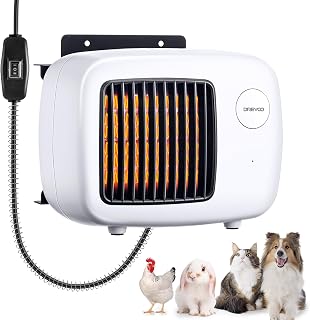
- Features: 300W/600W thermostatic control; heats up to 105 sq ft; 6 ft anti-chew cord; overheating protection; compact 6.7 x 6.3 x 4.7 inches.
Best for: spaces where a thermostat is desired to maintain a set temperature. Limitations: Requires stable wall mounting and may need airflow planning for even distribution.
GIFANK Chicken Coop Heater Lamp

- Features: UL-certified, two-level temperature adjustment; stainless steel heat element and waterproof body; designed for coops and small animals; anti-scald casing; stainless steel mesh cover.
Best for: chicken coops or small animal houses needing safe, level-controlled warmth. Limitations: Primarily marketed for poultry; suitability for dogs depends on enclosure layout and heat distribution.
LUCKY HERP Ceramic Heat Emitter (2-Pack)

- Features: 2-pack ceramic emitters with no light emission; rapid heating; durable ceramic material; standard E26 base; rated for long life (up to 10,000 hours).
Best for: nighttime warmth without light disturbance, suitable as supplementary heat for small areas. Limitations: Lower wattage per unit means larger spaces may need multiple units.
briidea 400W Dog House Heater

- Features: 400W with PTC heating for instant warmth; heats up to 120 ft³; adjustable temperature range 32–122℉; 11.5 ft anti-chew cord; dual ball-bearing fan.
Best for: larger dog houses or coops needing rapid warmth and even distribution. Limitations: The unit relies on fan-assisted distribution; ensure proper clearance around the heater for safety.
Buying Guide
Key considerations help tailor a heater to your dog’s needs and space:
- Space size and insulation: Measure the dog house or kennel volume and assess insulation. Smaller, well-insulated spaces may need lower wattage, while open or uninsulated areas benefit from higher wattage or thermostatic control.
- Thermostat control: Consider units with thermostats for automatic temperature maintenance. This reduces energy use and keeps pets comfortable without manual adjustments.
- Safety features: Look for chew-resistant cords, overheating protection, and waterproof or weatherproof housings if used outdoors. UL or equivalent certification adds assurance.
- Heat distribution: Models with built-in fans or rapid-heating elements provide more even warmth. If you have multiple pets or larger spaces, distribution matters.
- Light emission: If nighttime visibility matters, avoid bulbs that emit light. Ceramic emitters provide heat without light for peaceful sleep.
- Durability and cords: Chew-resistant cords and rugged housings reduce damage from curious pets. Longer cords offer flexibility for placement away from water or bedding.
Practical setup tips
- Mount heaters at a safe distance from bedding to prevent overheating directly on the animal.
- Seal gaps around the dog house door to minimize heat loss and improve efficiency.
- Combine a heater with proper ventilation to prevent overheating and moisture buildup.
- Regularly inspect cords and flame-resistant materials; replace damaged units promptly.
FAQs
- What wattage should I choose for a small dog house? Answer: A heater in the 200–400W range is typically sufficient for compact, well-insulated spaces, with thermostatic control preferred for stability.
- Are heat lamps safe for dogs? Answer: When used with proper protective housing, correct distance, and temperature control, heat lamps can be safe for dogs. Always follow manufacturer guidelines.
- Do I need a thermostat for cold weather? Answer: A thermostat helps maintain a consistent temperature and can prevent overheating, especially in fluctuating outdoor conditions.
- Is a chew-proof cord essential? Answer: For households with playful dogs, chew-resistant cords reduce the risk of damage and electrical hazards.
- Should I use a heat lamp versus a ceramic emitter? Answer: Ceramic emitters provide warmth without light, which is beneficial for nighttime use. Heat lamps offer faster heating and light, which some households prefer.
- Can these units heat large spaces? Answer: Most dog house heaters are designed for small to medium volumes (up to about 120 ft³). For larger areas, multiple heaters or higher-capacity units may be necessary.