When choosing an efficient gas heater for your home, look for models that balance space heating, safety, and operating cost. This guide highlights five top options, each suited to different spaces and needs—from compact wall-mounted units to larger ventless setups. Whether you want primary heat for a living area, supplemental heat for a room, or a dependable whole-home solution, these selections help you compare performance, suitability, and potential limitations at a glance.
Summary of selected products
| Product | Best For | Notes |
|---|---|---|
| Mr. Heater 30,000 BTU Vent Free Blue Flame Natural Gas Heater | Medium-to-large living spaces | Vent-free, battery ignition |
| Duluth Forge Ventless Natural Gas Stove – 25,000 BTU | Cozy living areas with decorative flame | Thermostat control, dual flame display |
| ProCom MN300HPA-B 30,000 BTU Ventless Infrared Plaque Heater | Open floor plans, no electrical dependency | Piezo ignition, three heat settings |
| MIZUDO Tankless Water Heater (gas) 199,000 BTU | Whole-house hot water with on-demand efficiency | Not for room heating; supports multiple fixtures |
| Comfort Glow 17,000 BTU Direct Vent Wall Heater | Small to mid-size rooms, space-efficient | Thermostatic control, safety features |
Mr. Heater 30,000 BTU Vent Free Blue Flame Natural Gas Heater

Product overview: This vent-free heater delivers up to 30,000 BTU per hour and can heat spaces up to about 1,000 square feet. It uses battery-operated electronic ignition, offering reliable start-up without external power. Best for medium rooms where electric-free operation is desirable during heating seasons.
Who it’s best for: Homeowners needing strong room warming without venting, especially in spaces up to a thousand square feet. It’s well-suited for basements, open-plan living areas, or detached spaces where venting isn’t practical.
Why selected: The unit’s high output, compact footprint, and battery ignition support dependable heating in areas where electrical reliability may be inconsistent. The vent-free design simplifies installation compared to vented units.
Limitations to consider: As a vent-free model, ensure adequate oxygen supply and proper room sizing; longer operation in poorly insulated spaces may require supplemental heating. Regular maintenance of the gas connections is advised for safety.
Duluth Forge Ventless Natural Gas Stove – 25,000 BTU

Product overview: The 25,000 BTU model provides heat to about 1,100 square feet and includes thermostat control for automatic cycling to maintain a chosen temperature. The dual burner creates a realistic flame display around hand-painted logs, with a large viewing area.
Who it’s best for: Those who want robust heat with a decorative flame ambiance in open living spaces or family rooms. Ideal for homeowners who value visual warmth in addition to warmth output.
Why selected: Thermostat-controlled heat helps maintain comfort without manual adjustments, while the dual flame and visible flame area enhance atmosphere in living rooms or dens.
Limitations to consider: Ventless operation requires proper room ventilation and appropriate clearance. This unit is designed for indoor use and relies on natural gas supply for heat generation.
ProCom MN300HPA-B Ventless Infrared Plaque Heater
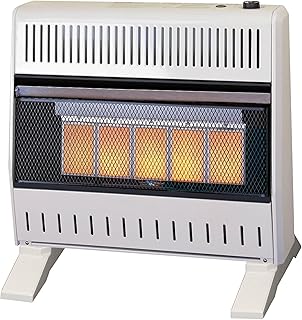
Product overview: This 30,000 BTU infrared heater heats up to 1,200 square feet and operates off natural gas with no electricity required, aided by a Piezo ignition. It includes three manual heat settings and an oxygen depletion sensor with automatic shut-off for safety.
Who it’s best for: Large or open-plan spaces where electricity is unreliable or unavailable, and where on-demand heat is desired with simple manual controls.
Why selected: Infrared heating provides efficient warmth with quick response times. The oxygen depletion sensor enhances safety in enclosed rooms.
Limitations to consider: It requires a natural gas supply and may have higher installation considerations than smaller room heaters. The manual settings require user attention for optimal comfort adjustments.
MIZUDO Tankless Gas Water Heater — 199,000 BTU

Product overview: This is a tankless water heater with a high heating input of 199,000 BTU and a flow rate of up to 10.3 GPM, designed to supply hot water for multiple fixtures across a home. It features WiFi and app control and CSA certification for indoor installation, with wide temperature control up to 149°F.
Who it’s best for: Households seeking on-demand hot water across several bathrooms and kitchens without a traditional water tank. Suitable for busy homes with simultaneous hot water needs.
Why selected: On-demand hot water reduces standby energy loss and can improve overall home efficiency when replacing older tank systems.
Limitations to consider: This unit is a water heater, not a space heater, so its heating capabilities apply to water only. Complex installation may require professional plumbing integration and venting considerations.
Comfort Glow 17,000 BTU Direct Vent Wall Heater

Product overview: This direct vent wall heater delivers 17,000 BTU and heats spaces up to about 500 square feet. It uses a sealed burn system with electronic ignition and safety pilot, plus a built-in pressure regulator to shut off gas flow if the pilot is extinguished.
Who it’s best for: Small to mid-sized rooms where a compact, wall-mounted heater is preferred, and safety features are a priority for families with children or pets.
Why selected: Direct vent installation saves floor space, while the safety-focused design helps prevent accidental gas leaks or unheated rooms.
Limitations to consider: Lower BTU output compared to larger units, making it less suitable for larger living areas or very cold spaces without supplemental heating.”
>
Buying Guide: How to Choose Efficient Gas Heaters For Home
What space size should I heat with a gas heater?
Match the heater’s BTU rating to your room size. Larger spaces may require 20,000–30,000 BTU units, while smaller rooms can be adequately heated by 10,000–17,000 BTU models. Ventless and direct-vent systems have different installation and ventilation needs—consider room air quality and local codes.
Do I need venting for a gas heater?
Ventless (unvented) models release combustion byproducts into the room, so ensure proper room size, ventilation, and carbon monoxide safety considerations. Direct-vent designs exhaust outdoors using a sealed vent and draw in outdoor air, which can be safer for some homes.
What about ignition and electrical needs?
Some units use battery or Piezo ignition and require no electricity, while others rely on electrical power for ignition or controls. In areas with frequent power outages, a battery-ignition or manual option can be advantageous.
How important are safety features?
Look for oxygen depletion sensors, automatic shut-off, sealed combustion, and proper clearances. Safety features reduce the risk of gas leaks or unsafe combustion in occupied living spaces.
Is a tankless water heater relevant to space heating?
Tankless gas water heaters provide on-demand hot water with high efficiency and can reduce standby energy loss. They are not space heaters; consider them as complementary system upgrades when deploying efficient home heating and hot water strategies.
Accessibility and installation considerations
Wall-mounted or compact units free up floor space, but installation often requires professional assessment of venting, gas lines, and clearance from walls or furniture. Vent-free units may be easier to install in some spaces but require adequate ventilation and room size considerations.
Frequently Asked Questions
- What is the most efficient gas heater for a large living room?
- Can vent-free gas heaters be used in bedrooms?
- Do I need professional installation for gas heaters?
- How do I maintain safety with gas heaters?
- Is a tankless water heater useful for home efficiency?
- Which heater is best for small apartments?
Ventless models with high BTU outputs (around 25,000–30,000 BTU) are typically better suited for larger spaces, provided there is adequate room ventilation and insulation.
Yes, but ensure proper ventilation, CO detectors, and compliance with local codes. Direct-vent models may be a safer alternative for bedrooms due to outdoor exhaust and controlled air intake.
Most gas heaters require professional installation to ensure safe gas connections, venting, and electrical integration if needed. Always follow manufacturer guidelines and local codes.
Regularly check for gas leaks, ensure proper ventilation, test CO detectors, and follow maintenance schedules. Use units with oxygen depletion sensors and automatic shut-off when possible.
Yes, when replacing traditional tank water heaters, a gas tankless system can reduce standby energy and provide on-demand hot water for multiple fixtures.
A compact direct-vent wall heater or a smaller ventless unit with thermostat control is often best for apartments due to space efficiency and simpler ventilation requirements.