The best option depends on room size, wattage needs, and installation preferences. This guide highlights five reliable electric baseboard heaters that suit different spaces and budgets, with clear pros, best-for notes, and practical cautions.
Summary of chosen products:
Small rooms or zones
| Product | Best For | Key Benefit | Notes |
|---|---|---|---|
| Cadet F Series 24″ Electric Baseboard Heater | Compact, universal wiring | Low wattage options | |
| Cadet F Series 36″ Electric Baseboard Heater | Medium rooms needing steady heat | Multi-watt (750/563 W) with easy install | Convection for even air flow |
| Cadet F Series 72 in. Electric Baseboard Heater (6F1500-1W) | Large spaces or rooms needing sustained warmth | High wattage, steady convection | Standard 120 V supply |
| Comfort Zone CZ600 Electric Baseboard Heater | Bedrooms or offices needing quiet operation | Two heat settings, adjustable thermostat | Safety features and stay-cool body |
| Cadet Ul 120 V/4.17 A White 30″ 500 W | Space-efficient zones or living areas | Easy floor mounting, remote control | Includes two units for flexible placement |
Below you’ll find detailed product sections with clear, comparison-friendly language to help you decide which heater best fits your space and usage needs.
Cadet F Series 24″ Electric Baseboard Heater
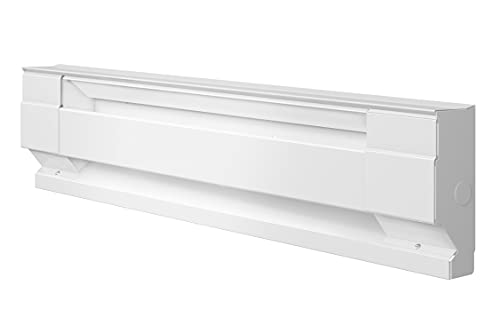
Best for small rooms or zones that require discreet heating. This Cadet 24-inch model offers multiple electrical options and a clean white finish that blends with common decors. It taps into 240/208-volt supply with 350/262 watts output, suitable for compact spaces where steady warmth is needed. Best for: apartments, dens, or bedrooms where a low-profile heater is preferred.
Why selected: Compact size and simple wiring make installation straightforward, and its steel body supports durable, quiet convection heating.
Caution: Check available electrical service in the room; higher-w wattage requires appropriate panel capacity.
Cadet F Series 36″ Electric Baseboard Heater
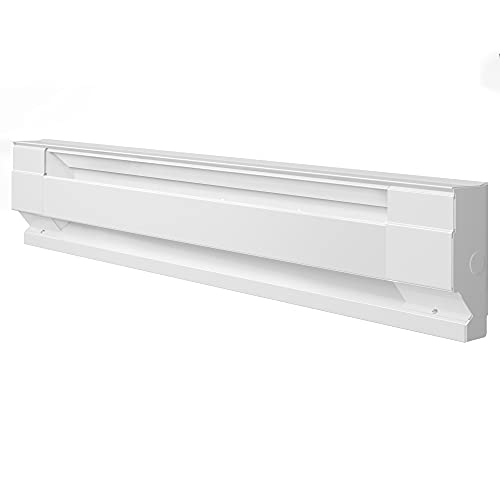
Best for medium-sized rooms needing consistent warmth. This Cadet 36-inch unit provides multi-watt capabilities (750/563 W) at 240/208 V, delivering reliable convection heat. It installs easily with universal wiring and pre-punched knockouts. Best for: living rooms or home offices where even heat distribution matters.
Why selected: Higher wattage than the 24″ model offers more room coverage while still keeping installation straightforward.
Caution: Larger footprint means you’ll need adequate wall space; verify clearances for safety.
Cadet F Series 72 in. Electric Baseboard Heater

Best for large rooms or open-plan spaces that demand sustained, even warmth. The 72-inch Cadet baseboard provides a high wattage option (1500 W at 120 V) and steady convection to circulate warm air. Best for: living areas, family rooms, or studios where a longer heater run is beneficial.
Why selected: Large length ensures broad coverage and predictable heat distribution, reducing cold spots.
Caution: Space planning is crucial; ensure enough clearance at ends and along the length for safe operation.
Comfort Zone CZ600 Electric Baseboard Heater

Best for bedrooms or offices needing quiet operation and precise temperature control. The CZ600 provides two heat settings with an adjustable digital thermostat, plus safety features like a tip-over switch and overheat protection. Best for: spaces where a quiet, controllable heater is valued.
Why selected: The digital thermostat and two heat settings offer precise comfort, while safety features support safe daily use.
Caution: Like many baseboard units, take care with floor mounting and ensure the headroom above the heater remains clear.
Cadet Ul 120 V/4.17 A White 30″ 500 W

Best for space-efficient zones and rooms that require flexible placement. This Cadet 30-inch model delivers 500 W of convection heat and can be configured as two units for versatile placement. Best for: narrow rooms, hallways, or compact living spaces where long coverage is needed without a bulky unit.
Why selected: Remote control option adds convenient temperature management without moving from seating areas.
Caution: Ensure accurate alignment with mounting surfaces; proper floor mounting aids performance and safety.
Buying Guide: How To Choose The Right Electric Baseboard Heater
What room size and heat output do I need?
Baseboard heaters are rated by wattage and length. For larger rooms, higher wattage units like 1200–1500 W may be necessary for even warmth. In small rooms, shorter units with lower wattage may suffice. Calculate space and consider ceiling height, insulation, and window placement.
What installation considerations matter?
Think about wiring type (240/208 V vs. 120 V), mounting method (surface vs. floor), and whether universal wiring or knockouts are needed. Verify clearance from furniture and walls to avoid obstructed airflow.
What safety features are important?
Look for tip-over protection, overheat protection, and stay-cool exteriors. Safety features help prevent accidents in homes with children or pets and during extended use.
How do you control comfort and energy usage?
Digital thermostats or built-in thermostats with adjustable settings enable precise control, reducing energy waste. Consider remote controls for convenient operation from seating areas.
Which materials and design features matter?
Most baseboard heaters use steel enclosures with convection heating. A slim, low-profile design is common and helps minimize visible footprint while providing steady heat distribution.
Maintenance and longevity considerations
Baseboard heaters generally require little maintenance beyond periodic cleaning of dust. Verify warranty coverage and ensure compatible replacement parts are readily available if needed in the future.
FAQ: Quick Answers For Buyers
- Q: Can I use a baseboard heater with a smart thermostat?
A: Yes, many baseboard heaters are compatible with wall-mounted or on-unit thermostats; check the model’s thermostat compatibility. - Q: Are baseboard heaters safer than space heaters?
A: Baseboard heaters generally have fewer moving parts and can be safer due to permanent installation, but safety depends on placement and usage. - Q: Do baseboard heaters require special electrical wiring?
A: Some models use 120 V, while larger units may require 240/208 V circuits; consult a licensed electrician to confirm service requirements. - Q: How do I size a baseboard heater for a room?
A: Consider room size, insulation, window exposure, and desired heat level. Larger spaces typically require longer units or higher wattage. - Q: Do baseboard heaters heat spaces quickly?
A: Baseboard heaters provide steady heat through convection and may take longer to reach peak warmth compared with radiant heaters, but they offer even distribution over time. - Q: Is it better to use multiple smaller units or one large unit?
A: Multiple smaller units can provide flexible placement and more uniform heat, especially in irregular rooms or when zoning is desired.