Best Electric Snow Melt Systems for Winter Surfaces
Answering the need for reliable, heater-assisted snow removal, these electric snow melt systems keep driveways, walkways, and patios clear with minimal effort. Ideal for homeowners seeking seasonal comfort, safer paths, and reduced shoveling time. The top picks below cover different coverage areas and installation options, from mats to cables, so you can choose what fits your space and climate.
| Product | Coverage | Best For | Installation Type |
|---|---|---|---|
| WarmlyYours 3×30 ft Mat | Up to large driveways and multiple surfaces | Large driveways, long sidewalks | Under asphalt, concrete, or pavers |
| WarmlyYours Underground Cable 428 ft | Up to 142 sq ft at 38 W/sq ft | Custom layouts, irregular areas | Under concrete, asphalt, or pavers |
| WarmlyYours 2×10 ft Mat | Medium surfaces | Walkways and porches | Under concrete, asphalt, or pavers |
| SNOWMELTZ Jumbo Area System | 820 sq ft total with multiple mats | Large residential or light commercial areas | Under concrete, asphalt, or pavers |
| WarmlyYours 188 ft Cable | 62 sq ft at 38 W/sq ft | Stairs or small sections | Under concrete, asphalt, or pavers |
WarmlyYours 3×30 Ft Snow Melting Mat
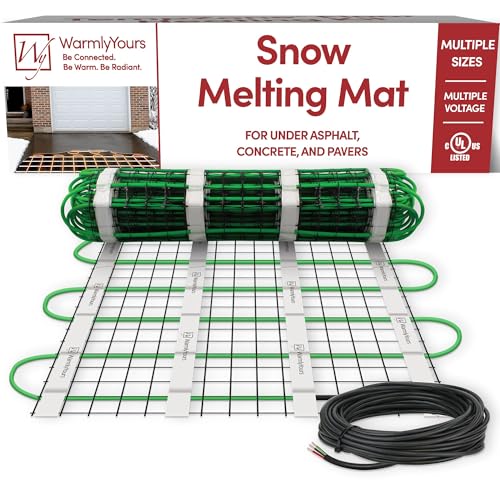
Best for expansive driveways and long pathways. This 3×30 ft mat provides broad coverage and is designed to be embedded under asphalt, concrete, or pavers. Features twin-conductor heating for reliable operation and CSA certification, supporting heavy traffic in winter conditions. Suitable for targeting tire tracks or creating full-area coverage. A caution: installation requires proper routing and protection in outdoor environments to maintain long-term performance.
WarmlyYours Underground Cable 428 Feet

Best for large, irregular spaces and retrofit projects. The 428-foot twin-conductor heating cable covers up to 142 sq ft at high output, with automatic or manual control options. It’s flexible for concrete, asphalt, or paver installations and excels at rapid snow and ice removal to keep driveways, walks, and stairs clear. Use this when you need extensive coverage, but plan for precise layout and generous install space. Limitation: longer cable runs require careful electrical planning and protection from the elements.
WarmlyYours 2×10 Ft Snow Melting Mat
Better for medium-sized areas like walkways and porches. This 2×10 ft mat provides reliable snow and ice removal with CSA-certified twin-conductor heating. It’s suitable for embedded installations under various substrates. Choose this if you’re upgrading a partial walkway or a compact entry path. A potential limitation is that coverage is narrower than the 3×30 ft option, so multiple mats may be needed for larger zones.
SNOWMELTZ Jumbo Area System

Best for extensive residential or light commercial coverage. The system includes eight mats totaling 820 sq ft, with smart sensors that activate based on temperature and moisture. It’s designed for flexible installation under concrete, asphalt, or pavers and supports automatic operation to maintain slip-free surfaces. Consider this choice for large driveways or multiple entry points, but plan for sensor placement and energy management to optimize performance.
WarmlyYours 188 Ft Underground Cable
Best for smaller sections like stairs or compact entryways. This 188-foot cable covers about 62 sq ft at up to 38 W/sq ft and installs beneath concrete, asphalt, or pavers. It provides strong efficiency for focused areas and can be combined with larger systems for phased heating. Limitation: limited coverage means you’ll need precise layout planning for complete protection of larger surfaces.
4 Pcs Heated Snow Melting Mats (4 Pack)

Best for modular, budget-conscious setups. This 4-pack includes 10×30 inch mats with a long connection cable and a weatherproof cover. They offer flexibility for walkways, decks, and smaller approaches. A caution: while energyefficient compared to traditional methods, it requires multiple mats to cover larger areas, which may complicate cable management and layout planning.
Buying Guide: Key Considerations for Electric Snow Melt Systems
- What area needs protection? Assess total square footage and whether you need whole-surface heating or targeted zones.
- How will you install? Decide between mats, cables, or a hybrid system based on space, substrate, and access for maintenance.
- What power capacity is available? Larger systems require sufficient electrical service and safety protections.
- Are you replacing or retrofitting? Retrofit projects may benefit from flexible mats or long cables that fit existing layouts.
- What automates performance? Sensors and thermostats can optimize energy use and prevent over-heating.
- What are safety and durability needs? CSA certification, weatherproofing, and robust heating cables are important for outdoor use.
- Maintenance and protection: Ensure proper shielding of cables, and plan for expansion if you anticipate changing layouts.
Frequently Asked Questions
- Q: Do these systems require a professional installation? A: Some installations involve electrical work and building codes; consult a licensed electrician for best results.
- Q: Can I run these systems in all climates? A: Most systems are designed for outdoor use in freezing conditions, but regional requirements may vary.
- Q: How do I control the system? A: Controls range from simple thermostats to smart sensors that trigger heating based on moisture and temperature.
- Q: Will these melt ice on stairs or ramps? A: Yes, many products are designed for stairs, ramps, and uneven areas, with proper installation.
- Q: Is insulation necessary? A: Insulation beneath heating elements improves efficiency and speeds up snow and ice melting.
- Q: How much energy do these systems use? A: Wattage varies by product and area; larger installations may require dedicated circuits and energy management.