Find the right electric underfloor heating controller to match your installation and comfort needs. This guide highlights five top options, detailing who each is best for, and how they help you manage radiant heat efficiently. Ideal buyers include DIY homeowners, renovators seeking reliable thermostats, and installers prioritizing safety features like GFCI protection. The summary below helps compare key points at a glance.
| Product | Best For | ||
|---|---|---|---|
| Floor Heating System, 120V Electric Tile Radiant Floor Heating Cable with UDG Programmable Thermostat (28 Sq.Ft.) | Simple, fixed cable layouts | Programmable thermostat with dual floor sensors | Wired |
| Programmable Thermostat for House Radiant Underfloor Heating | Complex setups needing smart control | AC 120/240V, built-in GFCI, dual sensing | Wired |
| VEVOR Floor Heating Mat, 30 Sq.ft | Easy install with adhesive mat | Built-in thermostat with floor/air sensors | Wired |
| LuxHeat 50 sqft Floor Heating System, WiFi Thermostat | Smart home integration | WiFi thermostat, self-adhesive mat, GFCI | Wireless |
| Electric Underfloor Heating Thermostat with Sensor Probe | DIY control and monitoring | LED display, child lock, memory, precise control | Wired |
Floor Heating System With UDG Thermostat

This 120V electric tile radiant system includes heating cable and a programmable UDG thermostat with two floor sensors. Best for compact areas up to about 28 square feet. It favors straightforward installations where a fixed layout helps ensure even heat distribution. Best for DIY installers who want a ready-to-go kit.
Who this is best for: homeowners seeking a simple, documented kit with built-in sensors. Why selected: it provides a complete package with a programmable thermostat and dual sensors for accurate sensing and comfort. Caution: cable length is fixed; do not cut the heating cable.
Programmable Thermostat for House Radiant Underfloor Heating
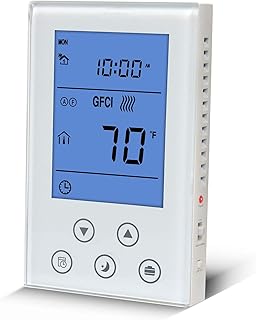
This dual-sensing thermostat supports 120/240V, with a maximum 3600W at 240V. It includes an integrated ground fault interrupt (GFCI) and on-device alerts for safety. It suits larger spaces or multi-zone setups where advanced protection and wide voltage compatibility are needed. Best for: homes requiring robust GFCI protection and flexible voltage support.
Who this is best for: installers or tech-forward homeowners prioritizing safety features. Why selected: comprehensive GFCI protection and clear guidance on tripping and safety checks. Caution: the device includes comprehensive safety instructions; follow test steps after installation to ensure safe operation.
VEVOR Floor Heating Mat, 30 Sq.ft

The VEVOR kit includes a 30 sq ft heating mat, a touchscreen thermostat, and floor temperature sensing. It uses a 2-inch spacing pattern and an integrated GFCI for protection. This option is best for projects where a flat, adhesive mat simplifies installation and allows semi-custom routing. Best for: quick-install projects in tiled or laminated floors.
Who this is best for: builders and homeowners doing a mid-size renovation where quick install matters. Why selected: pre-mounted adhesive backing and a four-mode thermostat offer straightforward control. Caution: the kit notes not to cut the red heater wires; embedding in thinset or mortar is required.
LuxHeat 50 Sqft Floor Heating System

This 50 sq ft kit uses a self-adhesive mat and includes the UWG4 smart thermostat with floor sensor and built-in GFCI. It’s designed for tile and bath areas where WiFi connectivity can enable remote control and scheduling. Best for: users who want smart home integration and simple installation. Caution: do not cut or shorten the red heater wires; ensure proper embedding in underlayment or mortar.
Electric Underfloor Heating Thermostat With Sensor Probe
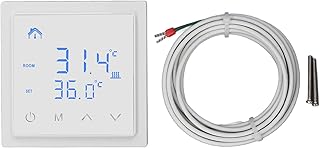
This LED-equipped thermostat emphasizes easy monitoring and precise control with features like a child lock, memory of power failures, and a narrow 0.5°C accuracy window. It’s compatible with a wide range of underfloor heating systems, making it a versatile stand-alone control option. Best for: installers or DIYers seeking a dedicated control unit with clear readouts. Caution: ensure sensor placement matches system design to avoid inaccurate readings.
Buying Guide
What should you consider when choosing an electric underfloor heating controller?
Compatibility with your existing heating mat or cable is essential. Check voltage (120V vs 240V), wattage limits, and sensor types (floor vs air). If you want smart features or WiFi integration, look for a thermostat that supports your home network and scheduling needs. Safety features like built-in GFCI protection reduce shock risk and electrical fires.
Wired vs. wireless control: which is better?
Wired thermostats tend to be straightforward, reliable, and easier to install for fixed installations. Wireless or WiFi-enabled thermostats offer remote control and integration with smart home ecosystems but may require more setup and reliable network access. Choose based on your comfort with technology and the installation environment.
Sensor placement and safety considerations
Floor sensors should be placed where the heating mat can respond quickly to temperature changes without being damaged. Dual-sensing options (air and floor) provide more stable comfort but may require more complex wiring. GFCI protection is strongly recommended in wet areas like bathrooms.
Installation tips for best results
- Follow manufacturer spacing guidelines; do not cut heating cables unless explicitly allowed.
- Embed heating elements in appropriate mortar or self-leveling compounds as directed.
- Test GFCI functionality after installation to ensure safety.
- Verify thermostat compatibility with your heating system before purchasing.
FAQ
- What is the main advantage of a GFCI in an underfloor heating thermostat?
It helps protect against electric shock by interrupting current if a fault is detected. - Can I install electric underfloor heating in a tile bathroom?
Yes, many systems are designed for tile installations, with compatible thermostats and sensors. - Is it better to choose a WiFi thermostat or a traditional wired one?
WiFi thermostats offer remote control and integration, while wired ones tend to be more straightforward and reliable in challenging installations. - Do I need to hire a professional to install underfloor heating controls?
For high-power or 240V systems, professional installation is recommended to ensure electrical safety and code compliance. - What maintenance is required for a floor heating thermostat?
Routine checks of sensor integrity, GFCI status, and software updates (for WiFi models) help maintain reliable operation.