Instant hot water is possible with compact, electric tankless models designed for under-sink or point-of-use installation. This guide highlights five top electric options, ideal for small homes, apartments, or busy kitchens and bathrooms. Each pick targets different needs—compact size, high efficiency, or dual-point use—so you can choose the best fit for your hot-water demand and space constraints. The following summaries show who each product is best for and why it stands out, along with practical cautions to consider before purchase.
Summary of top picks
| Product | Best for | Why it stands out |
|---|---|---|
| 14kW Tankless Water Heater Electric 240V | Small homes; under-sink use | High power at 14kW; compact; simple installation |
| Rheem 18kW 240V | Medium hot-water needs | Advanced self-modulation; durable components |
| 110V Tankless Water Heater, 3000W | Apartments and kitchens | Low-voltage option; precise temp control |
| APUS Propane Tankless Water Heater | Fuel flexibility; multiple fixtures | Gas-powered with high flow; efficient heat exchange |
| Tankless Water Heater Electric 110V, 3000W Portable | RVs, camping, tiny spaces | Ultra-compact; portable under-sink use |
14kW Tankless Electric Water Heater — 240V
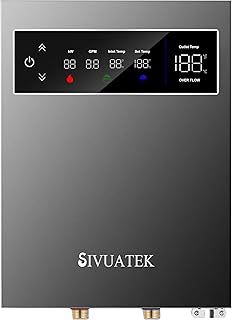
This unit delivers instant hot water with 14kW heating power and up to 99.8% thermal efficiency. It is designed for 1–2 simultaneous points of use, such as a kitchen and a bathroom. Best for: small households or apartments needing reliable hot water directly at points of use. Caution: requires a 60-amp circuit breaker and proper 1/2″ NPT connections, so ensure electrical capacity and plumbing fitment before purchase.
Rheem 18kW 240V Tankless Electric Water Heater

Rheem’s unit features external digital thermostatic control with an LED display and self-modulation to match hot-water demand. It includes durable copper immersion heating elements and is field serviceable. Best for: homes needing higher flow with precise temperature tracking. Limitation: maximum flow rate is around 4.4 GPM, which may limit simultaneous use in larger homes.
110V Tankless Water Heater — 3000W Under Sink

This 110V unit uses 3000W to heat water instantly and offers temperature control from 82°F to 131°F with a digital display. Best for: kitchens, bathrooms, or apartments needing precise temp control in compact spaces. Caution: under higher flow or colder water, performance may vary; ensure your supply lines and electrical service are compatible with 3000W under continuous use.
APUS Propane Tankless Water Heater — 95,000 BTU

APUS offers a high-capacity propane tankless option with 95,000 BTU and 4.42 GPM, designed to meet hot water for two showers plus a sink. Best for: households needing continuous hot water across multiple fixtures without a power connection. Caution: propane models require venting and proper outdoor or well-ventilated installation; ensure compliance with local codes.
Tankless Electric 110V, 3000W Under Sink Portable

This portable under-sink unit provides instant hot water with a 3–5 second heat time and an adjustable maximum of 131°F. Best for: RVs, camping, or spaces needing a portable solution. It includes IPX4 waterproofing and safety protections. Caution: 110V operation limits flow at higher demand; practical use is best with single faucet at a time.
Buying Guide: How To Choose The Right Electric Tankless Water Heater
What size do you need? Consider the heat output (kW) and your electrical service. Higher kW units deliver hot water faster but require appropriate circuit capacity and wiring. For multi-point use, look for models with self-modulation and automatic power adjustment to avoid overheating or shortages.
Where will you install it? Point-of-use under-sink or wall-mounted units save space and reduce heat loss. Ensure your water connections match standard 1/2″ NPT fittings and that the unit fits in the desired cabinet or wall location without obstructing access to the plumbing or electrical panel.
What about safety and efficiency? Choose heaters with automatic shutoff features, IP-rated waterproofing for exposed environments, and high thermal efficiency to minimize energy waste. If you are on a budget, a smaller 110V model may suffice for limited usage, whereas higher-demand homes benefit from 18kW or greater capacities and digital temperature controls.
Gas vs electric? If you need very high hot-water flow across multiple fixtures, propane models provide strong capacity without depending on electrical supply. Electric units are easier to install in most urban homes and are better suited to point-of-use scenarios with limited space.
Maintenance and serviceability? Look for units with serviceable heating elements and accessible components. Self-modulating tech helps maintain steady temperatures and can extend the unit’s life by preventing unnecessary cycling.
FAQ
- What is the benefit of a tankless electric water heater over a tank model? Tankless units heat water on demand, reducing standby energy loss and saving space, especially in small homes or apartments.
- Do I need a dedicated circuit for these heaters? Yes. Most higher-capacity electric tankless heaters require a dedicated circuit, often 60-amp or more, depending on the model and home wiring.
- Can these heaters be used for multiple fixtures at once? Some models support 1–2 simultaneous points, while higher-capacity units can handle more, depending on flow rates and incoming water temperature.
- Are there safety features I should look for? Look for IP-rated waterproofing, dry-burn protection, leakage protection, and automatic shutdown at idle to prevent hazards and save energy.
- Is a propane model better than electric? Propane models deliver higher flow for several fixtures without relying on electrical infrastructure, but require venting and proper installation per codes.
- What maintenance is required? Periodic inspection of connections, cleaning or replacing heating elements as recommended by the manufacturer, and ensuring venting (for gas models) is clear and correctly installed.