Looking for a reliable heat source that doesn’t rely on mains power? This guide highlights the best gas-powered heaters that work without electricity, ideal for off-grid living, emergencies, or backup heat. Each option targets different spaces and needs, from compact portable units to larger room heaters. The top picks are arranged to help buyers decide who each product is best for, with practical pros and limitations explained.
Summary table of selected products:
- Mr. Heater 9,000 BTU Portable Buddy Radiant Propane Heater — best for portable warmth up to 225 sq ft
- Vikye Indoor Kerosene Heater 12,000 BTU — best for enclosed spaces with long runtime
- ProCom Natural Gas Ventless Infrared Plaque Heater 30,000 BTU — best for larger areas without electricity
- MIZUDO 120,000 BTU Natural Gas Tankless Water Heater — best for flexible indoor/outdoor installation
- ProCom Liquid Propane Ventless Blue Flame Heater 10,000 BTU — best compact propane option
Mr. Heater 9,000 BTU Portable Buddy Radiant Propane Heater

Product: Mr. Heater 9,000 BTU Portable Buddy Radiant Propane Heater
Best for: Small to mid-sized spaces, portable use, emergency heat without electricity.
Why selected: This unit emits radiant heat in either 4,000 or 9,000 BTU/hr and is designed for indoor and outdoor use, making it versatile for cabins, workshops, or tents.
Limitations: Suitable space is about 225 square feet; for larger rooms, a bigger heater may be needed. Ensure proper ventilation and follow safety guidelines when used indoors.
Vikye Indoor Kerosene Heater, 12,000 BTU, Non-Electric

Product: Vikye Indoor Kerosene Heater, 12,000 BTU Non Electric Heater 6L Capacity
Best for: Power outages, off-grid living, basements, or garages needing a reliable heat source without electricity.
Why selected: It offers 12,000 BTU, a 6-liter tank, and up to 20 hours of runtime, with smokeless operation to maintain air quality while heating. It’s well-suited for prolonged use when power is unavailable.
Limitations: Requires kerosene and proper ventilation. Ventilation needs depend on space size and local safety guidelines.
ProCom Natural Gas Ventless Infrared Plaque Heater With Base Feet
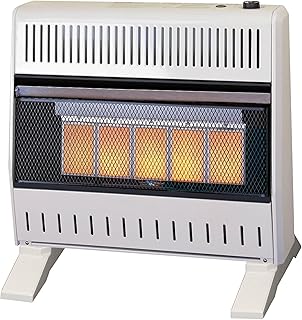
Product: ProCom Heating Natural Gas Ventless Infrared Plaque Heater With Base Feet — 30,000 BTU
Best for: Larger spaces that need steady heat without electrical power, such as open rooms or garages.
Why selected: It provides up to 30,000 BTU and heats up to 1,200 sq ft using natural gas with no electricity required, plus Piezo ignition and an oxygen depletion sensor for automatic shut-off.
Limitations: Uses natural gas; proper ventilation and connection are essential. Suitable only where gas supply and venting arrangements are available.
MIZUDO 120,000 BTU Natural Gas Tankless Water Heater

Product: MIZUDO 120,000 BTU Natural Gas Tankless Water Heater
Best for: Flexible installation for homeowners needing indoor/outdoor conversion and app control for remote management.
Why selected: This unit offers high BTU potential and converts between indoor and outdoor use with accessory kits, plus smart WiFi/app control and precise temperature stability (±1°F). It targets broader hot water and space heating needs in one system.
Limitations: Data notes may imply broader use; verify local gas code compliance and installation requirements before deployment.
ProCom Heating Liquid Propane Ventless Blue Flame Heater With Base Feet

Product: ProCom Heating Liquid Propane Ventless Blue Flame Heater With Base Feet — 10,000 BTU
Best for: Small spaces or as a backup heater where propane is readily available and electricity is not required.
Why selected: Delivers 10,000 BTU with no electricity and a Piezo ignition, making it a compact option for tight rooms or cabins. The blue flame design provides efficient heat distribution.
Limitations: Ventilation and safe indoor use must be followed; this is a ventless unit, so room size should match heating capacity to avoid overconsumption of oxygen.
Buying Guide: How to Choose a Gas Heater Without Electricity
- Space size and heat requirements: Match BTU ratings to the room area. Larger spaces need higher BTU units, while smaller rooms can rely on portable options.
- Fuel type and accessibility: Propane, kerosene, and natural gas have different fuel availability, odors, and maintenance needs. Choose based on fuel access and storage considerations.
- Ventilation and safety: Ventless units require adequate ventilation and oxygen monitoring. Always follow manufacturer instructions and local codes.
- Portability vs. fixed installation: Portable heaters suit temporary needs; vented or wall/ceiling-mounted heaters suit permanent setups in cabins or workshops.
- Ignition and control: Piezo ignition is simple, but check if you need multiple heat settings or continuous operation features for your space.
- Emergency readiness: For power outages, prioritize units with long runtime, minimal electrical dependence, and reliable ignition methods.
Frequently Asked Questions
- Do gas heaters require electricity to operate? Some do not; many rely on gas with manual ignition or battery-powered controls. Always verify electrical requirements in the product details.
- Is ventless heat safe for indoor use? Ventless heaters can be used indoors if there is sufficient ventilation and the unit includes safety features like an oxygen depletion sensor. Follow safety guidelines.
- Which heater is best for a power outage? The kerosene or propane-powered models with manual ignition and no reliance on electric power are typically best for outages.
- How large a space can a 30,000 BTU heater effectively heat? About 1,000–1,200 square feet under ideal conditions; actual performance depends on insulation and airflow.
- What maintenance is needed for gas heaters without electricity? Regular fuel checks, vent cleaning, and ensuring fuel lines and ignition systems are clear of obstructions are common tasks.
- Are there safety features I should look for? Oxygen depletion sensors, automatic shut-off, and proper venting are important safety features for indoor use.