Looking for an effective heat pump to heat or cool an inground pool? This guide highlights five top options that balance high BTU output, inverter efficiency, and smart controls. These selections are suitable for pools up to roughly 21,000 gallons and are accompanied by practical notes on who each heater is best for. The buying table below helps compare key specs at a glance.
| Product | Pool Size (gal) | BTU | COP / Efficiency | Best For |
|---|---|---|---|---|
| AQUASTRONG 75,000 BTU (21000 gal) | Up to 21,000 | 75,000 | 15.8 COP | Large inground pools; year‑round heating with app control |
| Vidapool 75,000 BTU (21,000 gal) | Up to 21,000 | 75,000 | Up to 70% energy savings vs gas | Powerful quick heating with smart WiFi control |
| BluePlenum 80,000 BTU (Up to 22,000 gal) | Up to 22,000 | 80,000 | Up to 16.2 COP | Largest option of the bunch; strong year‑round performance |
| TURBRO Beluga 33,000 BTU | Up to 10,000 gal | 33,000 (option 58,000) | Up to 15.8 COP | Smaller or mid‑sized pools; WiFi and programmable control |
| Varpoolfaye 65,000 BTU | Up to 21,000 | 65,000 | Inverter‑based efficiency | Balanced power with quiet 45dB operation |
AQUASTRONG 75,000 BTU Pool Heat Pump for 21,000 Gallons

The AQUASTRONG unit offers dual‑mode heating and cooling with a broad 47–104°F heating range and 47–83°F cooling range. It provides rapid heating around 75,000 BTU for large pools and includes app and control panel access for remote temperature management, scheduling, and energy monitoring. Best for large inground setups and cold climates where quick heat recovery matters. A potential limitation is the single model’s size and electrical needs, which may require professional installation for some backyards.
AQUASTRONG 35,000 BTU Heat Pump (9,000 Gallons)
Designed for mid‑sized pools, this unit provides 35,000 BTU heating with the same inverter and app control features as its larger siblings. It is better for 9,000‑gallon pools or spaces where a compact footprint is required. Choose this if your pool size is closer to 9,000 gallons and you want strong efficiency without the biggest footprint. Limitation: lower BTU means slower heat rise for very large pools.
AQUASTRONG 16,000 BTU Heat Pump (16,000 Gallons)
This option pairs 55,000 BTU heating with the same inverter technology for efficiency and energy savings. It is better for mid‑range pools and climates where a balance of cost, size, and performance matters. Caution: not ideal for very large or highly variable-season pools due to lower BTU output compared with multi‑ton units.
Vidapool 75,000 BTU Heat Pump (21,000 gal)

Vidapool combines 75,000 BTU heating with advanced inverter control and WiFi app management. It emphasizes energy savings—up to 70% compared to electric heating and up to 40% more efficient than gas systems—while delivering rapid warmth for pools up to 21,000 gallons. Best for users prioritizing energy savings and remote scheduling. Limitation: quieter performance may still be hardware‑dependent in very windy or noisy environments.
TURBRO Beluga 33,000 BTU DC Inverter
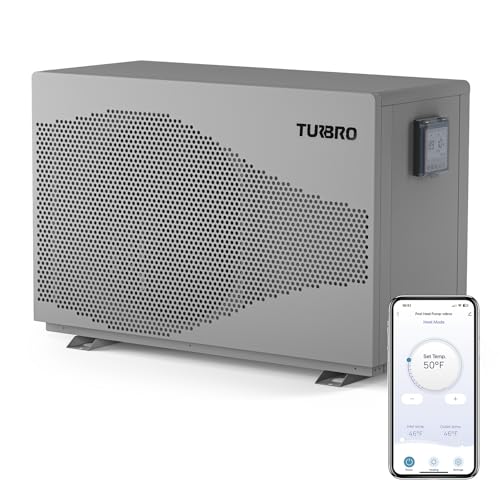
TurBo Beluga offers 33,000 BTU (and an option for 58,000 BTU) with DC inversion and WiFi control. It supports pools up to 10,000 gallons and emphasizes cost efficiency through variable speed operation. Best for small to mid‑sized inground pools where programmable control and energy efficiency are priorities. Caution: lower BTU in the base model may require longer heating times for larger pools.
Varpoolfaye 65,000 BTU Inverter Heat Pump
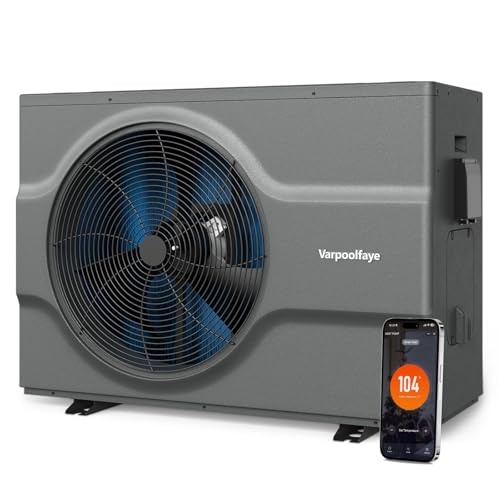
Varpoolfaye delivers 65,000 BTU with inverter technology and 21,000 gallon compatibility. It features a quiet 45dB operation and an intelligent control panel with one‑button fast heat. This option suits mid‑to‑large inground pools seeking reliable performance with simple controls. Limitation: not the highest BTU available in the lineup, so heat rise may be slower for very cold starts.
Buying Guide: Key Considerations For Selecting An Inground Pool Heat Pump
- Pool size and temperature goals: Match BTU output to your pool’s gallons and desired rise in temperature. Larger pools need higher BTU or longer heating windows.
- Energy efficiency: Look for inverter technology and COP ratings; higher COP means more efficient operation and lower operating costs.
- Climate and installation: In regions with very cold winters, ensure the unit can maintain comfortable temps and consider a model with a wider heating range.
- Controls and connectivity: App control, scheduling, and remote monitoring help optimize energy use and convenience.
- Noise and footprint: Some models advertise quiet operation; verify decibel levels if the pool is near living spaces.
- Warranty and service: A strong warranty and local support matter for long‑term reliability.
Frequently Asked Questions
- What size heat pump do I need for my pool?
Choose a heat pump with BTU output that matches or exceeds the heat load of your pool, factoring in pool size, climate, and desired temperature rise.
- Do inverter heat pumps save energy?
Yes. Inverter technology modulates power output for steady temperatures and lower energy use, often delivering substantial savings over traditional on/off units.
- Can heat pumps cool the pool as well?
Many models offer cooling modes in addition to heating, allowing you to lower water temperatures during hot months.
- Is professional installation required?
Most heat pumps require electrical wiring and refrigerant connections; professional installation is usually recommended to meet local codes and ensure safety.
- Will a heat pump work in cold climates?
Heat pumps draw warmth from the air and perform best in moderate climates, though some models are rated for cooler operation. Check the operating temperature range for your climate.
- How do I maintain a heat pump?
Regularly clean filters, inspect refrigerant lines for leaks, and follow manufacturer maintenance guidelines for optimal efficiency.