Yes—these are the best heating jackets for pipes. They are self-regulating heat tapes designed to prevent freezing, keep water flowing, and reduce energy use. This guide highlights five top options suitable for homeowners, RV owners, and small-business plumbing needs. Each choice is evaluated for safety certifications, compatibility with pipe materials, and installation practicality to help you pick the right solution.
| Product | Best For | Key Benefit | Approx. Cable Length |
|---|---|---|---|
| HEATIT Heating Cable – 6ft | General residential use | Fully certified, built-in thermostat, easy install | 6 ft |
| HEATIT 30ft Self-Regulating Cable | Long runs, outdoor or exposed pipes | Energy-efficient, wide length range | 30 ft |
| JDZKOMKE 30ft Pipe Heating Cable | Metal and plastic pipes, tough environments | Industrial-grade construction, IP67 jacket | 30 ft |
| MAXKOSKO 6ft Self Regulating Heat Tape | Small projects, quick fixes | Compact, preset power cord length | 6 ft |
| Methuker 24ft 120V Heat Cable | Mid-length installations with budget focus | Self-regulating, -40°F protection | 24 ft |
Note: The products listed are designed for water-filled pipes and not for fuel lines, gutters, or non-plumbing applications. Always follow the manufacturer’s installation instructions and ensure full certification coverage for safety and compliance.
HEATIT Heating Cable – 6ft, 7W/ft
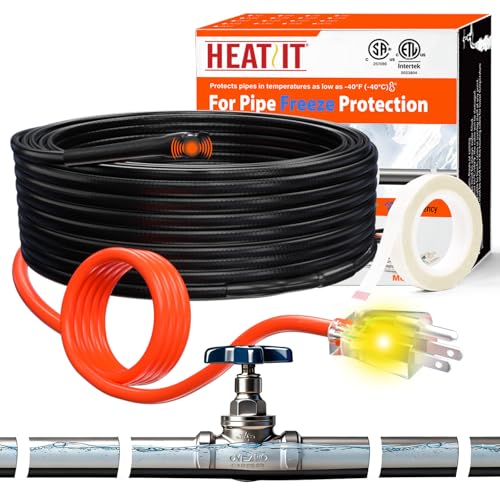
Best for: Small pipes, apartments, or budget-conscious homeowners needing quick freeze protection. This self-regulating cable includes a grounded plug with indicator light and a built-in thermostat that turns on at 37°F and off at 50°F, saving energy by warming only when needed. It is fully CSA and ETL certified, with UL-listed plug for extra safety. The instruction set is straightforward, making it a practical choice for DIY installations.
Why selected: It combines complete certifications with simple installation and a compact length, ideal for short pipe runs in tight spaces. The integrated thermostat and pre-assembled setup reduce labor time and risk of improper exposure.
Caution: Suitable for water-filled plastic or metal pipes only; avoid use on non-water-carrying lines or empty pipes to prevent overheating or insulation gaps.
HEATIT 30ft Self-Regulating Pipe Heating Cable

Best for: Longer pipe runs and exterior installations where heat coverage needs to span several feet. This 3 W/ft cable maintains water flow down to -40°F and includes a 2 ft power cord, offering flexibility for varied installation layouts. It’s fully ETL certified from end to end, with UL-certified plug for safety.
Why selected: The extended length and robust safety certifications make it a solid option for mid-to-long runs, especially where external exposure or buried pipes require consistent heat. It provides reliable freeze protection across different pipe materials.
Caution: Ensure the entire heating cable is installed and certified; do not rely on plug certification alone, and plan for an appropriate power source to accommodate the longer run.
JDZKOMKE 30ft Pipe Heating Cable
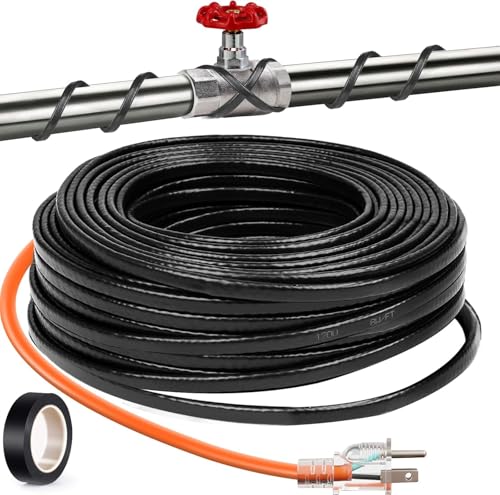
Best for: Pipes exposed to harsh environments or coastal climates due to rugged construction. It uses an aluminum shield and a triple-layer armor over a copper core to enhance durability. The jacket is IP67-rated for moisture, chemicals, and UV exposure, making it suitable for buried or outdoor pipes.
Why selected: Its robust construction and 30 ft length cover substantial runs, while the in-pipe design and full cable certification offer enhanced safety and reliability in more demanding setups.
Caution: This option is best when you can route the cable along a straight or legally permissible path; misrouting can limit heat delivery and energy efficiency.
JDZKOMKE 3ft Pipe Heating Cable
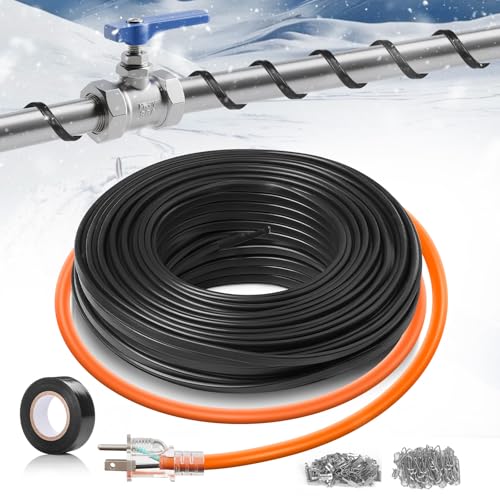
Best for: Shorter runs or tight spaces where only a small heat sleeve is needed. The 5 ft grounded plug with indicator light and full cable certification provide safety and visibility in compact installations.
Why selected: This shorter option is ideal for rapid, low-cost upgrades or repairs on limited pipe segments, offering reliable protection without excessive length.
Caution: With shorter cable lengths, plan heat coverage to ensure the entire pipe section remains protected and avoid gaps where bursts could occur during cold snaps.
MAXKOSKO 6ft Self Regulating Heat Tape

Best for: Small installations where a quick, energy-saving fix is needed. It uses high-tech self-regulating heating technology that adjusts power output to prevent overheating. Includes a 3 ft power cord, which helps manage the placement distance between the thermostat and plug.
Why selected: The built-in self-regulation reduces energy waste and improves safety, making it a practical choice for DIY enthusiasts who want predictable performance in a compact package.
Caution: For longer runs or more irregular pipe layouts, pairing with a longer cable or multiple segments may be necessary to achieve uniform heat distribution.
Methuker 24ft 120V Heat Cable

Best for: Medium-length installations where a budget-conscious option is needed with solid freeze protection. It delivers 5W per foot and features self-regulating technology to prevent overheating. The 24 ft cord design optimizes thermostat-to-plug distance for efficient operation.
Why selected: Methuker combines strong freeze protection with a straightforward installation, ideal for homeowners seeking a balance of price, length, and performance in moderate pipe runs.
Caution: Ensure the cable is installed per guidelines and avoid using on non-water-carrying lines to prevent overheating or unsafe conditions.
Buying Guide: Key Considerations For Heating Jackets For Pipes
What certifications matter? Look for cables that are fully certified end-to-end, such as ETL, CSA, or NSF61 when used for drinking water. Full-cable certifications ensure safety across the entire length, not just the plug.
Which pipe materials are compatible? Most self-regulating cables work with copper, PVC, PEX, and metal pipes. Verify compatibility for your specific pipe material before installation.
Length and layout considerations: Measure the total run and add extra length for turns or corners. Longer cables are more versatile for exterior or buried pipes, while shorter ones suit indoor cabinetry or basements.
Installation style and access: In-pipe installation provides discreet protection for hidden pipes, whereas external heat tapes are easier to install but visible. Straight, spiral, or overlapped layouts affect heat distribution and efficiency.
Energy efficiency and controls: Self-regulating cables automatically adjust heat output, reducing energy use. Check for built-in thermostats that trigger around 38-40°F to 50-60°F depending on the model.
Safety and maintenance: Consider models with clear indicators, UL-listed plugs, and warranties. Look for durable jackets that resist moisture, UV exposure, and chemicals in outdoor settings.
FAQ
- What is a heating jacket for pipes? A heating jacket, or pipe heating cable, is a self-regulating heating tape designed to prevent pipe freezing by warming the pipe surface.
- Do I need full-cable certifications? Yes. Full-cable certifications (not just plug certifications) ensure the entire cable meets safety and performance standards.
- Can these cables be used on metal and plastic pipes? Most are compatible with metal, copper, PVC, and PEX pipes, but always verify the product’s stated compatibility.
- How do I install a heating cable safely? Follow the manufacturer’s instructions, avoid overlapping or crossing the cable, and ensure proper spacing and insulation around the pipe.
- Are longer cables better for outdoor use? Longer cables cover more pipe length and are advantageous for exterior or buried pipes, but require appropriate power supply planning.
- What temperatures do these cables protect against? Many options provide protection down to -40°F (-40°C), depending on the model and installation.