When selecting a high efficiency commercial boiler, you want models that deliver steady heat, efficient fuel use, and easy integration with your existing system. This guide highlights five top options, suitable for small-to-medium commercial spaces and multi-unit settings. Each entry includes who it’s best for, why it was selected, and practical considerations to help you choose confidently.
Summary table of selected products:
| Product | Best For | Key Strength | Potential Limitation |
|---|---|---|---|
| Rinnai IP199199C I-SERIES Plus 199k BTU Condensing Combi Boiler | Small to mid-sized commercial spaces needing hot water and heating | 96% AFUE, Smart Sense Gas Valve | Propane or natural gas availability affects install |
| Rinnai CX199iN SENSEI CX Commercial Tankless Water Heater | Commercial settings demanding endless hot water in compact form | UEF .98, Versa Vent options | Outdoor install requires RX-OVC cap |
| IKONIC RTGH-SR11i 199,000 BTU Tankless Water Heater | Space-constrained projects needing robust output | High capacity in compact footprint | Limited data on controls |
| Rinnai i150SN Condensing Gas Boiler | Whole-home heating with space-saving design | Modulating burner, multi-zone control | Smart features require wiring/controls |
| A.O. Smith BTR-120 Commercial Tank Type Water Heater | Business with high-volume domestic water needs | Self-cleaning and flexible connections | Tank-based unit; may be bulkier than tankless options |
Rinnai IP199199C I-SERIES Plus 199k BTU Condensing Combi Boiler

This combi boiler integrates hot water and space heating in one efficient unit. It’s designed for indoor natural gas or propane use, delivering both reliable heat and on-demand hot water. Best for facilities needing a compact, all-in-one solution where space is at a premium. Its high AFUE rating supports significant energy savings over older boiler systems. The Smart Sense Gas Valve helps manage energy usage with precise control over heating and hot water supply.
Who it’s best for: small to mid-size commercial properties, restaurants, or multi-unit residential buildings that require simultaneous space heating and domestic hot water. Why selected: combines heating and hot water in one appliance with high efficiency and advanced control. Caution: ensure your gas type and venting align with installation requirements.
Rinnai CX199iN SENSEI CX Commercial Tankless Water Heater

This unit delivers continuous hot water with a compact footprint, ideal for facilities requiring ample hot water without bulk. It supports either natural gas or propane and features a modern interface and easy maintenance features like Quick Flush. It also offers high efficiency (UEF .98) and venting versatility with Versa Vent. Best for: locations needing reliable hot water in a small space or retrofit projects. Better for: installations that want indoor or outdoor flexibility. Limitation: optional control modules (like Controlr) are not included and may affect remote monitoring.
IKONIC RTGH-SR11i 199,000 BTU Tankless Water Heater
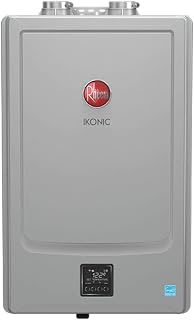
Rugged and compact, this model emphasizes high output in a small footprint, making it a strong choice for spaces where space is scarce but demand for hot water is high. It’s described as a “THERMAFORCE 199K COMBI BOILER” in the listing, signaling a focus on robust heating performance. Best for: projects that need strong BTU output in tight spaces. Better for: applications where a tankless configuration saves floor area. Caution: feature details are limited in the listing and may require confirmation of venting and control options.
Rinnai i150SN Condensing Gas Boiler

Designed to heat an entire home or commercial space efficiently, this boiler emphasizes a space-saving form factor and smart features. It uses a stainless-steel heat exchanger and a modulating burner for energy efficiency. Best for: whole-building heating with multi-zone control. Better for: climates with varying demand where modulating heat can reduce energy use. Caution: smart features require compatible controls and wiring to access full capabilities.
A.O. Smith BTR-120 Commercial Tank Type Water Heater

This tank-type water heater is designed for high-volume domestic hot water needs. It features a self-cleaning system to reduce sediment buildup and includes a factory-installed draft diverter and flue damper. Best for: businesses with consistent DHW demand and a preference for a reliable, tank-based solution. Better for: settings where flexible water connections are advantageous. Limitation: tank-based units may be bulkier and heavier than tankless options in tight spaces.
Buying Guide: Practical Considerations for High Efficiency Commercial Boilers
What should you consider when choosing a high efficiency boiler for a commercial space?
- Fuel type and availability: Natural gas vs. propane can affect installation costs and venting requirements. Choose a unit that aligns with your current fuel infrastructure.
- Heating vs. hot water needs: Combi boilers are ideal for simultaneous demand, while tankless models excel at endless hot water with compact footprints. Tanks offer simplicity for high DHW usage in some settings.
- Efficiency metrics: AFUE and UEF ratings indicate energy performance. Higher numbers generally translate to lower operating costs over time.
- Ventilation and installation flexibility: Versa Vent and similar options simplify venting for tight spaces or retrofits. Ensure compatibility with existing venting and outdoor placement restrictions.
- Control and zoning: Multi-zone capability and smart controls help tailor heat to different areas, improving comfort and efficiency.
- Maintenance and serviceability: Self-cleaning features and accessible flame guards reduce downtime. Consider service proximity and replacement part availability.
- Space constraints: Tankless models save floor area but may require more complex plumbing. Tank-style units deliver high DHW volume with potentially larger footprints.
- Future-proofing: If you anticipate expansions, choose modular or scalable systems that can integrate with additional boilers or smart controls.
Frequently Asked Questions
- What is the main advantage of a condensing boiler?
Condensing boilers recover heat from exhaust gases, increasing efficiency and reducing fuel use compared with non-condensing models.
- When is a tankless boiler preferable to a tank-style boiler?
Tankless boilers are better for buildings with high simultaneous hot water demand and limited space; tanks are simpler for very high DHW volume demands.
- How important is multi-zone control for a commercial setup?
Very important. It lets different areas heat independently, improving comfort and reducing energy waste by avoiding overheating unused spaces.
- What installation considerations matter most?
Fuel type, venting requirements, available space, electrical needs, and compatibility with existing controls should guide the final choice.
- Are high efficiency boilers significantly more expensive upfront?
Upfront costs may be higher, but energy savings over time can offset the premium by lowering operating costs and extending system life.