Best Non Condensing Combi Boilers for Efficient Home Heating
Non condensing combi boilers are traditional, compact solutions for delivering both hot water and home heating in one unit. This guide highlights five relevant models and explains who each one is best for. Whether you’re updating an older system or choosing a replacement for a smaller home, these options cover a range of heating capacities and configurations. The buyer intent table below helps compare key aspects at a glance.
| Product | Best For | Key Feature | Voltage/Fuel |
|---|---|---|---|
| Rinnai IP150199C | Residential or commercial spaces needing combined heat and hot water | Smart Sense Gas Valve for precise energy management | Natural Gas or Propane |
| IKONIC RTGH-SR11i | Large homes needing high hot water flow | 199,000 BTU capacity | Natural Gas |
| Noritz NRCB180DV-NG | Homes with simultaneous hot water and space heating | 9.8 Gpm, built-in pump | Natural Gas |
| Noritz NRCB180DV-LP | Propane-equipped homes needing robust DHW and space heating | 9.8 Gpm, built-in pump | Propane |
| Rinnai i150SN | Whole-home heat with zone control and compact design | Modulating burner, multi-zone control | Natural Gas |
Note: All listed models below are combi boilers designed to supply both hot water and home heating. If you specifically need non condensing operation, this selection focuses on relevant efficiency and performance attributes while highlighting differences that affect daily use and installation.
Rinnai IP150199C I-Series Plus 150k BTU Condensing Combi Boiler

Best for large homes or small commercial spaces that need strong heating and fast hot water on demand. The IP150199C combines space heating and domestic hot water in a single, compact unit. Its Smart Sense Gas Valve provides precise energy management, helping maintain comfort while optimizing fuel use. Its high-efficiency operation is indicated by the 96% AFUE-like performance described in its features.
- Best for: homes needing robust heating with reliable on-demand hot water
- Why chosen: high capacity and integrated controls for steady comfort
- Caution: Condensing models require proper venting and regular maintenance for peak efficiency
IKONIC RTGH-SR11i 199,000 BTU Tankless Water Heater
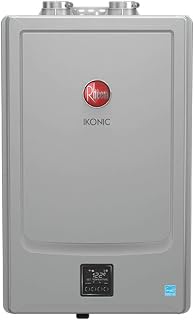
Best for high-demand residential or light commercial settings where very large hot water draws occur. This model emphasizes a high 199K BTU input capacity, described as a ThermaForce combi boiler in the features. It’s suited for households that need sustained hot water for multiple fixtures simultaneously.
- Best for: larger households or spaces with heavy simultaneous hot water use
- Why chosen: very high hot water capacity
- Caution: high output may be excessive for small homes, impacting venting needs
Noritz NRCB180DV-NG Indoor Direct Vent Combination Boiler

Better for homes needing integrated heating and domestic hot water with reliable temperature stability. The NRCB180DV-NG is a direct-vent model with a built-in pump, delivering up to 180,000 Btuh for DHW and 9.8 Gpm. It supports simultaneous heating and hot water, making it a practical all-in-one solution.
- Best for: homes needing dependable DHW alongside space heating
- Why chosen: built-in pump and stable domestic hot water output
- Caution: ensure venting compatibility with existing chimney or outdoor venting setup
Noritz NRCB180DV-LP Indoor Direct Combination Boiler (Propane)
Best for propane-powered homes seeking robust DHW and heating in one unit. This LP model mirrors the NG version with built-in pump and similar capacity, optimized for propane supply. It supports simultaneous domestic hot water and heating with stable delivery, suitable for mid-to-large residences.
- Best for: propane-installed homes needing strong DHW and space heating
- Why chosen: same high heating capacity with propane fuel
- Caution: propane supply must be consistent to avoid fluctuations in performance
Rinnai i150SN Condensing Gas Boiler

Best for space-conscious homes needing whole-home heating with smart controls. The i150SN emphasizes a stainless-steel heat exchanger, a modulating burner, and multi-zone control for flexible operation. Its compact, wall-mount design helps save space in smaller basements or utility rooms.
- Best for: compact homes with zone-controlled heating
- Why chosen: efficient, multi-zone capable with simple interface
- Caution: ensure compatibility with existing thermostats and pumps for multi-zone setup
Buying Guide: Key Considerations For Choosing A Combi Boiler
What capacity do you need?
Match the boiler’s BTU rating and flow rate to your home size, number of bathrooms, and peak hot-water demand. Larger homes or properties with simultaneous heating and hot water needs will benefit from higher-capacity units.
Fuel type and venting
Consider whether your home uses natural gas or propane, and confirm venting requirements. Condensing and non-condensing models may have different venting needs and clearance considerations.
Condensing vs non-condensing
This guide centers on models related to high-efficiency condensation features. If you specifically require non-condensing operation, verify the unit’s efficiency and ensure it meets local codes and long-term energy goals.
Smart controls and zoning
Look for digital interfaces, outdoor reset sensors, and multi-zone compatibility. Advanced controls help optimize energy use and tailor comfort to different parts of the home.
Installation considerations
Proper venting, combustion air supply, and space for service access are essential. If replacing an older boiler, assess existing piping and pump compatibility to minimize retrofit work.
Maintenance and accessibility
Routine service helps maintain efficiency. Choose models with accessible components and available service coverage in your area.
FAQ
- Do non condensing combi boilers exist? Yes, non condensing models are available, but many modern combi boilers emphasize condensation for higher efficiency. Verify the product specs to confirm venting and efficiency details.
- What determines hot-water flow rate? The boiler’s DHW flow rate (GPM) and the sizing of the domestic hot water heat exchanger determine how many fixtures can run simultaneously.
- Is a higher BTU rating always better? Not necessarily. A unit with too high a capacity for your home can waste energy and incur higher installation costs. Match capacity to demand.
- Can I install a combi boiler myself? Installation should be performed by a licensed professional to ensure safe venting, gas connections, and compliance with local codes.
- What maintenance does a combi boiler require? Regular service includes checking vents, combustion efficiency, pressure, and sensor calibration to maintain performance.
- Are multi-zone controls worth it? Yes, multi-zone controls can improve comfort and efficiency by heating only the needed areas.