Looking for reliable overhead radiant heaters that run on gas? This guide compares five gas-powered options ideal for garages, workshops, and outdoor spaces. Each pick suits different space sizes, ceiling heights, and safety needs. Best for large, high-ceiling garages; better for moderate workshop spaces; choose this if you need durable metal construction; avoid if you require electric ignition only. The table below highlights key choices at a glance.
| Product | Best For | Key Benefit | Approximate Heating Area |
|---|---|---|---|
| Heatstar By Enerco F125444 Radiant Overhead Garage Heater MH25NG Natural Gas | Large garages with natural gas supply | Overhead radiant comfort with natural gas hookup | Up to 1,000 sq ft (typical) |
| Mr. Heater 40,000 BTU Garage/Workshop Radiant Propane Heater | Medium to large spaces, propane users | High BTU output, efficient operation | Up to 1,000 sq ft |
| SunStar Heating Products Infrared Ceramic Heater- Natural Gas 80,000 BTU | Industrial or large workshop areas | High radiant efficiency with corrosion-resistant build | Large spaces (specific area not listed) |
| Tangkula Portable Patio Heater, 9500 BTU | Smaller outdoor setups or table-top heating | Compact design with safety features | Diameter up to ~4.5 ft heating area |
| Mr. Heater 30,000 BTU Vent Free Radiant Propane Heater | Vent-free, smaller to mid-size spaces | Vent-free operation for efficient indoor use | Up to 1,000 sq ft |
Heatstar By Enerco F125444 Radiant Overhead Garage Heater MH25NG Natural Gas

- Model uses natural gas with overhead radiant heating for garages.
- Best for large spaces with existing natural-gas line installations.
Best for: Garage owners with a natural gas line seeking steady, overhead heat distribution. This unit is chosen for its direct overhead placement that minimizes floor clutter and delivers consistent warmth across wide spaces. Limitation: Requires natural gas supply and appropriate ventilation; installation may require professional mounting.
Mr. Heater 40,000 BTU Garage/Workshop Radiant Propane Heater
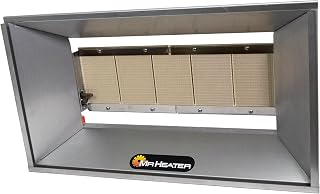
- High heat output up to 40,000 BTU, suitable for larger spaces.
- Efficient operation designed for garages and workshops.
Best for: Those who need rapid warming of mid-to-large spaces and already use propane fuel. This model is selected for its strong heating capacity and suitability for spaces up to 1,000 sq ft. Caution: Ensure proper ventilation to meet safety guidelines for propane heaters in enclosed areas.
SunStar Heating Products Infrared Ceramic Heater- Natural Gas 80,000 BTU

- High BTU output with corrosion-resistant aluminized steel body.
- Aluminum reflectors maximize radiant efficiency for broad heat coverage.
Best for: Industrial or large workshop spaces needing robust radiant heating and long service life. This unit is chosen for its heavy-duty construction and radiant efficiency. Limitation: Higher BTU means greater heat output; ensure space and venting considerations align with safety norms for large gas-fired radiators.
Tangkula Portable Patio Heater, 9500 BTU Outdoor Tabletop Heater

- Portable tabletop heater with 9,500 BTU and safety protections.
- Wide heating area (about 4.5 feet) and rustproof reflective cover.
Best for: Small outdoor spaces, patios, or decks where a compact propane heater is preferred. Choose this if you need portable, table-top heat and compact storage. Limitation: Lower BTU compared to overhead units; not ideal for large indoor spaces.
Mr. Heater 30,000 BTU Vent Free Radiant Propane Heater

- Vent-free operation suitable for enclosed spaces; 30,000 BTU.
- Heats up to 1,000 sq ft with battery-operated electronic ignition.
Best for: Smaller to mid-size rooms where vent-free operation is essential and propane is the fuel of choice. This model is selected for its balance of heat output and indoor-suitable design. Caution: Vent-free heaters require careful indoor clearance and proper ventilation planning to prevent moisture buildup or gas buildup in sealed spaces.
Buying Guide: Gas Overhead Radiant Heaters
- Space and ceiling height: Overhead units distribute heat downward; taller ceilings may need higher BTU or ambient radiation to feel warm at ground level.
- Fuel type compatibility: Decide between natural gas and propane based on available fuel infrastructure at the site.
- Heating area and BTU: Compare square footage guidance and BTU ratings to match your space size; higher BTU suits larger areas, but efficiency and cost matter.
- Ventilation and safety: Vented installations may require proper venting; vent-free options need adequate indoor ventilation and carbon monoxide considerations.
- Installation needs: Some models require professional mounting, gas line connections, and proper clearance from combustibles.
- Durability and build: Look for corrosion-resistant construction for long life, especially in humid or corrosive environments.
Frequently Asked Questions
- What’s the main difference between natural gas and propane overhead heaters? Natural gas units connect to a gas line and typically offer steady operation, while propane units run on portable tanks or a dedicated propane supply and may require more frequent refills.
- Are vent-free gas heaters safe for indoor use? Yes, when installed per manufacturer guidelines and with proper ventilation; ensure carbon monoxide detectors are present and that the space meets clearance requirements.
- Which heater is best for a 1,000 sq ft garage? Heaters with 30,000–40,000 BTU ranges and overhead installation are generally suitable, but verify the exact space layout and insulation for accurate sizing.
- Can I install these heaters myself? Some models allow DIY installation with proper clearances, but many installations require a licensed professional due to gas connections and venting requirements.
- Do overhead heaters emit noticeable light or odor? Most radiant gas heaters operate with minimal odor and no visible flame, but some pilot or burner designs may produce slight scents if ventilation is inadequate.
- What safety features should I look for? Look for automatic shutoffs, tip-over protection, flame-out protection, and robust mounting hardware to ensure stability and safety in use.