If you need a pellet stove that delivers near-50,000 BTU for larger spaces, this guide highlights five top options, with clear comparisons to help you choose. These stoves are best for homeowners needing substantial heat in open floor plans, older homes, shops, or cabins. Each product section explains who it’s best for and why it’s a strong pick, plus a concise caution when applicable. A quick buying table is included to summarize key specs at a glance.
| Product | Best For | Hopper Size | Approx. Heating Range |
|---|---|---|---|
| PelPro PP150 Pellet Stove | Large living spaces and spaces needing lots of heat | 150 lb | Up to 2,500 sq ft |
| Comfortbilt HP22 | Wide spaces, efficient and easy maintenance | 55 lb | Up to 2,800 sq ft |
| Cleveland Iron Works Bayfront | Smart-home users and consistent warmth | 66 lb | 1,800–2,500 sq ft |
| Cleveland Iron Works Large Pellet Stove | High-capacity heating with WiFi | 130 lb | 2,000–3,000 sq ft |
| US Stove 3,000 Sq. Ft. Pellet Stove | High-output option for open plans | 170 lb | Up to 3,000 sq ft |
PelPro PP150 Pellet Stove for Home Heating

The PelPro PP150 is designed to deliver up to 49,200 BTU to heat up to about 2,500 square feet, making it a solid choice for older homes, cabins, or shops that require robust, consistent warmth. It features an easy-dial thermostat control and auto-ignition, plus a 150-pound hopper that offers long burn times between refills. The stove is EPA-certified with high fuel economy, helping you maximize heat output per bag of pellets. A fresh-air kit is included, which is helpful for installations in spaces with tighter ventilation. Best for larger living areas or mixed-use spaces where steady heat is essential. Caution: the large hopper means a longer loading interval, but it may also require more space for placement.
Comfortbilt HP22 2,800 Sq Ft Pellet Stove

The Comfortbilt HP22 heats up to approximately 2,800 square feet and is designed for robust heating in medium-to-large spaces. It includes a large viewing area and a 55-pound hopper, offering a balance between heat and frequent refueling. The stove uses a powerful blower and requires standard venting (not ventless), making it a strong pick for homes with existing chimney or venting setup. Best for homeowners who want a visually appealing unit with strong heat output and straightforward maintenance. Limitation: not ventless, so space and venting considerations matter for installation.
Cleveland Iron Works Bayfront Pellet Stove
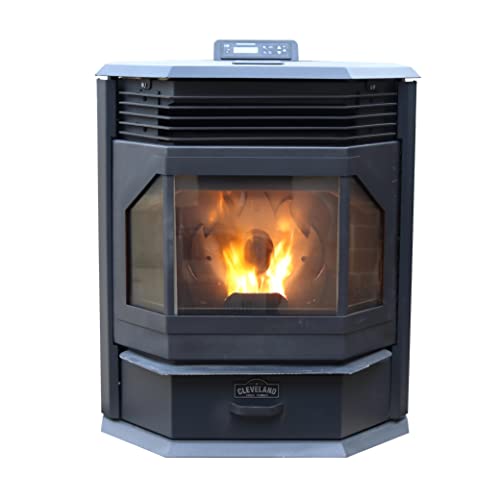
The Bayfront model from Cleveland Iron Works offers built-in WiFi smart-control, heating roughly 1,800 to 2,500 square feet with a 66-pound hopper for longer burn times. This unit is well-suited for tech-friendly homes that want remote monitoring and adjustable settings via a smartphone. It provides a reliable heat output and a compact footprint for mid-sized spaces. Best for homeowners who value smart features and consistent climate control. Caution: ensure your space supports WiFi-enabled operation and regular maintenance for the smart features.
Cleveland Iron Works Large Pellet Stove

The Large Pellet Stove from Cleveland Iron Works features a 130-pound hopper and built-in WiFi for smart-home integration, delivering heat to about 2,000–3,000 square feet. Its substantial hopper reduces refueling frequency, which is advantageous for long cold snaps. The model is best for users who want extended burn time and remote control capabilities. Limitation: larger footprint may require more floor space and a solid venting plan.
US Stove 3,000 Sq. Ft. Pellet Stove

The US Stove model heats up to 3,000 square feet and uses a substantial 170-pound hopper to sustain heat over long periods. It can run up to 80 hours on a full hopper, delivering up to 33,000 BTUs of clean heat. This is a strong option for open-plan homes or spaces where a higher BTU output is desired without sacrificing fuel economy. Best for larger, well-vented rooms or workshops. Caution: BTU output is high, so keep overall room size in mind to avoid overheating.
Buying Guide: Practical Considerations for 50k BTU Pellet Stoves
- Heating area and BTU alignment: Choose a model that suits your square footage, ensuring the stated BTU roughly matches the space you intend to heat.
- Hopper size and burn time: Larger hoppers reduce refueling frequency but require more space. Balance convenience with installation area.
- Ventilation requirements: Many stoves are not ventless. Confirm existing chimney or venting compatibility, and plan for proper clearance from combustibles.
- Smart features and WiFi: If you want remote control and monitoring, consider models with built-in WiFi, app control, and compatibility with smart-home systems.
- Fuel economy and efficiency: EPA-certified efficiency indicates better heat utilization. Compare efficiency ratings to estimate operating costs over time.
- Installation footprint: Large stoves may need a dedicated hearth or non-combustible pad. Check clearance distances and manufacturer recommendations.
- Maintenance and cleaning: Look for accessible burn pots, easy-to-clean flues, and simple ash removal to minimize downtime.
Frequently Asked Questions
- What size pellet stove do I need for 2,500 square feet? Answer: A model around 40,000–50,000 BTU with a suitable hopper and ducting can cover 2,000–2,500+ sq ft, depending on insulation and climate.
- Is a ventless pellet stove feasible for large spaces? Answer: Most units require venting. Ventless designs are typically limited in BTU and may not be appropriate for very large areas.
- Do larger hoppers save money? Answer: Larger hoppers reduce refueling frequency, potentially saving time, but price and space trade-offs apply.
- Are smart pellet stoves worth it? Answer: If you value remote scheduling, energy monitoring, and quick adjustments, smart features can enhance comfort and efficiency.
- What maintenance steps are essential? Answer: Regular ash removal, chimney or vent inspection, and periodic combustion chamber cleaning help maintain performance.
- How do I choose between these models? Answer: Match heating area, hopper capacity, and smart features to your home layout, venting options, and preferred maintenance level.