For buyers seeking reliable plug-in heat lamps, these picks offer a range of wattages, bases, and features to suit reptile enclosures, poultry brooders, and food-w warming setups. This guide highlights practical choices for different needs, from compact dome fixtures to larger dual-socket systems. Each product is evaluated for who it’s best for, plus concrete reasons to pick it or avoid it. The table below compares core details to help you choose quickly.
| Product | Best For | Why Pick |
|---|---|---|
| BOEESPAT Reptile Lamp Fixture | Small reptile enclosures | Deep dome, independent switch, high UV reflectivity |
| LUCKY HERP 150W Ceramic Heat Emitter | Night heating and long life | No light, fast warm-up, durable ceramic |
| WORLEYX 300 Watt Heat Lamp | Chicken coops, outdoor use | Weather-resistant, even heat, two-stage control |
| VORIGY Heat Lamp (Two 250W) | Food warming and catering | Two bulbs, adjustable height, rapid heating |
| ReptiKing 5.5″ Dome | Reptile basking and heat | Deep reflector, easy on/off |
Buyer tip: consider the enclosure size, safe heat range, base compatibility (E26), and whether you need light-emitting or non-light-emitting heat. The following sections break down each option with clear use-cases and cautions.
BOEESPAT Reptile Lamp Fixture 5.5 Inch Deep Dome

Best for: small reptile tanks and terrariums needing reliable basking heat. This fixture supports up to 250 watts, and it is compatible with E26 base bulbs, including UVA/UVB basking lamps and ceramic heat sources. The interior uses a high UV reflectivity aluminum alloy to boost UVA/UVB output, aiding appropriate basking behavior in reptiles.
Why selected: The deep 5.5-inch dome improves heat concentration while reducing hot spots. An independent switch on a long 67-inch cord adds convenient control away from the bulb itself. A practical choice for hobbyists who want straightforward heating with good UV output.
Caution: With higher wattage options available, ensure your enclosure can safely handle 250W total heat and confirm fixture mounting does not place bulb near flammable materials.
LUCKY HERP 150W Ceramic Heat Emitter
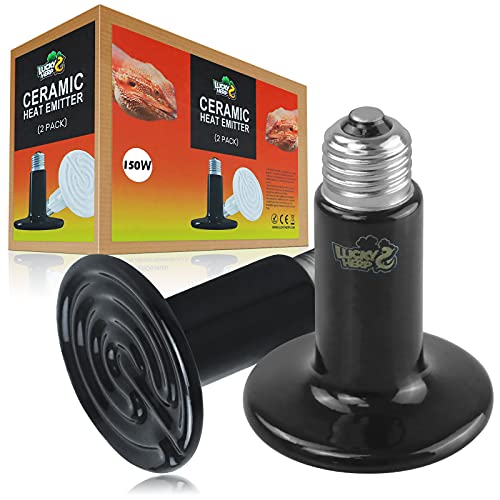
Best for: nighttime heating where light emission should be minimized. This two-pack provides 150W each, using ceramic material that emits heat without light, which helps maintain sleep cycles for pets.
Why selected: Fast heat-up (about 4 minutes to reach temperature) and robust ceramic construction extend operating life beyond many standard bulbs. It fits standard E26 sockets and runs on 120 volts, making it a versatile, low-maintenance option.
Caution: No light means relying on separation from daytime lighting plans; ensure your setup coordinates with day-night cycles and safety around heat sources.
WORLEYX 300 Watt Heat Lamp for Chicken Coop

Best for: larger poultry brooders and outdoor coops that require steady, even warmth. This professional-grade heater features a carbon fiber heating element and is designed to resist outdoor exposure.
Why selected: It offers even heat distribution to minimize hot spots, with a two-stage temperature control to adapt to different coop needs. The weather-resistant design makes it suitable for varied climates.
Caution: Ensure proper protective housing and airflow to prevent accidental contact with animals, and verify electrical safety in outdoor installations.
VORIGY Two 250W Heat Lamps for Food Warming

Best for: commercial or party-size warming needs where a large warming zone is required. The two 250W bulbs provide rapid, uniform heating across a 12″ x 20″ area.
Why selected: A height-adjustable stand allows tailoring heat intensity and coverage. The design emphasizes practical operation with one-touch activation and ventilated shades to extend bulb life.
Caution: The dual-bulb configuration may create excess heat in small spaces; monitor temperature to avoid overheating. Do not place near flammable materials.
ReptiKing Reptile Light Fixture, 5.5” Dome

Best for: bearded dragons and other reptiles that need basking heat with enhanced UVA output. The dome is paired with a heat-resistant socket for reliable daily use up to 150W.
Why selected: The extra-deep aluminum reflector dome improves light and UVA exposure. A straightforward on/off switch on a long power cord adds convenient control for quick adjustments.
Caution: Limit the maximum wattage to 150W to avoid overheating the dome and ensure proper ventilation around the fixture.
Chtoocy Chicken Coop Heat Lamp

Best for: brooder settings and small livestock housing needing a reliable, adjustable heat source. This 300W/150W dual-setting lamp provides directional heat for chicks and other animals.
Why selected: The unit features a stainless steel build with a heavy-duty grill to protect animals and bulbs, plus UL certification on the power cord for safety. It supports various barn and livestock environments.
Caution: The higher wattage requires careful hanging and distance management to prevent overheating or burns in confined spaces.
Buying Guide: Heat Lamp Purchase Considerations
What should you consider before buying a heat lamp? Key factors include heat output needs, enclosure size, and whether you require lighting in addition to warmth. For reptiles, UVB and basking compatibility matters; for poultry, durable outdoor-ready options and temperature control are crucial; for catering or food warming, rapid, even heating across a defined area is the goal.
Power and safety: Ensure the fixture supports the intended wattage and uses a robust cord, proper heat resistance, and safe mounting methods. Always verify compatibility with your bulb type (E26 is common) and avoid overloading electrical circuits.
Heat management: Look for products with adjustable heat, two-stage settings, or thermostatic control to maintain consistent temperatures without overheating. For bearded dragons and other reptiles, consider UVA/UVB output alignment with enclosure needs.
Durability and environment: Outdoor or damp environments require weather-resistant designs. Indoor brooders benefit from sturdy housings and protective grills to prevent accidental contact with animals.
Ease of use: Features like independent switches, easy-on/off cords, and adjustable stands improve daily usability and safety in busy setups.
Frequently Asked Questions
- What wattage should I choose for a small reptile terrarium?
Answer: A light basking area typically uses 50–100W, but a safer approach is to select a fixture that supports up to 150W with appropriate dimming to avoid overheating. - Are ceramic heat emitters better than traditional bulbs for nighttime warmth?
Answer: Yes, ceramic emitters provide heat without light, which helps maintain sleep cycles for animals. - Can I use heat lamps outdoors in winter?
Answer: Yes, but choose a weather-resistant model and ensure proper mounting and power access with weatherproofing. - Is two-bulb warming necessary for most enclosures?
Answer: Not always. Two bulbs can improve even heating for larger areas, but smaller setups may only need a single, properly positioned heat source. - What safety measures are important with heat lamps?
Answer: Keep bulbs away from flammable materials, provide guards or grills, and ensure cords are elevated and secure to prevent chewing or snagging by animals. - Should I mix light-emitting and non-light-emitting bulbs in the same area?
Answer: Avoid using UVB or bright LED lights in sockets controlled by thermostats intended for heat, as it can affect temperature readings and cycle timing.