Find the right remote-controlled boiler thermostat to optimize comfort and energy use. This guide compares five top options for American homes, highlighting who each model is best for, what makes them stand out, and practical cautions to consider before purchase. Whether you want simple plug‑in control, robust scheduling, or Matter compatibility, these picks cover a range of boiler, heat pump, and heating setups.
Summary of selected products
| Product | Best For | |
|---|---|---|
| Honeywell Home T5 Smart Wi-Fi Thermostat | Active home with flexible scheduling and energy rebates | 7-Day scheduling with location-based control |
| XuLuaba Smart WiFi Thermostat | Users needing app control and Alexa/Google compatibility | Mobile app control; compatible with Alexa/Google |
| Sensi Smart Thermostat | DIY installers; privacy-conscious users | Energy Star certified; easy install; flexible scheduling |
| meross Matter Smart Thermostat | Smart homes pursuing Matter ecosystem | Matter integration; wide compatibility |
| SENSTREE Remote Control Thermostat | Simple plug‑in control for space heaters and fans | Plug-in with remote temperature control |
Honeywell Home T5 Smart Wi-Fi Thermostat

The Honeywell T5 is a smart Wi-Fi thermostat with 7‑day scheduling and location-based control. Best for households seeking reliable programmable control and potential energy rebates through their provider. It supports geofence technology to adjust comfort when you’re away or returning home. A caution: energy savings vary by usage and regional utility programs.
- Best for: Homes with active schedules and interest in rebates or demand response programs.
- Why selected: Strong scheduling features and geofence capabilities support consistent comfort and potential savings.
- Limitation: Savings depend on local programs and user behavior.
Smart WiFi Thermostat for Home (XuLuaba)

This model emphasizes app-based control and voice assistant compatibility, suitable for users who want remote adjustments via smartphone. It requires a C‑wire for power and supports Alexa/Google Home. Best for: tech‑savvy households with compatible wiring and a preference for voice control.
- Best for: Users who want smartphone control and smart home integration.
- Why selected: Strong app control and voice assistant compatibility.
- Limitation: Compatibility depends on wiring and system type; not for all heating setups.
Sensi Smart Thermostat (ST55)

The Sensi thermostat emphasizes privacy protection and easy installation, with ENERGY STAR certification and flexible scheduling. Best for: DIY installers who value straightforward setup and energy savings without sacrificing privacy.
- Best for: Privacy-conscious buyers seeking easy DIY install.
- Why selected: Clear setup, energy efficiency features, and broad compatibility.
- Limitation: Commonly wired installations recommended; some homes may need extra wiring for optimal function.
meross Matter Smart Thermostat

Meross offers Matter-enabled control with broad compatibility across major ecosystems (Apple Home, Alexa, Google Home, SmartThings). Best for: Homes adopting Matter for future-proof smart home integration. It notes that some wiring configurations require a C wire and is not suitable for certain baseboard or millivolt systems.
- Best for: People pursuing Matter ecosystem compatibility.
- Why selected: Wide platform support and flexible scheduling.
- Limitation: Some systems require a C wire; not all heating setups are compatible.
Remote Control Thermostat (SENSTREE)
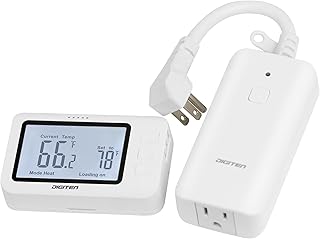
This pre-wired, plug-in thermostat focuses on simple, remote-regulated control for space heaters, fans, or window AC. Best for: Users who want a quick, non‑professional setup without extensive HVAC integration. A caution: designed for plug-in devices up to 1800W; not a replacement for a full HVAC thermostat in all homes.
- Best for: Quick setup without professional wiring.
- Why selected: Easy plug-in operation with remote control features.
- Limitation: Limited to compatible plug-in appliances; not a full furnace/boiler control solution.
Buying Guide
What should you consider when shopping for a remote control boiler thermostat?
- System compatibility: Check that your boiler, furnace, or heat pump supports a smart thermostat and whether a C wire is required for power.
- Wiring and installation: DIY-friendly options exist, but some setups demand professional wiring. Note whether the unit is pre-wired or requires a common home wiring scheme.
- Connectivity and ecosystems: Decide if you prefer Wi‑Fi control, voice assistant compatibility, or Matter support for broader smart home integration.
- Scheduling and geofencing: Evaluate if 7‑day scheduling, location-based control, or flexible modes align with your routine and energy goals.
- Energy savings potential: Look for ENERGY STAR certification or documented rebates in your region, and consider how your usage patterns affect savings.
- Privacy and data: Some brands emphasize privacy protections and limited data sharing; review manufacturer statements on data use.
Practical buying questions
- Do I need a C wire for a smart thermostat? In many cases yes; verify your system’s wiring before purchase.
- Is Matter compatibility important? If you plan to expand a smart home, Matter support can simplify future integrations.
- Can I install a thermostat myself? Many models offer DIY installation, but complex HVAC systems may require a pro.
- Will these thermostats save money? They can reduce energy use, especially with programmable features and real-time adjustments, but savings vary by usage and local rates.
- Which features matter most? Scheduling, geofencing, app control, and energy reports are common drivers for choosing a model.
- Are there privacy concerns? Some brands highlight privacy protections and limited data sharing; review policy summaries.
FAQ
- What is the main benefit of a remote thermostat? Convenience and the potential for energy savings through scheduling and remote control.
- Do smart thermostats work with boilers? Yes, many models support boilers when wired and configured for compatible systems.
- Can I use a thermostat with heat pumps? Many options support heat pumps, but check for compatibility with auxiliary heat and multi-stage setups.
- Is a C wire always required? Not always; some models work with battery power or power-over-ethernet, but many do require a C wire.
- How accurate are smart thermostats for energy savings? They provide precise control and usage data, helping users optimize routines for potential savings.
- Should I pick a Matter-enabled thermostat now? If you plan to unify multiple smart devices across brands, Matter offers broader future compatibility.