Answering the buyer’s search for reliable stove pipe joint sealants, this guide highlights five top options suited for high-heat environments such as pellet stoves, wood stoves, fireplaces, and direct-vent systems. These products are selected for durability, heat resistance, and ease of use, helping reduce smoke leakage and maintain airtight joints. Ideal buyers include homeowners performing DIY stove maintenance, installers seeking professional-grade sealants, and renters who need temporary, non-staining solutions. The table below summarizes the chosen products to help you compare at a glance.
| Product | Best For | Heat Tolerance | Format |
|---|---|---|---|
| Meeco’s Red Devil 600B | Pellet stove flues and gas vent joints | Up to 450°F continuous, 500°F intermittent | Silicone sealant tube |
| Meeco’s Red Devil 615 Black | Direct vent and venting joints | Up to 1100°F peak, 900°F continuous | Cartridge sealant |
| Meeco’s Red Devil 601C Clear | Pellet stove flues and gas vent joints (clear finish) | Up to 450°F continuous, 500°F intermittent | Silicone sealant cartridge |
| 2500°F High Temp Stove Gasket Cement (WREMEST) | Static joints in stoves, fireplaces, chimneys | Up to 2500°F | Gasket cement |
| Non-Toxic Mill-Pac Black Sealant (IGS) | Gas appliances and direct vent systems | Up to 1050°F | Squeeze tube sealant |
Meeco’s Red Devil 600B High-Temp Silicone Sealant
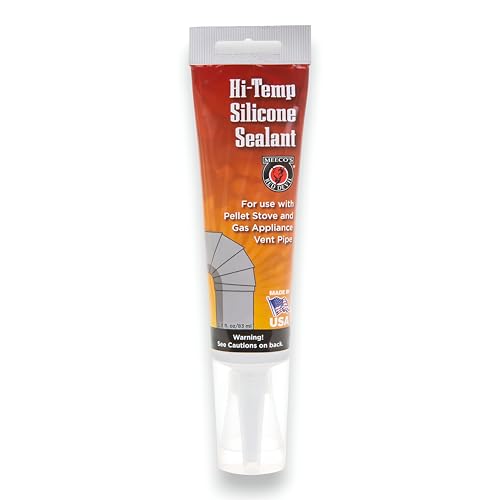
Purpose-built for pellet stove flues, gas vent pipes, and fireplace joints, the Meeco’s Red Devil 600B is a black, hi-temp silicone sealant designed for elevated heat exposure. It provides a flexible, rubber-like seal that resists cracking and weathering. Best for: indoor or outdoor stoves and vent connections where continuous heat approaches 450°F and occasional spikes reach 500°F. Caution: avoid use on non-heat-exposed joints that do not experience high temperatures.
Meeco’s Red Devil 615 Black Direct Vent Sealant
This direct-vent sealant is designed for high-heat venting components. It withstands up to 1100°F peak and 900°F continuous heat, making it suitable for direct-vent fireplaces, stoves, and venting joints. Best for: installations where extreme heat is expected and a durable, non-adhesive cure is preferred. Limitation: it cures without adhesives, so it’s mainly for sealing rather than bonding structural components.
Meeco’s Red Devil 601C Clear High-Temp Sealant
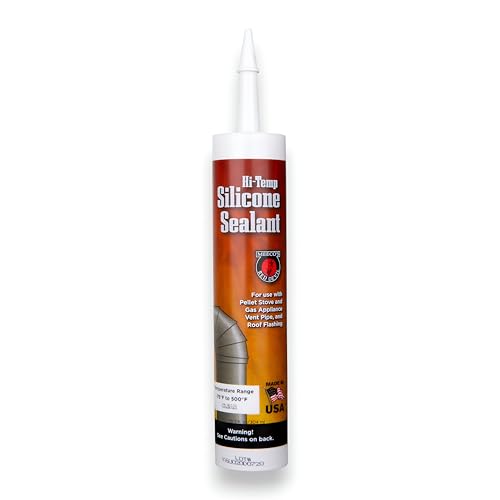
The 601C uses a clear hi-temp silicone formulation for pellet stove flues and gas vent pipes. It shares the same 450°F continuous, 500°F intermittent heat rating as the 600B, but offers a visually unobtrusive finish. Best for: applications where joint visibility matters. Caution: ensure proper surface preparation for optimal adhesion, especially on painted or porous materials.
2500°F High Temp Stove Gasket Cement (WREMEST) 10 oz

This silicate-based, non-flammable sealant is engineered for static joints in stoves, fireplaces, ovens, and chimneys. It is paintable after full cure for a neat finish. Best for: high-heat static joints where a rigid, durable seal is required. Limitation: not suitable for moving joints, and long-term flexibility may be less than silicone formulations in dynamic connections.
Non-Toxic Mill-Pac Black Sealant (IGS Industries)

This product emphasizes environmental safety with an organic binding system and non-toxic formulation. It’s designed to seal gas appliances and direct vent systems without off-gassing like some RTV silicones. Best for: applications where indoor air quality matters, and when sealing direct-vent gas appliances is a priority. Caution: while versatile, it may not achieve the highest heat resistance compared with silicone-based sealants above 1000°F.
Buying Guide: Key Considerations For Sealant Joints
What heat rating do I need? For most stove pipe joints, continuous heat tolerance around 450°F with intermittent spikes up to 500°F covers pellet stoves and many fireplaces. For direct-vent systems or extremely hot vent exits, higher ratings (up to 1100°F peak) provide extra reliability. Always choose a product whose heat rating matches the expected joint temperature range.
Silicone vs. cement-based formulas: Silicone sealants (like Meeco’s Red Devil 600B and 601C) offer flexibility, weather resistance, and water resistance, suitable for moving or non-permanent joints. Cement-based options (like WREMEST gasket cement) provide rigid, high-heat sealing for static joints but lack flexibility. Choose based on joint movement, exposure to the elements, and whether you need a paintable finish.
Direct-vent compatibility: Direct-vent joints benefit from products specifically designed for vent seals (e.g., 615 Black) because they are designed to seal joints where exhaust gases and moisture are present. Look for air-cure, non-adhesive formulas when maintenance access is frequent.
Finish and appearance: If a visible seal is a concern, consider clear silicone (601C) versus black silicone (600B) or high-heat cement. Paintable cement offers a clean finish after cure, useful for a finished room aesthetic.
Safety and environment: Non-toxic options (Mill-Pac Black) prioritize indoor air quality, especially for enclosed spaces. Ensure proper ventilation during application and curing as recommended by the manufacturer.
Application and cure time: Some products cure at room temperature without heat (air-cure), simplifying maintenance during mild weather. Others cure with heat or after full cure, affecting how quickly a system can be put back into service. Read product instructions for surface prep, curing times, and weather considerations.
FAQs: Quick Answers For Buyers
- Which sealant is best for pellet stove flues?
Sealants labeled for high-heat stove flues, such as Meeco’s Red Devil 600B or 601C, are strong options due to heat tolerance and flexible seals. - Can I use cement-based sealants on moving joints?
No. Cement-based products are typically for static, non-moving joints and can crack if joints move. Use silicone or other flexible seals for moving connections. - Is non-toxic sealant better for indoor air quality?
Non-toxic formulations reduce off-gassing and are preferable in enclosed spaces, especially near living areas. Check label specifics for venting suitability. - Do I need a paintable sealant?
If aesthetics matter or you want a neat finish around joints, choose a paintable option and follow curing guidelines for best results. - Are there sealants that cure without heat?
Yes, several air-cure formulations seal at room temperature, simplifying maintenance and allowing easier disassembly for inspection. - What is the limit for direct-vent systems?
Direct-vent joints may require higher heat tolerance; select products explicitly rated for direct-vent sealing to ensure consistent performance.