Small gravity-fed pellet stoves provide a reliable heat source without electricity, appealing to off-grid homes, cabins, and emergency-ready buyers. This guide highlights five compact options, clarifying who each stove is best for, and why you might choose one over another. The buyer-friendly table below summarizes key details to compare at a glance.
| Product | Best For | Notable Benefit |
|---|---|---|
| Wiseway Non Electric Pellet Stove | Homesteaders and off-grid homes | Long hopper, silent operation |
| US Stove GW1949 Wiseway Non-Electric Pellet Stove | Small-to-medium living spaces | EPA-certified gravity feed, large heat output |
| Garturects Wood Burning Stove with Oven | Outdoor tents and camping twins | Built-in oven and pellet-capable for outdoor use |
| Freedom Stove PS21 Pellet Stove | Smart-home-ready off-grid setups | Battery backup, Wi-Fi and remote control |
| GREEN STOVE Pellet Stove with Oven | Portable outdoor cooking plus heat | Includes chimney pipes and oven-style versatility |
Wiseway Non Electric Pellet Stove

The Wiseway Non Electric Pellet Stove operates on gravity feed with a 60-pound hopper designed to last up to 36 hours. It runs silently, making it suitable for bedrooms, living rooms, and cabins where quiet operation is valued. This model is best for buyers seeking a low-maintenance, off-grid heat source that doesn’t rely on electricity. A potential limitation is limited automatic controls, which may require manual stove management in variable conditions.
US Stove GW1949 Wiseway Non-Electric Pellet Stove

This model uses an EPA-certified gravity-feed system for low-maintenance operation. With about 40,000 BTUs, it can heat up to 2,000 square feet and uses standard 3-inch pellet venting. It’s ideal for medium-to-large spaces where a gravity-fed approach lowers energy use. A caveat is that non-electric stoves may require careful venting setup and adherence to local codes, especially in tightly sealed homes.
Garturects Wood Burning Stove with Oven
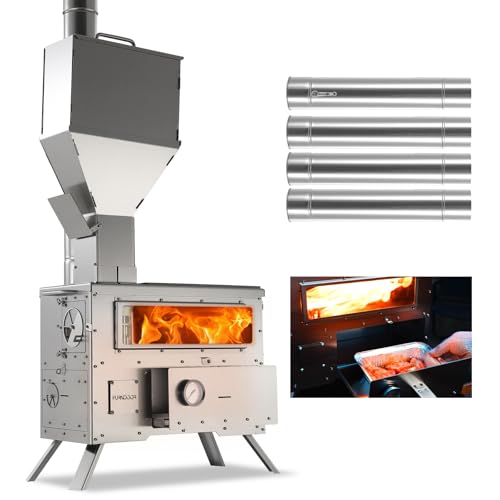
This outdoor, pellet-capable stove blends cooking versatility with heat through its built-in oven and a large viewing glass. It’s designed for campers and hunting setups needing both warmth and food preparation options. It uses pellet fuel and features wider chimney connections for improved draft. Best for extreme outdoor environments or temporary heating with cooking needs; however, it’s bulkier and more suited to outdoor use than indoor space.
Freedom Stove PS21 Pellet Stove

The Freedom Stove PS21 combines 34,700 BTUs with a 24V battery backup system, enabling 40+ hours of heat on two batteries. It offers Wi-Fi control, a touchscreen, and remote access for convenience in off-grid or storm-prone areas. This is the pick for buyers who want modern control features alongside gravity-fed heating. A potential drawback is reliance on battery availability for full functionality during outages.
GREEN STOVE Pellet Stove with Oven

This portable outdoor stove combines a pellet-centric design with an oven and included chimney pipes. It is a robust option for campers and outdoor enthusiasts who want to bake or roast in addition to heating. It’s best for temporary or outdoor use where cooking versatility matters. A limitation is potential complexity in setting up multiple chimney sections for new sites.
US Stove 3,000 Sq. Ft. Pellet Stove

Designed to heat up to 3,000 square feet, this US Stove option features a 170-pound hopper and up to 33,000 BTUs of clean heat. It’s well-suited for larger living spaces where continuous heat is needed without frequent refills. The larger hopper improves burn time, but it may require more floor space and a sturdy installation surface to support the weight.
Comfort Glow Wall Mounted Pellet Stove

This compact wall-mounted unit heats up to about 350 square feet and uses a 28-pound hopper for up to 35 hours of burn time. It’s a space-saving choice ideal for small apartments or rooms. It’s best for owners prioritizing footprint over larger heating capacity, and may require careful mounting and venting planning in tight spaces.
Buying Guide: Key Considerations for Small Gravity-Fed Pellet Stoves
How big is your space? Gravity-fed stoves typically require careful placement due to venting and airflow needs. For small rooms, models with efficient heat output and easy venting are preferable.
Off-grid suitability matters. If you want operation without electricity, choose non-electric gravity-fed models with reliable hopper capacity and a design that minimizes manual intervention.
Ventilation and clearance. Check venting requirements (3-inch vents are common) and ensure adequate clearance from combustibles. Local codes may influence stove placement and installation.
Fuel and burn time. Larger hoppers reduce refueling frequency. Consider how long you’ll be heating without maintenance access, especially in off-grid cabins or tents.
Controls and automation. Some models offer Wi-Fi or battery backup, which adds convenience but may increase complexity. Decide whether smart features are essential or optional for your setup.
Durability and weather considerations. Outdoor and camping stoves require weather-resistant construction and robust chimney connections. Indoor models emphasize airtight seals and quiet operation.
FAQs
- What is a gravity-fed pellet stove? – A stove that relies on gravity to feed pellets from a hopper to the burn pot, often without electricity.
- Are gravity-fed stoves suitable for apartments? – They can be, if venting is properly installed and space is adequate for clearance and safety.
- Do gravity-fed stoves require a chimney? – Yes, proper venting is essential for safe operation and emission control.
- Can I use these stoves during a power outage? – Non-electric gravity-fed models operate without power, while electric components in other units may require backup power.
- Which stove is best for off-grid living? – Models with large hopper capacity, silent operation, and gravity-feed design are usually best for off-grid use.
- What maintenance is typical? – Regular cleaning of the burn chamber and ash bin, inspection of gaskets, and venting upkeep are common tasks.