The best thermostats for electric heat balance precise control, energy savings, and smart home compatibility. This guide highlights five reliable options for 120V–240V baseboard and other electric heating setups, explaining who each model is best for and why. Ideal buyers include smart-home enthusiasts, DIY installers, and those seeking budget-friendly, reliable temperature control without complex features.
Summary of chosen products
| Product | Best For | Key Benefit |
|---|---|---|
| Mysa Smart Thermostat LITE | Smart homes with voice assistants | WiFi control, 7-day scheduling, HomeKit/Alexa/Google |
| YeloDeer 240V 4-Wire Dial Thermostat | Stylish, precise dial control | Wide range, 240V wiring, clear display |
| Honeywell RLV3120A | Non-programmable, quiet operation | Accurate, TRIAC switching |
| Riseem Digital Non-Programmable | Single-stage systems with energy savings | Energy-saving features, compatibility notes |
| Aowel Non-Programmable Thermostat | Simple control for basic setups | Compact, straightforward operation |
Mysa Smart Thermostat LITE for Electric Baseboard Heaters

Features: Save up to 26% on heating costs with custom schedules; WiFi direct connection; 7-day scheduling; works with Apple HomeKit, Amazon Alexa, and Google Home; 120V–240V compatibility.
Best for: Homeowners seeking a modern, app-controlled thermostat that integrates with major voice assistants and supports whole-home scheduling. The LITE model emphasizes efficiency and remote access without a hub.
Caution: Requires a supported baseboard heating system and a stable WiFi connection for full functionality.
240V Only 4-Wire Manual Electric Baseboard Heater Thermostat

Features: White, flush-mounted design; large knob for easy manual adjustments; higher accuracy than traditional mechanical baseboard thermostats; 240V wiring with a 40–80°F (4.4–26.7°C) control range.
Best for: Users who prefer a simple, reliable manual thermostat with a clean look and clear dial control for 240V baseboard systems. Suitable for those who don’t need smart features.
Caution: Limited to 240V systems and manual operation; not ideal for smart-home integration.
Honeywell Home Digital Non-Programmable Thermostat for Electric Heat Only
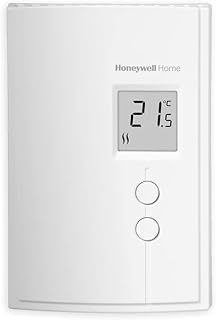
Features: Digital non-programmable thermostat for electric baseboard heaters and two-wire setups; high accuracy (±0.27°F) and silent TRIAC switching for stable temperature control.
Best for: Consumers needing precise temperature control without scheduling or smart features, especially in single-zone electric baseboard installations.
Caution: Lacks programmable scheduling and smart-home compatibility; ensure system is a simple 2-wire configuration.
Riseem Digital Non-Programmable Thermostat
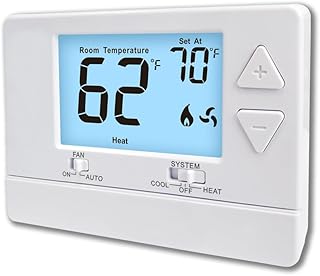
Features: Single-stage, 1H/1C control; energy-saving orientation; compatibility with multiple heating and cooling configurations; backlit display.
Best for: Homes with single-stage heating and cooling where basic digital control plus energy awareness matters. Not suitable for multi-stage or heat-pump setups.
Caution: Compatibility notes indicate several restricted systems; verify your HVAC configuration before purchasing.
Aowel Non-Programmable Thermostat for Home

Features: 1H/1C manual operation; suitable for 24V conventional single-stage systems; compact design with humidity display; simple wall-mount layout.
Best for: Budget-conscious buyers who need straightforward control for conventional single-stage systems without smart features. Not suitable for high-voltage line-heating or multi-stage systems.
Caution: Not applicable for 120–240V line-voltage heaters or multi-stage configurations; confirm system compatibility before buying.
Buying Guide
How to choose the right thermostat for electric heat
- System type: Confirm whether your heater is 120V or 240V, and whether you need line-voltage control or a low-voltage thermostat powering a relay. This affects compatibility and safety.
- Programmability: Do you want manual control, simple scheduling, or full smart-home integration? For energy savings with schedules, consider WiFi-enabled models with app control.
- Smart home compatibility: If you use Apple HomeKit, Google Home, or Amazon Alexa, prioritize thermostats that explicitly support those ecosystems.
- Installation and wiring: Some thermostats require professional installation, especially line-voltage models. Read wiring diagrams carefully and verify the number of conductors (2-wire vs. 4-wire or more).
- Accuracy and comfort: Look for thermostats with precise temperature control (±0.5°C or better) to minimize temperature swings in electric heating systems.
- Display and usability: A large, easy-to-read display, backlighting, and a clear dial or button layout reduce user errors and simplify daily adjustments.
Frequently Asked Questions
- What is the best thermostat for electric baseboard heaters?
- Do I need a smart thermostat for electric heat?
- Can I use a standard thermostat with baseboard heat?
- What should I consider when installing a thermostat for electric heat?
- Are there safety concerns with wiring baseboard heaters?
- Do these thermostats work with smart assistants?
The best option depends on your needs. For smart control and energy savings, a WiFi-enabled model like Mysa LITE is strong. For straightforward manual control, a 240V dial thermostat can work well.
Not necessarily. If you want energy savings and remote control, a smart thermostat is beneficial. If you just need basic temperature control, a non-programmable model may suffice.
Most baseboard heaters require line-voltage thermostats designed for 120V or 240V. Check your heater’s voltage and wiring before purchasing.
Key factors are compatibility with your voltage, number of wires, installation location, and whether the thermostat supports your heating system type (single-stage, multi-stage, etc.).
Yes. Line-voltage installation can pose risks. If uncertain, hire a licensed electrician to ensure proper wiring and to avoid electrical hazards.
Only models specifically designed for smart home ecosystems (like Mysa LITE) support voice and app control. Check each product’s compatibility before purchase.