If you’re looking to add cozy warmth under tile, stone, or laminate, an underfloor heating cable kit is the most versatile solution. This guide helps DIYers, homeowners, and remodelers pick the right kit for their space, budget, and electrical setup. The top picks below balance ease of installation, safety features, and effective heat distribution. See the quick product table for a snapshot, then dive into detailed comparisons.
| Product | Voltage | Coverage | Best For |
|---|---|---|---|
| VEVOR 50 sqft Underfloor Heating Cable Kit | 120V | 50 sq ft | Small to medium bathrooms and kitchens; tile or stone floors |
| VEVOR 200 sqft Underfloor Heating Cable Kit | 240V | 200 sq ft | Larger living areas; energy-efficient 240V setup |
| VEVOR 100 sqft Underfloor Heating Cable Kit | 120V | 100 sq ft | Medium spaces; versatile tile and wood installations |
| LuxHeat 30sqft Floor Heating Cable Kit | 120V | 30 sq ft | Smaller rooms; high-control thermostat and alarm included |
| HEATIT 45 sq.ft. Electric Underfloor Heating Cable | 120V | 45 sq ft | Tile and hardwood blends; customizable layouts |
Notes: All products feature thermostat control and free-form cable layouts for flexible installation. 12W per square foot is typical for energy efficiency. Always check local electrical codes and, if needed, consult a licensed electrician before installation.
VEVOR 50 Sqft Underfloor Heating Cable Kit

Features: Smart Thermostat with Full Control — a 15A programmable thermostat with GFCI protection offers 41°F–98.6°F (5°C–37°C) range, 7-day scheduling, 4 events/day, screen lock, and dual-sensor monitoring (air & floor). Flexible & Secure Mat Design — free-form heating cables support tile, natural stone, laminate, and wood floors. Security Certification — dual-layer aluminum shield reduces signal interference and includes a grounding wire for leak-proof operation. Low-wattage design at 12W/sq.ft. for energy efficiency.
Best for: Small to medium rooms like bathrooms and kitchens that need precise, zone-controlled warmth. Choose this if you want robust thermostat features and flexible cable layouts. Caution: ensure floor height is considered, as embedded wires must be fully covered by suitable underlayment.
VEVOR 200 Sqft Underfloor Heating Cable Kit
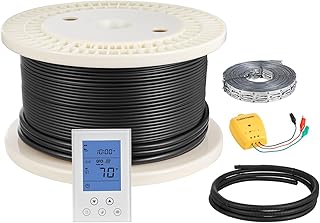
Features: Smart Thermostat with Full Control — 15A programmable thermostat with GFCI protection; 41°F–98.6°F range; 7-day scheduling; dual-sensor monitoring; screen lock. Flexible & Secure Mat Design — free-form cables for tile, stone, laminate, and wood. Professional Security Certification — aluminum shield and grounding wire for safe, even heat distribution. Energy-efficient at 12W/sq.ft.
Best for: Larger spaces or open-plan areas where a single 240V system can deliver even heat distribution with centralized control. Avoid this if you’re wiring a very small space and don’t plan to take advantage of the high coverage.
VEVOR 100 Sqft Underfloor Heating Cable Kit

Features: Smart Thermostat with Full Control — 15A programmable thermostat with GFCI protection, 41°F–98.6°F range, 7-day scheduling, screen lock, dual-sensor monitoring. Flexible & Secure Mat Design — free-form cables adaptable to tile, stone, laminate, and wood. Professional Security Certification — aluminum shield and grounding wire for leak-proof operation. Low-wattage design (12W/sq.ft.) for energy efficiency.
Best for: Mid-sized homes or renovations where a 100 sq ft footprint fits multiple rooms. Use this when you want balanced heat in several zones with precise control. Caution: installation requires careful measurement of room boundaries to avoid gaps.
LuxHeat 30sqft Floor Heating Cable Kit

Features: Includes 30 sq ft Heating Cable, Programmable Touchscreen Thermostat (UDG4-4999), Alarm, Floor Sensor, and Strapping Guides. Individual room control helps tailor comfort. Design Flexibility — loose-lay/free-form cables support custom layouts. Must embed wires in self-leveling underlayment, thinset, or mortar. LuxHeat offers a long-standing industry presence and a 25-year warranty in its info lineup.
Best for: Small rooms or bathrooms where you want strong, independent room control. Choose this if you value an included alarm and sensor for installation peace of mind. Limitation: careful embedding in suitable underlayment is required to minimize floor height changes.
HEATIT 45 Sqft Electric Underfloor Heating Cable

Features: [UL and CSA Certified] 120V system covering up to 45 sq ft with 148.5 feet cable, installation alarm, and metal fixer for secure setup. Customizable Installation — loose-lay cable supports flexible layouts for tile, laminate, or hardwood. Energy Efficient Heating — 3.7 watts per foot with dual-wire technology; minimal EMF. 1/8″ diameter helps minimize finished-floor height impact.
Best for: Mixed-floor renovations where you want a flexible layout and strong compliance with US/Canada codes. Choose this if you want a known installation alarm and compact wire height. Limitation: ensure proper embedding with compatible underlayment to maintain floor thickness.
Buying Guide
What should I consider when choosing an underfloor heating cable kit?
- Space size and layout: Larger areas benefit from higher coverage; consider 120V for smaller rooms and 240V for bigger spaces.
- Thermostat features: Look for programmable schedules, dual-sensor monitoring (air and floor), and safety protections such as GFCI.
- Cable design: Free-form or loose-lay cables offer flexibility for irregular rooms but require suitable underlayment.
- Floor type compatibility: Ensure the kit is suitable for tile, stone, laminate, or wood and that installation materials are compatible with your subfloor.
- Energy efficiency: Check wattage per square foot and the system’s ability to run efficiently with your home’s insulation.
- Electrical code compliance: Verify UL/CSA certifications and whether the installation requires a licensed electrician.
Which kit should I pick based on my space?
- Small bathrooms or kitchens: 50 sq ft kit or LuxHeat 30 sq ft kit offer compact, easy installation with strong control features.
- Medium living areas: 100 sq ft or 45 sq ft HEATIT options provide flexible layouts with robust thermostats.
- Large open spaces: 200 sq ft 240V kit enables even heat distribution and centralized control across zones.
Installation considerations
- Floor height: Factor in the added thickness from heating cables, underlayment, and tile or mortar.
- Sensor placement: Place floor sensors away from direct heat paths to avoid skewed readings.
- Safety: Use GFCI-protected thermostats and ensure proper grounding as described by the manufacturer.
Maintenance and longevity
- Expect long-term operation with correct installation and compatible floor coverings.
- Keep access to the thermostat and sensor wiring in case of future servicing needs.
Frequently Asked Questions
- What voltage should I choose for underfloor heating?
120V is common for smaller spaces; 240V is more efficient for larger areas and can cover more space with even heat.
- Can I install underfloor heating under wood floors?
Yes, but it requires proper underlayment and careful embedding to avoid damage to wood finishes.
- Is a thermostat with dual-sensor monitoring important?
Yes, it improves temperature accuracy by measuring both air and floor temperatures, helping prevent overheating.
- Do these systems require professional installation?
Electrical codes vary; while some DIY installation is possible, many setups should be wired by a licensed electrician, especially for 240V systems.
- What is the expected energy usage?
Most kits operate around 12W per square foot, but actual usage depends on room insulation and thermostat settings.
- Are these systems resistant to electrical interference?
Many kits include shielding to reduce interference, but verify specifications and ensure correct grounding.