Finding the right underfloor heating overlay system depends on space, installation needs, and your preferred heat source. This guide highlights five compatible options, focusing on ease of installation, reliability, and suitability for tile, laminate, or other overlays. Best for bathroom updates, kitchens, or living areas where a warm floor is a key comfort feature. The table below summarizes the selected products for quick comparison.
| Product | Best For | Key Benefit |
|---|---|---|
| LuxHeat 40sqft Electric Radiant Floor Heating System | Small to medium rooms | Includes thermostat, uncoupling membrane, and sensor for simple tile installs |
| Prodeso Underfloor Heat System Membrane | Tile over problematic substrates | Crack isolation and vapor management for safe overlays |
| Warming Systems 35 Sqft 120V | Bathrooms and tight spaces | Complete kit with monitor and membrane for fast installs |
| VEVOR 200 sqft 240V Kit | Larger areas | Smart thermostat and flexible cable design for varied layouts |
| LuxHeat 25 Sqft Radiant Floor Heating System | Smaller zones | Self-adhesive mat and integrated thermostat options |
The following sections review each option in detail, including who it’s best for, installation notes, and potential limitations. All details are based on the product features provided and are intended to help you compare overlay systems side by side.
LuxHeat 40Sqft Electric Radiant Floor Heating System

Best For: Small to medium spaces like bathrooms, kitchens, or laundry rooms needing quick warmth control. The kit provides a 40sqft heating cable, uncoupling membrane, and a touchscreen thermostat with GFCI protection for safer wiring. The 3-in-1 membrane design helps with crack prevention and waterproofing under tile.
Why Selected: It combines a dedicated heater circuit with a user-friendly thermostat and included sensor, enabling precise floor temperature management. The membrane support offers added durability for tile overlays and reduces self-leveling time.
Caution: Do not cut or shorten the heater wire; ensure proper embedding in self-leveling underlayment or mortar for best efficiency.
Prodeso Underfloor Heat System Membrane, PDESH

Best For: Installers needing a reliable uncoupling and vapor management solution beneath tiled floors, especially on substrates prone to movement or moisture sensitivity.
Why Selected: The membrane’s rounded reliefs create channels to embed heat cables while uncoupling movement and improving crack prevention. Its vapor management helps balance substrate moisture during overlays.
Caution: This membrane is part of a larger system; compatibility with your heat source and level of substrate prep should be verified before purchase.
Warming Systems 35 Sqft 120V Electric System
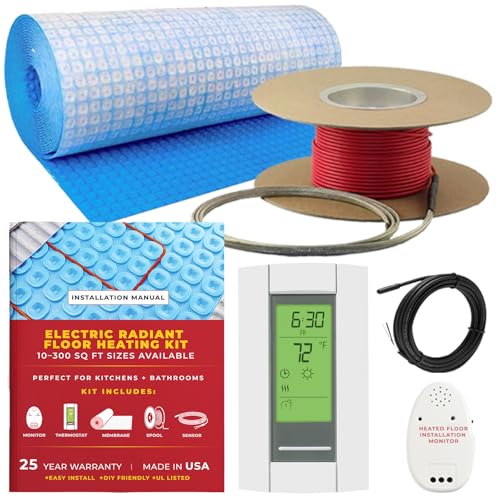
Best For: Bathrooms or compact living areas where a complete kit with an alarm monitor adds installation confidence.
Why Selected: Includes a digital thermostat with floor sensor and a built-in monitoring alarm. The uncoupling membrane supports fast tile installation and reduces substrate issues. Suitable for various tile or wood overlays with proper leveling.
Caution: System data indicates 420W total load for 35 sq ft; plan electrical capacity accordingly to avoid overloading circuits.
VEVOR 200 Sqft Underfloor Heating Cable Kit
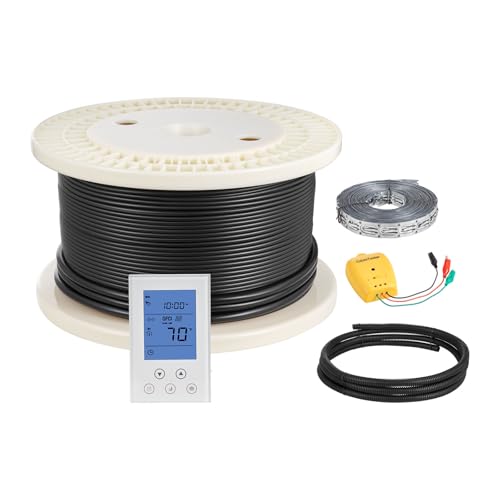
Best For: Larger areas where flexible cable layout is desired. Includes a smart thermostat with dual-sensor monitoring for air and floor temperatures.
Why Selected: The flexible cable design supports free-form layouts, making it easier to fit into irregular spaces. A dual-sensor thermostat supports precise comfort control and energy efficiency across bigger zones.
Caution: Requires careful planning of circuit load and wall outlet capacity, especially for 240V systems with longer cable runs.
LuxHeat 25 Sqft Radiant Floor Heating System

Best For: Small zones or compact spaces where tile or laminate overlays require targeted warmth.
Why Selected: Self-adhesive mat design with a programmable thermostat and floor sensor offers straightforward installation and reliable control. LuxHeat’s long-term warranty indicates durability for small rooms.
Caution: Mat-based installations require embedding in self-leveling underlayment or mortar; avoid cutting heater wires at any location.
Buying Guide: Key Considerations for Underfloor Heating Overlays
What type of heating fits your floor? Electric systems are popular for overlays under tile or laminate, but hydronic options exist if you’re renovating larger spaces and have access to plumbing.
How large is the area? For small baths, 20–40 sq ft kits are often sufficient. For larger rooms, 100+ sq ft systems or modular layouts may be more cost-effective and easier to design.
How will you level and prep the subfloor? Membranes and uncoupling layers reduce crack transmission and improve heat distribution, but they require proper substrate prep and adherence to manufacturer instructions.
What controls do you prefer? Thermostats with floor sensors deliver consistent comfort. Consider models with dual sensors, maintenance alerts, and remote access if available.
What safety features are important? Look for GFCI protection, water resistance for wet areas, and built-in alarms to identify cable issues during installation.
What is the installation timeline? Pre-assembled panels and complete kits can shorten install time, especially for DIY projects. Hydronic systems may require professional plumbing work.
FAQ
- What is an overlay underfloor heating system? It is a thin heating layer installed over an existing subfloor, designed to warm the floor surface under tile, laminate, or vinyl.
- Do I need a professional to install these overlays? It depends on the system. Some kits are DIY-friendly with step-by-step instructions, while others benefit from professional installation for electrical or hydronic components.
- Can I install under tile with uncoupling membranes? Yes. Uncoupling membranes help prevent cracks and allow for heat distribution under tiles.
- Will these systems work with all floor types? Most are designed for tile, some for laminate or engineered wood, but proper leveling and substrate compatibility are essential.
- How do I control energy usage? Programs on thermostats and floor sensors enable efficient operation by matching heat to room use and ambient conditions.
- Are there safety considerations for wet areas? Look for GFCI protection and moisture-rated components to reduce risk in bathrooms and kitchens.