Answering buyers who want supplemental heat without running full central systems, these gas-powered wall space heaters deliver reliable warmth in small-to-medium rooms. The top picks below are best for spaces like living rooms, bedrooms, offices, and sunrooms where a compact, installation-friendly heater is ideal. Choose this list if you want natural gas operation, ventless design, and targeted heating without complex setups.
Summary of selected products:
| Product | Best For | Key Benefit |
|---|---|---|
| Mr. Heater 30,000 BTU Vent Free Blue Flame Natural Gas Heater | Medium rooms up to 1,000 sq ft | High BTU with battery ignition |
| ProCom MN300HPA-B 30,000 BTU Ventless Infrared Plaque | Medium to large spaces | Three heat settings and oxygen depletion sensor |
| ProCom MN100TPA-B 10,000 BTU Ventless Infrared Plaque | Small rooms or offices | Thermostat control and compact profile |
| ProCom MN100TBA-B 10,000 BTU Blue Flame | Small rooms, bedrooms | Same compact design with blue flame heat |
| Envi Plug-in Electric Panel Heater | Electric backup or mixed heat zones | Quiet, energy-efficient, wall-mounted |
Mr. Heater 30,000 BTU Vent Free Blue Flame Natural Gas Heater

This vent-free heater delivers up to 30,000 BTU per hour and can heat areas up to 1,000 square feet. A battery-operated electronic ignition supports quick startup, making it suitable for living rooms or larger bedrooms where higher warmth is desired. Best for homeowners who want robust heat output from a natural gas source with minimal electrical dependence.
- Best for larger living spaces within the 800–1,000 sq ft range
- Better for homes with existing natural gas supply and a desire for quick heat when needed
- Caution: Vent-free units require proper room air exchange; ensure compliance with local codes
ProCom MN300HPA-B 30,000 BTU Ventless Infrared Plaque
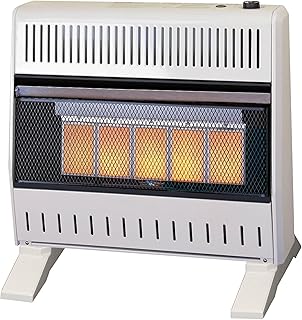
This 30,000 BTU infrared plaque heats up to around 1,200 square feet. It offers a three-heat setting manual control and includes an Oxygen Depletion Sensor with automatic shut-off. It is a solid option for larger rooms or open-plan spaces where a wall-mounted infrared heater can provide steady warmth without additional electrical load. Best for: spaces that need substantial heat with simple manual controls.
- Best for larger living areas needing strong heat output
- Better for users who prefer manual 3-heat settings and safety shut-off features
- Caution: Requires proper installation per manufacturer guidelines; ensure clearance from combustibles
ProCom MN100TPA-B 10,000 BTU Infrared Plaque
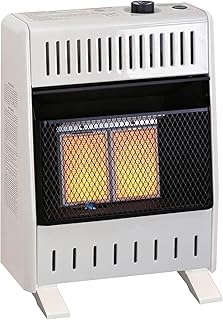
This compact infrared heater provides up to 10,000 BTU and heats up to 500 square feet. It is well-suited for smaller rooms, offices, or bedrooms where space is limited. It includes thermostat control for High/Medium/Low settings, and can be mounted on a wall or placed on the floor with base feet. Best for small spaces needing focused warmth without excessive heat output.
- Best for small rooms or workspaces
- Better for users seeking a slim, modern profile that fits in tight spaces
- Caution: Lower BTU may be insufficient in very drafty rooms
ProCom MN100TBA-B 10,000 BTU Blue Flame
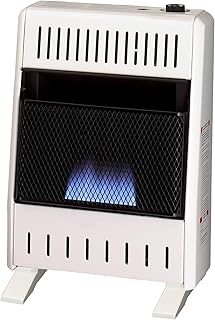
This 10,000 BTU blue flame heater offers a compact option for small rooms and bedrooms. It provides thermostat control (High/Medium/Low) and a modern, slim design that fits easily on walls or floors with base feet. Best for users who want efficient, steady warmth in a compact footprint.
- Best for compact spaces needing efficient small-area heating
- Better for users who prefer a quick-heat option with a stylish profile
- Caution: As with ventless gas units, ensure adequate ventilation in the room
Envi Plug-in Electric Panel Heater

This electric panel heater is energy-efficient and suitable as a supplementary heat source or for zones where gas is unavailable. It operates safely with a cool surface and a wall-sense safety sensor. It’s a quiet, fan-less option ideal for bedrooms or nurseries where low noise matters. Best for mixed-heating setups or as a back-up heat source when gas is not practical.
- Best for zones requiring electric-only warmth
- Better for allergy-aware or noise-sensitive spaces due to quiet operation
- Caution: Electric models will not heat as broadly as gas-powered units in very large rooms
Buying Guide: Gas Wall Heaters For Space Heating
What should you consider when choosing a gas wall heater? Start with room size, venting needs, and energy source compatibility. Vent-free models work well in well-ventilated spaces but require standard air exchange to keep indoor air fresh. Infrared heat is efficient for targeted warmth, while blue flame or blue flame-and-vent designs can provide a quicker, more uniform feel in medium rooms. Consider installation flexibility—mounted on the wall or floor—especially if you have limited floor space.
Key questions to guide your choice:
- What is the room size and ceiling height? Larger rooms may benefit from higher BTU units.
- Is natural gas available, and can you meet local venting and clearance codes?
- Do you need manual or thermostat control, and is an Oxygen Depletion Sensor required?
- Would a compact infrared plaque or a blue flame model better fit your decor and heat needs?
- Is this heater meant to be a primary heat source or a supplemental space heater?
Frequently Asked Questions
- Are vent-free gas heaters safe for use in bedrooms? Yes, when installed according to local codes and with proper room ventilation and CO safety measures.
- What is the difference between infrared and blue flame gas heaters? Infrared focuses heat on objects and people; blue flame produces more radiant heat and may warm air more quickly in a room.
- Can a gas wall heater be used without electricity? Some models operate without electricity, but many rely on battery ignition or thermostat controls that require power.
- How large a space will a 10,000 BTU heater warm? Roughly up to 500 sq ft in moderate conditions, depending on insulation and airflow.
- Do these units require professional installation? Vent-free units often require professional installation to ensure venting, clearance, and safety compliance.
- What maintenance is needed? Regular cleaning of vents and ensuring gas connections are secure are common maintenance steps.