When a water heater expansion valve is needed, the goal is to protect your system from pressure and temperature surges while fitting your piping and space. This guide highlights practical expansion-relief valve options suitable for residential and small-business setups. The top picks cover different pipe types, installation ease, and durability. Best for: homeowners replacing an expansion tank, plumbers seeking quick installs in tight spaces, and builders needing reliable protection across common water-heater configurations. Below is a quick, buyer-friendly comparison plus detailed product insights.
| Product | Best For | Key Benefit |
|---|---|---|
| SharkBite 3/4 Inch Thermal Expansions Relief Ball Valve | Tight spaces, PEX and copper systems | Push-to-connect, no tools required |
| Cash Acme 3/4 Inch NCLX-5L | Residential water heaters needing calibrated relief | Factory-calibrated relief at 150 PSI / 210°F |
| HYDRO MASTER 3/4 Inch Safety Relief Valve | Brass body, corrosion resistance | All brass body with stainless spring |
| Camco Automatic Temperature and Pressure Relief Valve | RV and home heaters with standard NPT | All brass body, 150 PSI / 210°F settings |
| HYDRO MASTER Tankless Service Valve Kit | Tankless systems needing integrated relief | All-in-one kit with isolation valves |
Note: Each product listed below aligns with common water heater safety requirements and common residential piping standards. Read each section to determine which valve best aligns with your system type, space constraints, and maintenance preferences.
SharkBite 3/4 Inch Thermal Expansion Relief Ball Valve
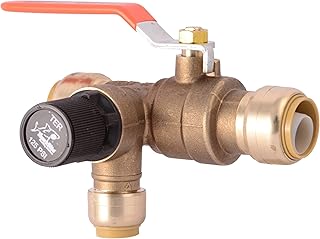
The SharkBite Thermal Expansion Relief Ball Valve provides a compact, push-to-connect solution that replaces an expansion tank, shut-off valve, and related fittings in many setups. It supports PEX, CPVC, PE-RT, SDR-9 HDPE, and copper pipes, making it versatile for tight spaces where traditional soldering is impractical. Best for: homeowners or installers who want a quick, tool-free installation and prefer push-to-connect reliability. Caution: as a pressure-relief device, ensure correct orientation and confirm compatibility with your pipe material to avoid leaks or misfits.
Cash Acme 3/4 Inch NCLX-5L Temp & Pressure Relief Valve

The Cash Acme NCLX-5L is a factory-calibrated relief valve designed to protect water heaters by releasing excess temperature and pressure. Its bronze body, stainless steel components, and a silicone seat are built for durability in residential systems. Best for: those who want predictable, factory-set protection without manual adjustments. Limitations: the shank length and mounting configuration may require compatible fittings in older installations.
HYDRO MASTER Safety Relief Valve With 3/4 Inch Thread

The HYDRO MASTER valve features an all-brass body with a stainless steel spring, designed to withstand corrosion and provide reliable protection against excessive pressure. Best for: systems that require robust brass construction and corrosion resistance. Caution: verify thread compatibility with existing piping to avoid leaks or the need for adapters.
Camco Automatic Temperature and Pressure Relief Valve

The Camco relief valve provides protection for RV or home water heaters with a ¾-inch NPT connection. It features a 150 PSI/210°F factory setting, with an extension probe and lever for easy verification and maintenance. Best for: RV owners or homes using standard NPT connections where an extended probe helps detect issues early. Limitation: the probe length may require clearance for installation in tight compartments.
HYDRO MASTER Tankless Water Heater Service Valve Kit

This all-in-one kit provides hot and cold isolation valves, a 150 PSI relief valve, and full-port ball valves, designed for tankless systems that benefit from integrated flow control and safety. Best for: tankless water heater installations needing a compact, ready-to-install solution with built-in relief. Caution: ensure compatibility with your tankless model’s connection standards and space for mounting the kit.
Buying Guide: Key Considerations for Water Heater Expansion Valves
- Compatibility: Check pipe material (PEX, CPVC, copper, PE-RT, HDPE) and thread types (NPT) to ensure the valve fits your system.
- Calibrated vs. uncalibrated: Factory-calibrated valves offer predictable relief settings; adjustable units are better when precise tuning is needed for unique installations.
- Space and accessibility: Tight spaces benefit from push-to-connect or compact designs; consider a model with an easy disconnect feature for maintenance.
- Durability: Brass bodies and stainless springs resist corrosion and provide longer service life in hot water environments.
- Maintenance needs: Probes, extensions, and accessible relief points simplify inspection and verification routines.
- Tank vs. tankless compatibility: Tank-type heaters often use standard relief configurations; tankless systems may require integrated kits for proper protection.
- Industry standards: Look for valves rated for typical residential temperatures (around 210°F) and pressures (commonly 150 PSI) to match your system’s safety margins.
Frequently Asked Questions
- What is the main purpose of a water heater expansion valve?
To relieve excess pressure and temperature in the water heater system, protecting components and preventing damage. - Do I need a relief valve for every water heater?
Most residential systems require a relief device per safety standards; check local codes and manufacturer guidelines. - Can I install a relief valve with push-to-connect fittings?
Yes, many models support push-to-connect options, simplifying installation in tight spaces. - What should I consider when choosing between tank and tankless relief options?
Tankless systems often benefit from integrated relief or dedicated service kits designed for their specific flow and connection layouts. - Is factory calibration important for a relief valve?
Factory calibration provides predictable activation at specified temperature and pressure, reducing the need for adjustments. - Are brass bodies more durable than other materials?
Brass bodies with stainless springs tend to resist corrosion in hot-water environments, offering longer service life.