Best Water Heater Recirc Pump Options for Instant Hot Water
When you want hot water at taps in seconds, a dedicated water heater recirculation pump is the right upgrade. This guide highlights five reliable choices suited to different homes and budgets. Best for single‑level homes, larger houses with long pipe runs, or boiler/ radiant heating systems, these pumps prioritize quick water delivery, energy efficiency, and simple installation. Each pick is evaluated for installation ease, energy use, and the right match for varied plumbing layouts.
Summary Of Chosen Products
- — compact, three speeds, 1″ NPT, solid for average households.
- — three speeds, 3/4″ NPT, quick install kit, versatile for boiler or solar setups.
- — timer‑free, ultra‑quiet, compact under-sink placement.
- — 3 speeds, stainless head, flow switch with dry‑run protection.
- — heavy‑duty, 17 GPM, 35 ft head, robust for larger homes or radiant systems.
AB 110V Hot Water Recirculating Pump

The AB pump offers adjustable three‑gear control (55/90/130 W) with a maximum flow of 13 GPM and a head up to 24 ft. It ships with a standard 1″ NPT flange, gaskets, nuts, and bolts for quick install. This model is best for mid‑size homes with moderate pipe runs seeking fast hot water without excessive energy use. It’s maintenance‑free, with no mechanical seals to replace. A potential limitation is that performance drops if the loop is unusually long or extremely long returns are required.
CrestWave 130W Hot Water Recirculating Pump

With three speeds (55/90/130W) and three head options (9.8/18/24 ft), CrestWave is ideal for varying layouts. The included 3/4″ FNPT flange and kit simplify installation, making it suitable for boiler upgrades, solar thermal systems, and radiant setups. It is best for users who want a compact unit that can serve multi‑level homes efficiently. A limitation is that it requires a compatible electrical outlet and may be overkill for very small apartments with short runs.
Laing LHB08100092 AutoCirc Recirculation Pump

Laing’s AutoCirc offers a compact under‑sink installation with a timer and minimal power draw, using about 14 watts. It’s designed for farthest fixtures from the water heater and functions quietly. Best for small homes or apartments where a dedicated under‑sink pump is preferred. A potential limitation is that it does not include a built‑in timer if the model chosen is not timer‑equipped; verify the exact variant before buying.
BACOENG Hot Water Recirculating Pump

BACOENG provides a stainless steel pump head and a smart flow switch with multiple modes (Auto/Manual) and dry‑run protection. Three speeds (46/67/93 W) cover typical residential needs, with 6–13 GPM depending on head. This model is best for households seeking reliable safety features and robust materials. Potential drawback is that the extra features may come at a higher initial cost compared to entry‑level models.
VEVOR F-009-BF5-J Cast Iron Circulator Pump
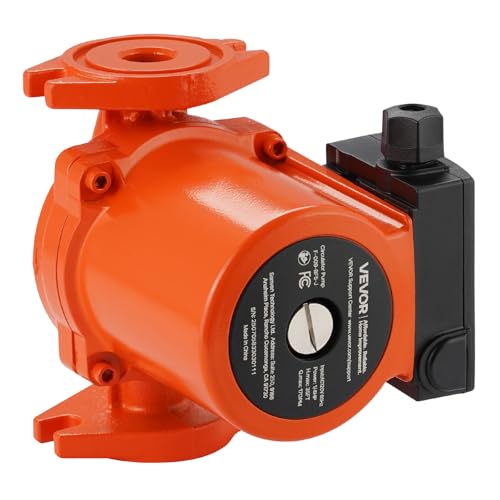
VEVOR’s cast iron body delivers durability for home heating and large hot water loops, offering up to 17 GPM at 35 ft head with a 1/4 HP motor. This pump is well suited for larger homes, radiant heating systems, or installations requiring higher flow. A limitation is its larger size and higher power draw, which may not fit compact under‑sink installations or lower power setups.
Buying Guide
What should I consider before buying a water heater recirc pump?
Key factors include compatibility with flange sizes (1″ vs 3/4″), head height (ft), flow rate (GPM), and whether you need a timer or auto‑shutoff. Determine if your home has a dedicated return line or if you’ll use a “no return line” option. Consider noise, installation ease, and energy consumption.
How do I choose the right head and flow for my home?
Short loops and single‑story homes typically need lower head and moderate flow. Multi‑story or long pipe runs benefit from higher head and higher GPM. Choose a pump that can maintain hot water at the furthest fixtures without overworking the unit.
Is a timer important?
Timers help manage energy use by limiting when the pump runs. If you have a consistent daily pattern, a timer can save energy. If you prefer always‑on hot water, a model without requires careful daily usage to avoid waste.
What about materials and durability?
Stainless steel bodies resist corrosion; cast iron offers durability for heavy use. Ensure seals and impellers match your water quality. Look for models with dry‑run protection to prevent damage during dry starts.
Installation considerations
Most pumps come with installation kits, including flanges, gaskets, and bolts. Verify flange size, compatible power supply, and whether there is a need for additional wiring or a dedicated outlet. If uncertain, consult a licensed plumber.
Maintenance and longevity
Opt for a maintenance‑free design when possible. Regular inspection of connections and seals can prevent leaks. Choose pumps with guaranteed compatibility for your existing piping and water heater type.
Frequently Asked Questions
- Do I need a return line for a recirculation pump? Some systems require a return line; others work with a retrofit kit that creates a short loop. Check your current plumbing layout.
- Will a recirc pump waste water? When used correctly, it reduces water waste by delivering hot water faster, minimizing cold water runoff.
- Can these pumps be used with solar or boiler systems? Yes, several models are designed for boiler upgrades and solar thermal integrations.
- Which pump is quietest? Models marketed for “whisper quiet” operation and with better seals tend to be the quietest, particularly under‑sink installations.
- What maintenance is required? Most recirc pumps are maintenance‑free, but periodic inspection of seals, flanges, and electrical connections is advised.
- Is 13 GPM necessary for every home? Not necessarily; 13 GPM covers many homes with long loops, but smaller homes may get adequate performance with lower GPM and head.