Answering the need for a flexible, wire-free way to manage irrigation zones, these wireless zone valve controls let you automate sprinklers without complex wiring. They are ideal for homes with detached sheds, existing valve boxes, or landscapes where trenching is impractical. This guide highlights five top options, outlining who each product is best for, and why they stand out. Whether you want battery-powered operation, battery backups, or mesh-ready smart control, these picks balance reliability with ease of installation.
| Product | Best For | Why It Stands Out |
|---|---|---|
| Orbit 57865 Outdoor Battery-Powered Water Sprinkler Controller | Small or hard-to-wire yards | Battery-powered, supports up to four valves, simple scheduling |
| Hunter Node 100 Battery Operated Sprinkler Timer | Remote or off-grid zones | No wiring required, pre-wired solenoid, rugged outdoor design |
| Pluvion 2-Wire TapLink 4-Zone Starter Kit | Existing timers, minimal wiring expansion | Adds four zones over two wires, independent valve installation |
| Orbit B-hyve Indoor Smart Sprinkler Controller – 8-Zone | App-based, multi-zone control | WiFi-enabled, weather adjustment, multi-zone management |
| YoLink Wireless Smart Valve Control Kit | Remote, offline control with leak sensing | LoRa range, offline D2D shutoff, battery backup |
Orbit 57865 Outdoor Battery-Powered Water Sprinkler Controller

Key use: battery-powered, wireless zone control. Best for homeowners needing a quick, trench-free upgrade to four independent valves. It supports easy expansion with a 1″ FPT jar-top valve and enables customized schedules per zone, promoting efficient watering. Cautions include battery maintenance and ensuring valve compatibility with existing irrigation hardware.
Best for: small yards, seasonal setups, or retrofit projects where wiring is not practical. Why selected: straightforward wireless operation, reliable timer functionality, and simple installation align with typical residential needs.
Hunter Node 100 Battery Operated Sprinkler Timer
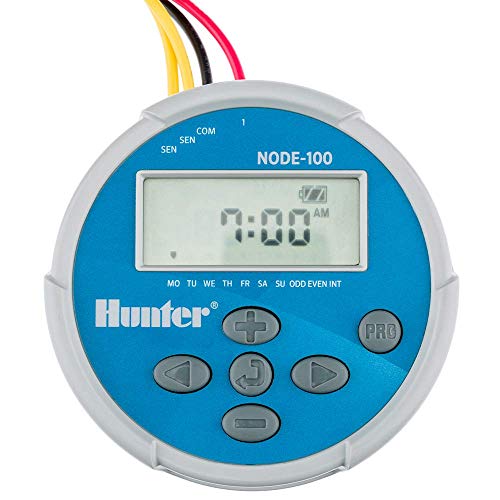
Key use: wireless operation with a pre-wired solenoid. Best for zones where wiring is not available or desirable. It runs on one or two 9V batteries and includes a battery-life indicator, making it suitable for off-grid or difficult-to-access areas. A limitation is reliance on battery power, so periodic replacement is essential for uninterrupted control.
Best for: remote valve boxes, detached yards, or small remote gardens. Why selected: fast, tool-free installation and true wireless control that avoids trenching or wiring runs.
Pluvion 2-Wire TapLink 4-Zone Starter Kit

Key use: expands irrigation with two wires. Best for existing timer users who want four extra zones without re-wiring. Each TapLink receiver installs at the valve and connects simply, avoiding centralized multiplexers. Caution: setup is quick but relies on compatible 24VAC timers and valves; plan for zone placement to avoid interference.
Best for: expanding systems in yards with scattered valves or when trenching is not feasible. Why selected: independent zone receivers simplify placement and wiring, enabling flexible layouts.
Orbit B-hyve Indoor Smart Sprinkler Controller – 8-Zone

Key use: app-controlled multi-zone irrigation with weather adjustments. Best for tech-savvy homeowners who want centralized control and remote scheduling. It supports multiple zones and is designed for indoor setup with outdoor-ready options. A potential limitation is reliance on WiFi and the Orbit app for full functionality.
Best for: households seeking comprehensive smart irrigation across several zones. Why selected: robust app-based control, weather-based adjustments, and easy multi-zone management make it a versatile solution for dynamic outdoor layouts.
Orbit B-hyve Smart Indoor/Outdoor Sprinkler Controller – 6-Zone

Key use: indoor/outdoor smart controller with six zones and weather-aware scheduling. Best for mixed environments where part of the system is inside, and part is exposed to weather. It uses an app-controlled interface for remote management and supports custom irrigation schedules. Caution: ensure weatherproofing for exterior installation if placed outside the home.
Best for: larger homes or properties with several distinct zones requiring centralized scheduling. Why selected: combines indoor convenience with outdoor durability and flexible installation options.
Buying Guide: Key Considerations For Wireless Zone Valve Control
- Power source and reliability: Battery-powered options avoid trenching but require battery management. Solar-assisted or mains-powered backups are worth considering for off-grid locations.
- Zones and expandability: Match the number of zones to your landscape. Look for scalability, whether by adding taps, integration kits, or multi-zone controllers.
- Wiring needs: Some solutions are truly wireless, others use existing wires or two-wire expansions. Choose according to your yard layout and future plans.
- Control method: App-based control is convenient but depends on WiFi or LoRa networks. D2D (device-to-device) offline shutoff adds resilience during outages.
- Weather and environment: Weatherproof enclosures and IP ratings matter for outdoor placements. Indoors/outdoors compatibility expands installation options.
- Compatibility: Verify valve compatibility (1/2″, 3/4″, 1″ sizes) and timer compatibility with TapLink or remote receivers if you’re repurposing an existing system.
- Alerts and monitoring: Look for leak sensors, water usage data, and remote shutoff to prevent waste and damage.
Frequently Asked Questions
- What is wireless zone valve control?
It enables irrigation zone management without hard-wired connections between the controller and valves, using wireless receivers or battery-powered modules.
- Do these systems work with existing irrigation timers?
Many are designed to integrate or expand existing setups using two-wire or wireless receiver kits, but compatibility varies by model.
- Is battery-powered better than wired solutions?
Battery-powered options reduce installation work and trenching but require battery maintenance and periodic replacements.
- Can I control multiple zones from a single app?
Yes, most multi-zone controllers offer centralized apps with scheduling and weather-based adjustments for all zones.
- What should I consider for outdoor installations?
Weatherproofing, enclosure integrity, and correct valve sizing are essential for reliable outdoor performance.