Garages demand dependable heat solutions that can blast through drafts, startups, and chilly mornings. This guide highlights five blower heaters suited for garage spaces, prioritizing safety, efficiency, and consistent warmth. Each option below offers a distinct approach—from kerosene and propane units to electric models—so you can compare heat sources, coverage, and features at a glance.
| Product | Heat Type | Approximate Coverage |
|---|---|---|
| Dyna-Glo Delux KFA135DGD | Kerosene Forced Air | Up to 3,200 sq. ft. |
| NewAir NGH160GA00 | Electric Portable | Up to 160 sq. ft. |
| Dura Heat EUH1465 | Electric Forced Air | Small spaces (garages/workshops) |
| Flame King 60,000 BTU | Propane Forced Air | Up to 1,500 sq. ft. (outdoors/garages) |
| TEMPWARE 7500-Watt | Electric Ceiling Mount | Up to 1,250 sq. ft. |
Choosing a garage heater involves evaluating heat source compatibility with your space, safety features, and run-time preference. The following sections present five products with concise technical insights, helping you compare suitability for workshops, detached garages, or home garages where quick warmth is essential.
Dyna-Glo Delux KFA135DGD 95k/135k BTU Kerosene Heater
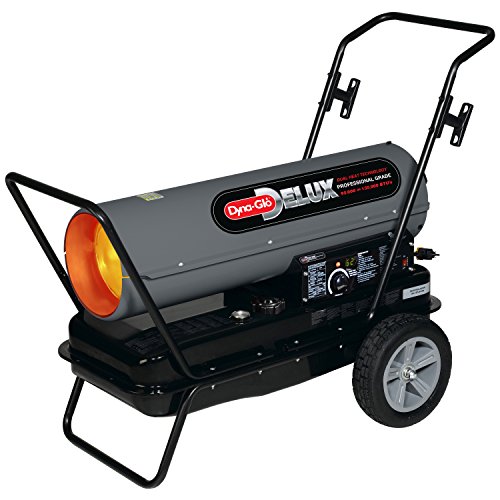
The Dyna-Glo Delux KFA135DGD provides dual-heat capacity with 95,000 or 135,000 BTU options. It is designed for larger garage spaces, capable of heating up to about 3,200 square feet. This kerosene-fired blower uses forced air to distribute warmth quickly, making it a practical choice for colder climates or bigger projects. Safety considerations include proper venting and fuel storage, as with most kerosene units, to minimize emissions and fire risk.
NewAir NGH160GA00 120V Electric Portable Garage Heater

NewAir’s NGH160GA00 offers portable electric warmth with a cool-to-the-touch exterior for safety. It features an internal thermostat and automatic shut-off, helping prevent overheating. With two heat modes and a tilting head, this unit can focus warmth toward work areas, and a carry handle enhances mobility for quick relocation around a workspace. It’s best suited for smaller garages or zones where portable, low-maintenance heating is advantageous.
Dura Heat EUH1465 Electric Forced Air Heater
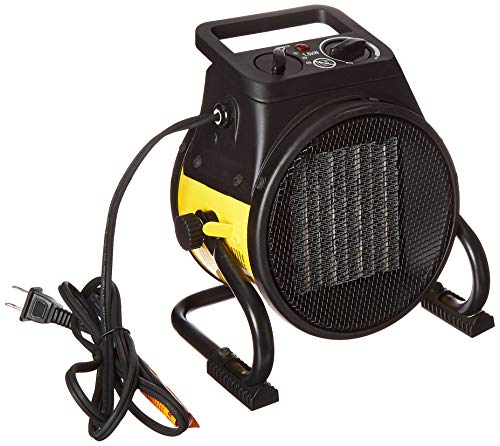
With 1500W of PTC ceramic heating, the Dura Heat EUH1465 delivers quick warmth in smaller spaces. Its rugged steel construction suits garage environments where durability matters. The heater offers heat and fan-only options, providing flexibility whether you need direct warmth or improved air circulation in a workshop. It is a compact option for garages lacking a dedicated heating system.
Flame King 60,000 BTU Propane Forced Air Heater

The Flame King propane heater delivers 60,000 BTU with forced air output, suitable for larger garages or outdoor job sites. This unit emphasizes safety features like a built-in safety fuel shutoff and a fire-detection system, plus a tilt shutoff for accidental tip-overs. A hot-air blow flow helps maintain comfortable working temperatures quickly, though it requires proper venting and propane fuel management.
TEMPWARE Electric Garage Heater, 7.5kW, Ceiling Mount
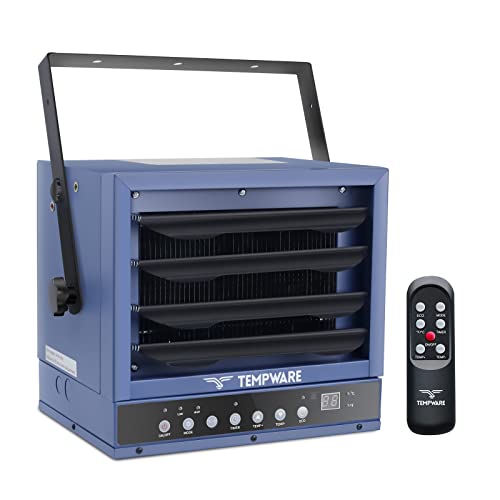
TEMPWARE’s 7,500-watt ceiling-mount heater is designed for workshops and garages with higher heat needs. It features ECO mode and a 1-12 hour timer, allowing energy-efficient operation and adjustable air output. A built-in thermostat supports automatic shutoff when the desired temperature is reached, and a temperature sensor helps prevent overheating. The unit is ideal for larger garages that can support ceiling installations and require consistent, centralized heat distribution.
Buying Guide: Key Considerations For Choosing A Garage Blower Heater
- Heat source and space size: For large, uninsulated garages, kerosene or propane units can deliver high BTUs, while electric heaters work well in insulated spaces or where gas lines aren’t available.
- Safety features: Look for automatic shut-off, tip-over protection, thermostat control, and proper venting or cool-to-the-touch exteriors in electric models to reduce risk.
- Ventilation and emissions: Kerosene and propane units require adequate ventilation to manage fumes. Always follow manufacturer guidelines and local codes.
- Install location and setup: Ceiling-mounted electric heaters save floor space, while portable models offer flexibility around the workspace. Consider clearance from combustibles and easy access to outlets or fuel sources.
- Energy efficiency and operating costs: ECO modes, thermostats, and timer functions reduce energy use. Electric heaters typically have lower ongoing fuel costs in moderate climates, while gas or kerosene units may suit consistently cold conditions.
- Maintenance and durability: Durable builds, rust-resistant housings, and simple filter or vent maintenance extend the life of a garage heater in dusty environments.
- Noise and airflow: Some blowers can be louder than others. Airflow direction and adjustable heads or tilting options help target heat where you work most.
When selecting a garage blower heater, align the heat source with your space, insulation level, and safety practices. For frequent use in larger, drafty garages, high-BTU machines with proper venting are beneficial. For smaller spaces or where mobility is needed, electric portable options with thermostatic control provide efficient, adjustable warmth. Always consult the manufacturer’s installation instructions and local building codes to ensure a safe setup.