Best Check Valves for Irrigation Systems: Durable, Leak-Free Backflow Prevention
Choosing the right check valve for an irrigation system helps protect water quality, prevents backflow, and extends the life of sprinklers and pumps. This guide reviews five reliable options, highlighting durability, installation, and performance features. Each product is selected for compatibility with common irrigation setups and ease of use for homeowners and professionals alike.
Summary of Selected Products
- Hunter Sprinkler HC50F50M HCV 1/2-Inch Female Inlet by 1/2-Inch Male Outlet Check Valve
- Hunter Sprinkler HC75F75M HCV 3/4-Inch Female Inlet by 3/4-Inch Male Outlet Check Valve
- Midline Valve PVC Inline Check Valve for Backflow Prevention 3/4” FIP White Plastic
- Midline Valve PVC Inline Check Valve for Backflow Prevention 1/2” Solvent Connections White Plastic
- IPW Industries Inc. SMC 6850090 Inline Poppet Backflow Preventer Check Valve
Hunter HC50F50M HCV 1/2-Inch Valve for Irrigation

The Hunter HC50F50M HCV is designed to fit a 1/2-inch irrigation line with a 1/2-inch male outlet. It is built to schedule 80 specifications, offering durable construction suitable for outdoor irrigation environments. The unit is configured to be inserted between the riser and sprinkler head, enabling straightforward installation and height adjustment to ensure proper check functionality. This model emphasizes durability and long service life in typical irrigation cycles.
Hunter HC75F75M HCV 3/4-Inch Valve for Irrigation
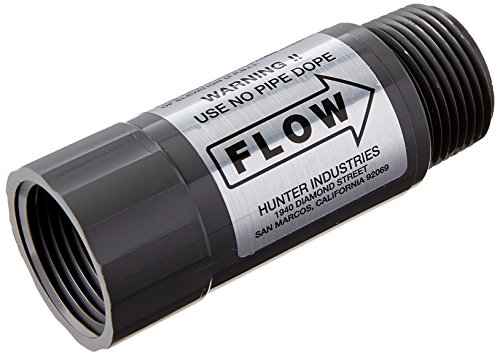
This 3/4-inch Hunter HCV valve is engineered to maintain one-way flow in larger irrigation runs. It offers adjustable check height and is designed to resist wear under consistent irrigation cycles. Like the smaller model, it is built to durability standards and is suited for installations requiring reliable backflow prevention between risers and sprinkler heads. The design aims to minimize backflow risks while preserving system efficiency.
Hunter HC50F50F HCV 1/2-Inch Female Inlet by 1/2-Inch Female Outlet Check Valve

This valve version features a 1/2-inch female inlet and a 1/2-inch female outlet, suitable for tight irrigation spaces where space is at a premium. It shares Hunter’s emphasis on durability and easy installation, with height adjustments to ensure proper one-way flow. It is well-suited for small to mid-sized residential irrigation setups requiring reliable backflow prevention.
Midline Valve PVC Inline Check Valve 3/4” FIP

This 3/4” female-in, male-out check valve offers leak-free performance with EPDM O-rings and TPE seats for a secure seal. It features a stainless-steel spring-loaded check to prevent backflow, and is designed for cold-water lines up to 150 PSI at 73°F. The unit is ISO 9002 and ASTM F1970 approved, reflecting a robust manufacturing standard. It is suitable for irrigation mains and other backflow prevention needs where reliability matters.
IPW Industries Inline Poppet Check Valve

The IPW Inline Poppet Check Valve is designed for home irrigation and water pump systems, focusing on a compact inline poppet mechanism to ensure one-way flow. Its polypropylene construction resists corrosion, making it suitable for various irrigation environments. The valve is positioned as a versatile option for protecting water quality in residential setups, with reliable backflow prevention across different piping configurations.
Buying Guide: Key Purchase Considerations For Irrigation Check Valves
- Valve size and compatibility: Match the valve size to your irrigation line (1/2″, 3/4″, etc.) and confirm inlet/outlet threading or solvent connections that fit your piping and fittings.
- Material and durability: Look for corrosion-resistant materials (PVC, polypropylene) and schedules rated for outdoor exposure. Consider whether metal components are needed for harsher climates or high-pressure zones.
- Backflow prevention vs. check valve: Distinguish between inline check valves (prevent backflow in the line) and backflow preventers (vacuum breakers or other devices) that protect potable water supplies. Choose based on system risk and local codes.
- Pressure and temperature ratings: Verify cracking pressure, operating pressure range, and temperature tolerance to ensure reliable performance in your climate and water supply.
- Installation flexibility: Some valves allow easy height adjustment and quick insertion between risers and sprinkler heads, while others require more extensive piping changes. Choose based on your site constraints.
- Maintenance and service life: Consider O-ring and seal quality, ease of disassembly for maintenance, and the likelihood of needing replacements over a typical irrigation season.
- Code compliance: Ensure the valve adheres to local plumbing and irrigation codes, especially where backflow prevention is mandatory.
- Cost of ownership: Evaluate not only upfront pricing but also long-term durability, maintenance needs, and replacement intervals to determine overall value.
Formatting And Installation Tips
When installing any check valve, ensure it is oriented correctly for one-way flow as indicated by the flow direction arrow on the body. For higher head pressure zones, prefer valves with robust seals and stronger springs. For small garden irrigation systems, compact inline valves are often easier to fit inside existing irrigation trenches. Always follow manufacturer instructions for installation, and consult a licensed plumber if you are unsure about backflow prevention requirements in your area.