Shops and warehouses require reliable, durable heating that distributes warmth evenly, reduces cold spots, and keeps energy use sensible. This guide highlights five robust options suited for commercial spaces, from ceiling-mounted units to portable and dual-fuel designs. Each product is evaluated on heat distribution, controls, safety features, and installation considerations to help facility managers choose the right solution for different shop layouts.
| Product | Brand |
|---|---|
| Comfort Zone 10,000W Hard-Wired Garage Heater – Industrial & Commercial Ceiling Mount | Comfort Zone |
| VEVOR Kerosene Forced Air Heater, 215000 BTU | VEVOR |
| TEMPWARE Electric Garage Heater, 7500-Watt | TEMPWARE |
| Mr. Heater F260550 Big Maxx MHU50NG Natural Gas Unit Heater | Mr. Heater |
| VEVOR Electric Garage Heater, 15000-Watt | VEVOR |
Comfort Zone 10,000W Ceiling Mount Heater
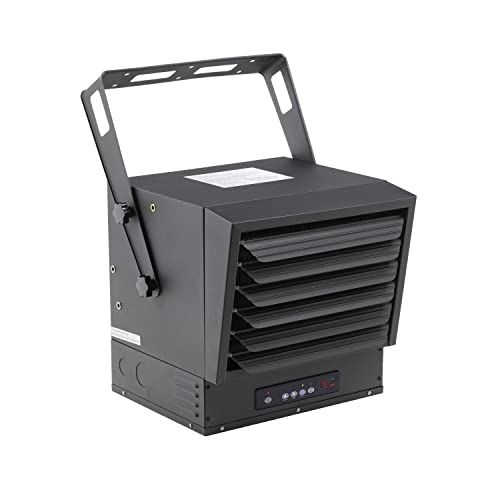
The Comfort Zone ceiling-mounted heater channels warm air across wide areas using a fan-forced system. Its 10,000-watt output is designed for large shops, with adjustable directed airflow vents that minimize cold zones. A digital thermostat, 12-hour timer, and remote control enhance convenience for manager-controlled heating schedules. The unit’s heavy-gauge steel construction and fully sheathed heating elements contribute to durability in dusty or demanding environments, while the enclosed motor offers additional protection. Ideal for commercial settings that require reliable ceiling-mounted heating with precise temperature management.
VEVOR Kerosene Forced Air Heater, 215,000 BTU

With 215,000 BTU, this kerosene heater delivers fast, robust heat suitable for extensive workspaces such as barns, shops, and industrial facilities. It includes a thermostat with a room temperature display, and overheat protection to safeguard performance. The dual-fuel design accepts kerosene and diesel (one fuel type at a time) and features a fuel gauge and filters to minimize smoke and odor. An automatic shutoff on low fuel helps avoid interruptions, while a pressure gauge supports monitoring for safe operation in larger spaces.
TEMPWARE Electric Garage Heater, 7500-Watt
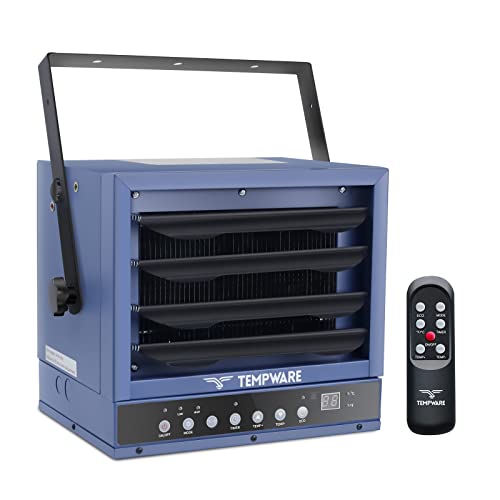
This 7500-watt electric garage heater emphasizes adjustable airflow with louvers and variable mounting angles to direct heat effectively across up to 1,250 square feet. Eco mode automatically selects energy-saving operation based on ambient temperature, while a built-in timer (1–12 hours) reduces unnecessary energy use. A built-in thermostat enables precise temperature settings, and an automatic overheat protection system enhances safety and reliability in busy workshop environments.
Mr. Heater F260550 Big Maxx MHU50NG
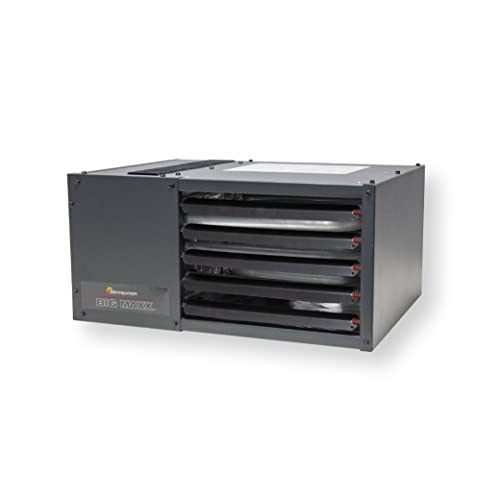
This natural gas unit heater delivers 50,000 BTU and supports flexible venting options (vertical or horizontal). Designed for easy outside access to thermostat and gas connections, it suits larger commercial spaces that require dependable, continuous heating. Coverage in the right installation can extend to sizable shop areas, making it a practical option where natural gas is readily available.
VEVOR Electric Garage Heater, 15000-Watt
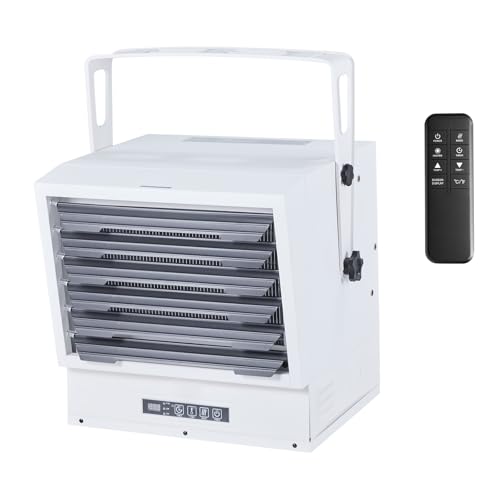
With 15,000 watts, this electric garage heater uses a controlled thermostat and built-in ECO energy-saving mode to maintain stable warmth while reducing energy consumption. A remote control extends convenience for operators working from a distance, and the unit is suitable for indoor workshops or warehouses that require rapid, electric heat without combustion. The design supports wall or ceiling mounting to optimize space in compact shop layouts.
Buying Guide: Key Considerations For Shopping Center, Shop, And Garage Heating
- Heat source compatibility: Electric versus gas heaters have different installation requirements, fuel availability, and maintenance needs. Electric units offer clean operation and simpler ventilation, while gas unitsDeliver higher BTU output for large spaces but require proper venting and gas line installation.
- Space and layout: Ceiling-mounted units save floor space in busy shops, but you also need to account for ceiling height and air distribution patterns. For open-plan spaces, wider airflow and adjustable louvers help minimize cold spots.
- Control features: Thermostats, timers, ECO modes, and remote controls contribute to consistent comfort and energy efficiency. Look for units with multi-stage heating and accurate temperature sensors for steady performance.
- Durability and safety: Industrial-grade steel housings, enclosed motors, auto shutoffs, and overheat protection improve longevity in dusty or demanding environments. Consider corrosion resistance and weather-rated components for outdoor or partially enclosed spaces.
- Ventilation and exhaust: Gas-fired heaters require proper venting and mounting clearances. Ensure compliance with local codes for venting and combustion air to maintain safe operation.
- Maintenance: Filterability, accessibility for service, and availability of replacement parts influence long-term operating costs. Regular inspections of fuel lines, electrical connections, and venting are essential.
- Installation options: Determine whether you need ceiling-mount, wall-mount, or floor-standing configurations. Ceiling-mounted models maximize floor space and are ideal where floor activity is heavy.
- Energy efficiency: Look for models with smart controls and eco modes to minimize energy usage during low-demand periods. Energy savings can be significant in large shops with extended heating seasons.
- Operational footprint: Noise levels, startup surges, and warm-up times affect workshop productivity. Quiet operation may be important in customer-facing areas or where conversations occur near the heater.
- Maintenance plan: Establish a routine inspection schedule, including flame checks for gas heaters and thermostat calibration for electric ones, to sustain performance and safety over time.