Best Expansion Tanks for Hot Water Heaters: Reliable Protection for Your System
Thermal expansion tanks protect hot water systems by absorbing pressure increases as water expands when heated. Selecting the right tank involves considering capacity, material quality, pre-charge pressure, and compatibility with your piping. The following guide reviews five well-regarded options, highlighting their features, installation notes, and how they fit typical residential and light commercial setups. This selection emphasizes tanks that balance reliability, ease of installation, and durable construction for long-term performance.
| Product | Capacity | Connection | Material | Highlights |
|---|---|---|---|---|
| Flexcon Industries PH5 FLEX2PRO | 2.1 gal | 3/4 in | Butyl diaphragm with plastic liner | 100% butyl diaphragm, corrosion-resistant components |
| Eastman 60022 Thermal Expansion Tank | 2 gal | 3/4 in MIP | Butyl rubber diaphragm, 304 stainless steel | Factory pre-charged, durable stainless connection |
| TT FLEX Potable (2.1 gal) | 2.1 gal | 3/4 in MNPT | Butyl diaphragm, plastic liner | Compact, easy install, strong expansion management |
| Eastman Mini Thermal Expansion Tank | 2 gal | 1/2 in threaded | 304 stainless steel | Versatile mounting, durable construction |
| Watts ETX-30 (Non-Potable) | 4.7 gal | 1/2 in MNPT | Carbon steel with epoxy finish | Large capacity, robust membrane design |
Flexcon PH5 FLEX2PRO Thermal Expansion Tank

The Flexcon PH5 FLEX2PRO is designed to separate system water from the precharged air using a 100% butyl diaphragm and a plastic liner. A stainless steel nipple on the system connection helps resist corrosion, addressing concerns common with other manufacturers. The exterior finish uses appliance-grade paint to reduce external corrosion. This model is well-suited for both residential and light commercial hot water systems where reliable pressure management is needed without frequent maintenance. Its 2.1-gallon capacity is a practical compromise between space and storage for thermal expansion control.
Eastman 2 Gallon Thermal Expansion Tank (60022)

Eastman’s 60022 model focuses on durability and reliable performance. It uses a butyl rubber diaphragm and a 304 stainless steel system connection to resist corrosion. The tank arrives factory pre-charged at 40 PSI, which simplifies installation and helps ensure consistent performance for water heaters sensitive to pressure changes. This 2-gallon option is a solid choice for households seeking a robust, easy-to-install expansion tank with proven materials and strong corrosion resistance.
TT FLEX Potable Thermal Expansion Tank (2.1 gal)

The TT FLEX potable tank takes a practical approach to thermal expansion management in closed-loop heating or cooling systems. Its 2.1-gallon capacity is ideal for smaller installations, offices, or apartments where space is at a premium. The unit is designed for straightforward installation and contractor or DIY-friendly setup. The combination of a compact footprint and straightforward pre-charge makes it a versatile option for households seeking reliable expansion management without bulky equipment.
Eastman 2-Gallon Mini Thermal Expansion Tank (60008)

The Eastman Mini is crafted from durable 304 stainless steel with a 1/2-inch threaded connection. It’s designed to absorb pressure increases to protect tankless and traditional water heater setups. The tank’s versatility extends to indoor or outdoor installations, and its adjustable pressure feature adds installation flexibility for varied plumbing configurations. This model is appropriate for limited spaces while still delivering effective expansion control and corrosion resistance over time.
Watts GIDDS-1030402 Potable Expansion Tank

Watts’ GIDDS-1030402 is a potable water expansion tank designed for commercial and residential closed-loop piping. With a 4.5-gallon capacity, it provides substantial relief for larger or more actively used systems. Constructed from carbon steel with an epoxy finish, it pairs durability with a reliable membrane that minimizes air charge loss. A 3/4-inch male connection supports straightforward integration, while the mounting options permit flexible placement along supply lines.
Solimeta 2.1 Gallon Potable Tank With Mounting Bracket
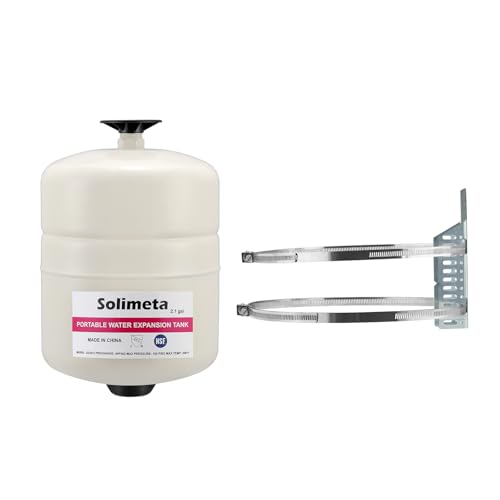
Solimeta’s 2.1-gallon potable expansion tank includes a wall mounting bracket and a rubber thread protector for secure, space-efficient installation. The unit features a 3/4″ MNPT connection and emphasizes pressure stabilization, reduced water hammer, and protection against leaks. Built for residential and light commercial plumbing, this tank offers a balanced blend of capacity, ease of mounting, and practical performance for everyday hot water systems.
Buying Guide: Key Purchase Considerations
- Capacity vs. system size: Larger tanks (4.5 gal) suit bigger homes or high-demand systems; smaller tanks (2.0–2.1 gal) fit compact spaces or smaller households. Match capacity to anticipated expansion volume and usage.
- Pre-charge pressure: Most tanks ship pre-charged; ensure the setting matches your water heater’s static pressure. Incorrect pre-charge can reduce efficiency or trigger more frequent pressure relief events.
- Diaphragm material and corrosion resistance: Diaphragms are typically butyl; stainless steel connections help resist corrosion and extend life, especially in mineral-rich or outdoor installations.
- Connection size and orientation: Common 3/4 in MNPT or MIP connections cover most residential pipes. Some models offer flexible mounting options, including wall brackets, which save space and simplify routing.
- Indoor vs. outdoor suitability: Outdoor exposure demands corrosion protection and weather resistance. Indoor tanks benefit from compact designs and quieter operation.
- Tank type and system compatibility: Closed-loop hydronic systems and potable water applications have different regulatory considerations. Ensure the tank is rated for potable use if required by your plumbing code.
- Maintenance and warranty: Look for durable membranes, epoxy or stainless finishes, and manufacturer warranties that cover leaks or diaphragm failures over several years.
- Installation complexity: Some tanks are straightforward for DIY installation; others may require professional plumbing assistance, especially with gas or high-efficiency heating systems.