Best Fire Suppression Systems for Kitchens: Safety, Selection, and Installation
Choosing the right fire suppression solution for a kitchen involves evaluating fire types, installation, maintenance, and code compliance. This guide covers top residential and commercial kitchen options, highlighting automatic and manual systems designed to protect property and lives. The selections below focus on devices suitable for home kitchens, restaurants, and vehicle or trailer kitchens, providing quick orientation on purpose, activation, and compatibility with common cooking hazards such as grease fires and electrical equipment.
| Product | Brand | Type | Key Benefit |
|---|---|---|---|
| StoveTop FireStop Rangehood Fire Suppressor | StoveTop FireStop | Automatic, under-hood | Direct flame-activated, four-burner kitchen protection |
| First Alert EZ Fire Spray | First Alert | Aerosol extinguisher | Longer firefighting duration, portable |
| FireSlayer Tube Extinguisher Kit | FireSlayer | Automatic tube system | Dupont FE-36 clean agent, wide operating range |
| Amerex C260 6 Liter Class K Extinguisher | Amerex | Wet chemical extinguisher | Class K for professional kitchen use |
| ComplianceSigns Fire Suppression Sign | ComplianceSigns | Safety signage | Clear, compliant fire safety messaging |
StoveTop FireStop Rangehood Fire Suppressor

The StoveTop FireStop system is designed for residential kitchens with four-burner stoves. It automatically activates when exposed to sustained direct flame contact, releasing a dry-powder suppressant to quickly suppress grease fires and other cooking flames. The unit is marketed as easy to install under the range hood, using magnets for a straightforward setup. This targeted solution provides protection exactly where residential cooking fires typically begin, offering rapid response without manual intervention.
First Alert EZ Fire Spray, Extinguishing Aerosol Spray
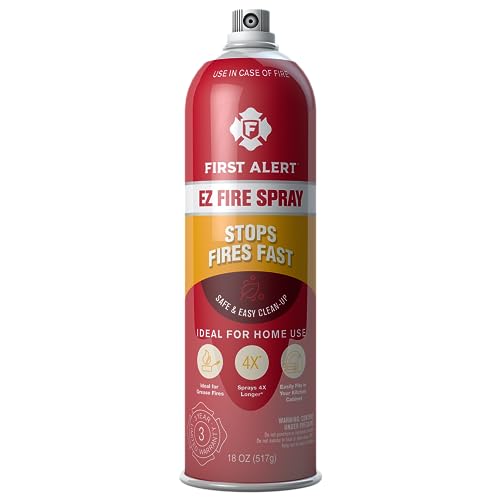
The First Alert EZ Fire Spray is a portable extinguishing aerosol canister designed for quick response in kitchen settings, among others. It discharges for about 32 seconds, providing longer firefighting capability than traditional handheld extinguishers. It is compact and easy to use, with a focus on immediate action for grease, paper, fabric, wood, and some electrical fires, making it a convenient supplementary option for smaller kitchens, boats, RVs, and dorm rooms.
FireSlayer Automotive RV Tube Extinguisher Kit

This kit uses a 6-foot tube filled with Dupont Fe-36 clean agent, designed for quick deployment where space is limited, such as automotive kitchens or RV setups. It is described as a complete, ready-to-install system that can operate across a wide temperature range (-35°F to 175°F). It targets rapid suppression of fires in high-risk kitchen zones with integrated installation hardware for straightforward setup.
Amerex C260 6 Liter Class K Wet Chemical Extinguisher
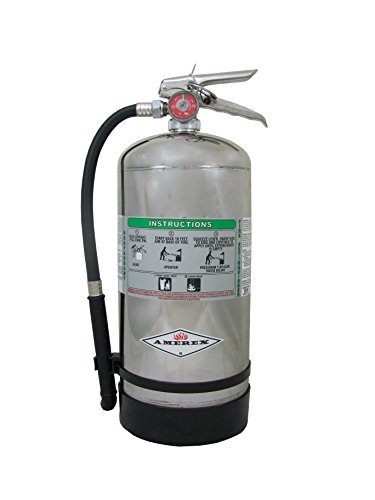
Class K wet chemical extinguishers are specifically designed for commercial and some residential kitchens to address commercial cooking oils and fats. The Amerex C260 provides a 6 liter capacity and a UL/ULC rating of 2A:K, with an estimated discharge time of 53 seconds. This option is intended for professional-grade kitchen fire safety, aligning with codes that specify specialized agents for grease fires and cooking equipment fires.
ComplianceSigns Fire Suppression Sign

Signage plays a critical role in safety planning and inspections. The ComplianceSigns Fire Suppression Sign communicates important fire protection messaging clearly. Made from semi-rigid plastic, the 10 x 7 inch sign features protective laminate and mounting holes for easy installation near equipment and exits—helping ensure visibility and compliance during safety checks.
RV Automatic Fire Suppression Tube Extinguisher

This package from FireSlayer features a 6-foot tube with Dupont Fe-36 clean agent, designed for quick installation in RV or compact kitchen spaces. The kit emphasizes readiness, with zip ties and clamps included, and a wide operating temperature range. It is positioned as a versatile solution for mobile or compact kitchen environments where traditional wall-mounted extinguishers may be impractical.
Note on installation and use: Fire suppression systems and extinguishers should be selected based on cooking equipment, room size, ventilation, and local fire codes. Automatic systems are often designed for grease fires, while Class K wet chemical extinguishers address professional-grade kitchen oils. For homes, a combination approach—an automatic under-hood solution paired with a portable extinguisher—can offer layered protection for common kitchen fire scenarios.
Buying Guide: Key Purchase Considerations and Comparisons
- Fire Type Coverage: Grease fires are common in kitchens; choose solutions specifically rated for grease and cooking oils (Class K) or automatic systems designed for cooking fires.
- Activation Method: Automatic systems that activate with flame contact provide immediate response. Portable extinguishers require user action but offer flexibility for different spaces.
- Installation and Compatibility: Under-hood or range-hood suppressors fit residential kitchens; consider existing ventilation and space constraints. For vehicles and RVs, compact or tube-based systems may be preferred.
- Agent Type: Dry powder agents react quickly for many types of fires, while wet chemical agents (Class K) target kitchen oils more specifically. Ensure agent compatibility with your cooking equipment.
- Maintenance and Inspections: Regular checks and adherence to local codes are essential. Signage and clear labeling assist inspections and safety drills.
- Code Compliance: Commercial kitchens often require NFPA-compliant equipment; consult local authorities or a licensed fire protection professional to confirm compliance for residential use as applicable.
- Cost vs. Coverage: Higher-capacity extinguishers or integrated systems provide broader protection but may require professional installation. Balancing coverage with budget is key for effective safety planning.
- Accessibility: Keep extinguishers and signs accessible and unobstructed. For automatic systems, ensure there is no workflow disruption and that mounting positions do not interfere with ventilation or cooking activity.
- Durability and Temperature Range: Systems designed for wide temperature ranges suit kitchens near heat sources or in seasonal climates. Materials should withstand heat and humidity typical of cooking areas.
In selecting a kitchen fire suppression setup, analyze the layout, cooking methods, and potential ignition points. A layered approach—automatic protection near the range plus a portable extinguisher for immediate response—often yields the most reliable safety outcome. Always follow manufacturer instructions and local fire codes when installing and operating any suppression equipment.