Choosing a reliable pool heat exchanger can simplify maintaining comfortable water temperatures while managing chemical exposure and energy use. The following five units represent a mix of stainless steel and alternative materials, with capacities spanning small backyards to larger residential pools. Each entry includes key specifications, durability notes, and typical applications for pools, spas, and hot tubs.
The summary table below highlights essential details to help compare options at a glance.
| Product | Brand | Approx. Capacity | Material | Notes |
|---|---|---|---|---|
| AB Pool Heat Exchanger 300 kBtu | AB | Up to 23,800 gal | 316L Stainless Steel | Same side ports; 2″ & 1.5″ FPT; 1-year warranty |
| Jiabailie 200KBTU Pool Exchanger | Jiabailie | Up to 23,800 gal (implied by spec) | 304 Stainless Steel | 1″ & 1.5″ FPT; strong heating performance |
| AB Pool Heat Exchanger 155kBtu | AB | Up to 11,900 gal | 316L Stainless Steel | Opposite ports; 1.5″ & 1″ NPT; 1-year warranty |
| DEIGEHJRE Pool Heat Exchanger | DEIGEHJRE | 200kBtu/hr range | 304 Stainless Steel | Same side; 1″ & 1.5″ FPT; 200 kBtu/hr |
| JENLER Swimming Pool Exchanger | JENLER | 200kBtu range | 304 Stainless Steel | Versatile; supports pools, spas, hot tubs; 1.5″ & 1″ FPT |
AB Pool Heat Exchanger 300 kBtu

Product Overview: This stainless steel 316L unit supports large residential pools or spas, with a heating capacity up to 300 kBtu/hr. It is designed for longevity in chemically treated water and salt environments, and it features same-side ports for streamlined plumbing. The unit is suitable for solar integration and hot water supplementation where rapid temperature increases are desired. Its corrosion resistance and warranty offer long-term reliability for frequent heating cycles.
Key Features and Considerations:
– Max heating capacity: up to 23,800 gallons with 60°C (140°F) delta.
– Material: stainless steel 316L for corrosion tolerance.
– Port configuration: 2″ & 1.5″ FPT, same side.
– Warranty: 1 year, standard for many pool heat exchangers.
– Suitable uses: pool, spa, hot tub, chemical-treated water environments.
Jiabailie 200KBTU Pool Exchanger

Product Overview: This model uses 304 stainless steel and provides a 200 kBtu/hr freshwater transfer, supporting consistent pool temperature increases. It features a 60°C delta capability to heat water efficiently and aims to deliver rapid heating for pools, hot tubs, and spas. The design emphasizes durability and reliable heat transfer across varying water chemistries.
Key Features and Considerations:
– Material: 304 stainless steel for durability in pool environments.
– Heat transfer: designed for fast heating with a 60°C delta.
– Capacity indication: 200 kBtu/hr heating capability.
– Applications: swimming pools, hot tubs, solar heating setups.
– Maintenance: corrosion resistance aids longevity in treated water.
AB Pool Heat Exchanger 155kBtu

Product Overview: An efficient 155 kBtu/hr unit made from 316L stainless steel, this exchanger is designed for mid-sized pools and spa setups. It uses opposite port connections and includes corrosion resistance features to endure chemical treatments typical in pool environments. A 1-year warranty provides added assurance for homeowners.
Key Features and Considerations:
– Heating capacity: up to 11,900 gallons based on 60°C delta.
– Material: 316L stainless steel for anti-corrosion performance.
– Port configuration: 1.5″ & 1″ NPT, opposite ports.
– Warranty: 1 year.
– Ideal for: medium-size pools, spas, and hot tubs with routine chemical treatment.
DEIGEHJRE Pool Heat Exchanger
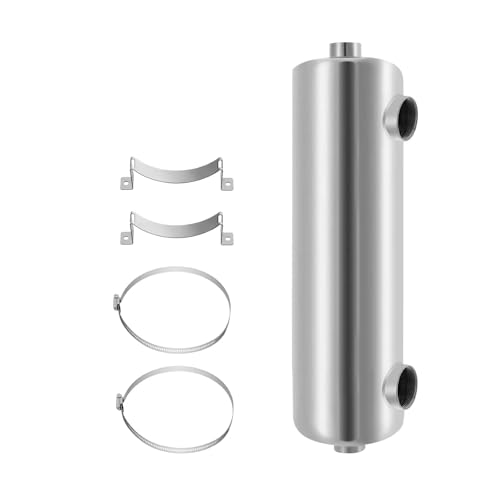
Product Overview: This 304 stainless steel heat exchanger concentrates on durable performance for spas and pools, offering stable temperature transfer with a 60°C delta to achieve rapid heating. Its inline design supports consistent heat transfer while remaining compatible with various hot water circuits. The unit is positioned for reliable operation in residential setups that rely on indirect heat transfer.
Key Features and Considerations:
– Material: 304 stainless steel for durability.
– Heating performance: designed around a 60°C delta to achieve 200 kBtu/hr heating.
– Port options: 1″ and 1.5″ FPT, same side.
– Applications: pools, hot tubs, spas, and solar-assisted heating.
– Maintenance: corrosion-resistant build supports longer service life.
AB 300 kBtu Titanium Alternative
Product Overview: This titanium-based unit is designed for exceptionally long service life in aggressive water conditions and salt pools. With 2″ & 1.5″ FPT connections, it targets larger outdoor pools and saltwater systems. Titanium’s corrosion resistance can reduce maintenance costs over time, though it may involve higher upfront costs. This model emphasizes durability for demanding environments and high-performance heating.
Key Features and Considerations:
– Capacity up to 29,000 gallons with 360 kBtu/hr potential.
– Material: anti-corrosion titanium, self-sealing welding benefits.
– Port configuration: 2″ & 1.5″ FPT, same side.
– Warranty and service: standard warranty information should be confirmed.
– Best fit: saltwater pools or environments with aggressive chemical exposure.
LOYALHEARTDY 95KBTU Shell Exchanger

Product Overview: A compact, shell-and-tube heat exchanger designed for smaller or retrofitted pool heating setups. At 95 kBtu/hr, it provides a lower-capacity option for homeowners seeking modest temperature increases or solar-assisted heating of pools and hot tubs. The unit emphasizes anti-rust properties and saltwater resistance for prolonged operation in chlorine or salt-based pools.
Key Features and Considerations:
– Capacity: around 95 kBtu/hr, suitable for smaller pools or supplemental heating.
– Material: anti-corrosion stainless steel for durability.
– Port configuration: 1.5″ & 1″ FPT, same side.
– Applications: home pools, spas, hot tubs, and solar integration.
– Maintenance: corrosion resistance supports longer life in chlorinated or salted water.
Buying Guide: Key Purchase Considerations
- Pool size and heating goals: Larger pools and higher heating needs demand bigger kBtu/hr capacities. Match the unit’s maximum heat output to your pool volume and desired temperature rise.
- Material choice: 316L stainless steel offers strong corrosion resistance for chlorinated water, while titanium can provide superior longevity in highly corrosive or saltwater environments, often at a higher upfront cost.
- Port configuration: Check FPT (female pipe thread) sizes and whether ports are on the same side or opposite sides to ensure compatibility with existing plumbing.
- Water chemistry compatibility: Consider units designed to handle chemical treatments, chloramines, and salt systems. Stainless steel and titanium are common durable choices.
- Maintenance and warranty: A 1-year warranty is common; longer warranties or service options can indicate higher confidence in durability.
- Installation considerations: Some units are better suited for solar-assisted heating, while others work as standalone heat sources. Evaluate compatibility with your heater, solar panels, or boiler system.
- Physical footprint: Larger units with higher capacity may require more space and more complex installation; ensure adequate room for service and airflow.
Multiple perspectives suggest balancing initial cost against long-term durability. For saltwater or chemically treated pools, corrosion resistance is a critical factor. Titanium variants can offer extended lifespans but may require professional installation. If you anticipate frequent heating cycles or solar integration, units with higher kBtu/hr ratings and robust heat transfer efficiency may yield faster temperature changes and energy savings over time.