Choosing a reliable heat pump for an inground pool involves balancing capacity, energy efficiency, and smart controls. This guide highlights five top options designed to heat or cool large water spaces while maintaining steady temperatures. Each product features inverter technology, WiFi control, and robust durability to endure outdoor conditions. Read on to compare specifications, performance, and practical considerations for American pools.
The following summary table lists the selected models, highlighting key specs to help you compare at a glance.
| Product | BTU | Volume Capacity | Brand | Type |
|---|---|---|---|---|
| Aquastrong 55,000 BTU | 55,000 | Up to 16,000 gallons | AQUASTRONG | Inground/Above Ground |
| Aquastrong 75,000 BTU | 75,000 | Up to 21,000 gallons | AQUASTRONG | Inground/Above Ground |
| WOPOLTOP 100,000 BTU | 100,000 | Up to 26,000 gallons | WOPOLTOP | Inground/Above Ground |
| TURBRO 50,000 BTU | 50,000 | Up to 16,000 gallons | TURBRO | Inground/Above Ground |
| Doniks 22,000 BTU | 22,000 | Up to 7,000 gallons | Doniks | Above Ground/Inground |
Aquastrong 55,000 BTU Inverter Heat Pump

The 55,000 BTU model supports pools up to 16,000 gallons, offering heating from 47–104℉ and cooling from 47–83℉. It features full app and control panel access, enabling remote temperature adjustments, energy tracking, and programmable schedules. An inverter system delivers energy savings and faster warm-up for large or chilly pools, with a claimed COP around 3–5 depending on conditions. This model is suitable for steady seasonal extension in both inground and above-ground installations.
Aquastrong 75,000 BTU Inverter Heat Pump
This 75,000 BTU unit is designed for larger pools up to about 21,000 gallons. It provides heating from 47–104℉ and cooling from 47–83℉, with WiFi control and an app for remote operation. The inverter technology supports high efficiency with a COP around 5–6 in favorable conditions, offering quicker warm-up and substantial energy savings compared with traditional electric heaters or gas heaters. It is well-suited for extensive inground installations or frequent seasonal transitions.
WOPOLTOP 100,000 BTU Inverter Heat Pump
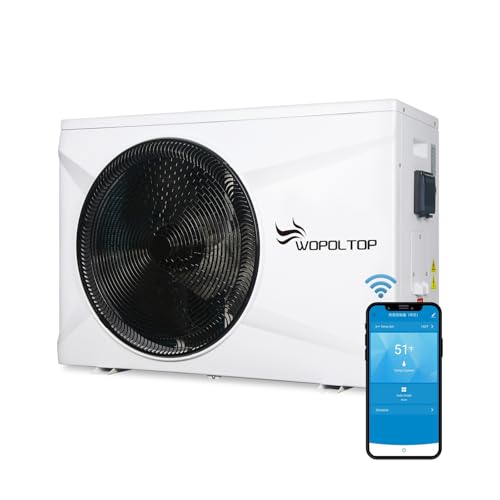
With up to 100,000 BTU and a recommended pool capacity around 26,000 gallons, this heat pump targets large inground pools. It features full DC inverter control, HVAC-grade efficiency, and WiFi scheduling for heating and cooling. Its high capacity supports rapid temperature changes and energy efficiency through adaptive frequency modulation. This model is a strong option for large backyard resorts or family pools that demand robust year-round comfort.
TURBRO Beluga 50,000 BTU Inverter

The TURBRO Beluga series delivers up to 50,000 BTU with inverter technology and WiFi control. It supports pools up to 16,000 gallons and offers a COP up to about 16.2, depending on ambient conditions. The system emphasizes quiet operation and energy efficiency, making it a practical option for residential inground and above-ground pools that prioritize lower operating costs and stable temperatures across shoulder seasons.
Doniks 22,000 BTU Pool Heat Pump

Engineered for 7,000-gallon pools, this 22,000 BTU unit offers a compact option with inverter-based efficiency. It includes a digital display and smart protection features, making it suitable for smaller inground or above-ground installations seeking moderate heating capacity and app-control for scheduling. It emphasizes energy savings and quieter operation, supporting year-round use in temperate climates.
Buying Guide
When selecting a heat pump for an inground pool, consider capacity, climate, and pool volume. Key factors include:
- Pool size and BTU needs: Larger pools require higher BTU units; verify that the model supports the pool’s volume and temperature goals.
- Efficiency and COP: Inverter-driven compressors save energy by adjusting output to demand. Higher COP translates to lower operating costs in moderate climates.
- Temperature range: Check heating and cooling ranges to ensure comfort across seasonal shifts (e.g., heating to 104℉, cooling to 83℉ or similar).
- Control and connectivity: WiFi or app-based controls enable scheduling, remote monitoring, and energy tracking for convenience and efficiency.
- Durability and warranty: Outdoor units should resist corrosion and weather exposure; review enclosure, materials, and warranty terms.
- Noise levels: Look for models designed for quiet operation, especially in residential lots close to living spaces.
Durability and installation considerations vary by climate. In colder regions, defrost features and robust heat exchangers are critical. For warmer climates, efficiency during peak sun hours and the ability to maintain comfortable pool temperatures without excessive energy use are primary concerns. Compare the upfront cost with projected annual energy savings to determine the total cost of ownership. If possible, consult a pool professional to confirm compatibility with your existing system, plumbing, and electrical capacity.