When a basement stays chilly, a reliable space heater can make the space habitable without breaking the bank. The following selections emphasize quick heat, safety features, and quiet operation—ideal for basements used as living areas, offices, or hobby rooms. Each option below includes robust ceramic or infrared technology, thermostat control, and safety protections suitable for American homes.
| Product | Brand | Key Strength |
|---|---|---|
| Dreo Space Heater, Portable Electric Heaters for Indoor Use with Thermostat and Remote | Dreo | Fast 1500W heating, smart thermostat, multiple safety features |
| Dreo Space Heater, 1500W with 70° Oscillation | Dreo | Wide coverage, quiet operation, timed safety protections |
| Dreo Space Heater Indoor, 25″ Tall with Fast Heat | Dreo | Large-room capability, low-noise airflow, extended reach |
| PELONIS Oscillating Ceramic Tower Heaters | PELONIS | Wide coverage, programmable thermostat, ECO mode |
| Lasko Oscillating Digital Ceramic Tower Heater | Lasko | Quiet operation, remote, adjustable timer |
The following five options showcase compact and powerful heating suitable for basements, with a focus on safety and energy efficiency. They vary in size, coverage area, and control features to fit different basement layouts and insulation levels.
Dreo Space Heater With Thermostat And Remote

Powered by a 1500W PTC ceramic heating system, this Dreo model delivers warmth quickly through a redesigned heat funnel that expands air reach. The device includes a digital display, remote control, and a 12-hour timer for flexible operation in a basement that may have varying occupancy. Safety features include tilt-detection sensors, flame-retardant materials, overheat protection, and a certified ETL build. A precision thermostat supports temperatures from 41 to 95°F in 1°F steps, helping to maintain comfort without wasting energy. The compact footprint makes it suitable for corner placement under a window or near a seating area in a basement living space.
Key features include: rapid heating, enhanced airflow for broader room coverage, multiple heat modes, and a user-friendly interface. For basements with higher ceilings or more open layouts, this unit provides robust warmth without occupying too much floor space. It’s a dependable option for quick, targeted comfort when the basement is used for extended periods, such as a home office or workout area.
Dreo Space Heater With 1500W Power And 70° Oscillation

This model emphasizes broader heat distribution with a 70° oscillation, making it well-suited for basement rooms where heat must reach multiple zones. Safety remains a core focus, with ETL-listed components, dedicated tip-over protection, overheat safeguards, and a strong, grounded plug. The 12-hour timer adds convenience for overnight use, while the quiet operation keeps basement spaces comfortable without adding ambient noise. For basements used as studios or bedrooms, the 270 square-foot coverage helps ensure a steady, comfortable climate across a wider area.
Users can expect rapid warming thanks to the high-performance 1500W ceramic element, paired with a low-noise fan that minimizes distraction during work or sleep. The control panel and remote support precise temperature regulation, helping to avoid overheating a space that often traps cooler air. This makes it a reliable option for climate control in a basement living area or home office where consistent warmth is essential.
Dreo Space Heater Indoor 25-Inch Tall

Designed for larger rooms, this 25-inch tall model stretches heat output with an extended impeller and a high heat range. Its 11.5 ft/s rapid heating capability helps basements reach comfort quickly, which is particularly valuable in drafty rooms. The unit operates quietly, aided by an airflow design that reduces wind noise and maintains focus on warmth. Safety features include a reinforced plug, 45° tip-over protection, and ETL certification, making it suitable for basements used as family rooms or home offices.
For homes needing steady, distributed warmth in open basement layouts, this unit’s wide oscillation and robust construction offer reliable performance. The digital panel allows precise tuning, and the included remote control adds convenience when the space is set up around a desk or seating area. Overall, this option balances power, quiet operation, and practical safety for basement heating needs.
PELONIS Oscillating Ceramic Tower Heater

The PELONIS PHF15RSAPH23 offers rapid heating with a 1500W ceramic element, capable of warming spaces up to around 220 square feet. The 75° wide oscillation helps direct warmth to multiple corners of a basement, which is helpful for irregular layouts or rooms with awkward corners. A programmable thermostat and 12-hour timer provide energy management and convenience for overnight or extended use. ECO mode supports energy-conscious operation, reducing heat output when the target temperature is met.
Additional safety features include tip-over protection, overheat protection, and a child lock option, contributing to safer operation in households with kids or pets. The tower’s design also tends to blend into living spaces, making it a practical choice for basements used as living or study areas without dominating the room’s aesthetic.
Lasko Oscillating Digital Ceramic Tower Heater
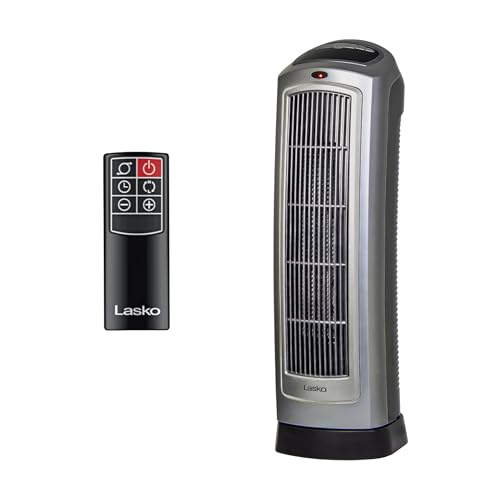
Designed for quiet operation and simple usability, this Lasko tower heater features two quiet heat settings and an adjustable thermostat to maintain comfortable basements temperatures. The remote control adds convenience for changing heat settings from across the room, while a timer allows automatic shut-off between 1 and 8 hours. Oscillation helps distribute warmth evenly, reducing cold spots in corners and under stairwells often found in basements. This model is ideal for smaller to medium basement rooms where basic warmth and straightforward controls are priorities.
The combination of a compact footprint, digital control, and a tested safety profile makes it a practical baseline choice for basement spaces that require dependable heat without extensive setup or maintenance. Users can rely on steady heat delivery and predictable operation during cold seasons or variable basement usage.
Buying Guide: Key Considerations For Basement Heaters
- Room size and heat coverage: Measure your basement area and select a heater with a rated square-foot coverage that accommodates your space, allowing for doorways and open areas that may diffuse heat.
- Safety features: Look for tip-over protection, overheat protection, sturdy plugs, and ETL or UL certification. In homes with children or pets, models with child locks and reinforced cords are advantageous.
- Thermostat precision: A thermostat with fine increments (1°F steps) helps maintain steady temperatures and prevents energy waste in drafty basements.
- Noise level: If the space is used as a bedroom, office, or study, prioritize units described as quiet (often 25–34 dB). Airflow design can affect perceived noise as well.
- Heat technology: Ceramic (PTC) heaters heat quickly and are well-suited for intermittent use, while infrared heaters can deliver intense warmth for larger, open areas. Consider oscillation features for broader coverage in rooms with irregular shapes.
- Energy management modes: ECO or energy-saving settings help reduce consumption when a steady, lower level of heat is sufficient, especially in well-insulated basements.
- Controls and accessibility: Remote controls, digital displays, and app compatibility offer convenience for basement layouts where the heater sits out of reach.
- Durability and materials: Flame-retardant plastics and sturdy construction enhance safety and longevity in basements that may experience higher humidity or cooler drafts.
- Installation and power needs: Most units plug into standard outlets; avoid using extension cords for safety and performance reasons. Ensure your outlet capacity matches the heater’s power requirements.
- Maintenance considerations: Easy-to-clean grilles and filter-free designs reduce upkeep, which is helpful for basements with dust and humidity concerns.