Best Heaters for Construction Sites: Portable, Safe and Efficient Heating Solutions
When working on outdoor or poorly insulated construction sites, reliable heating is essential for safety and productivity. This guide highlights five top heaters that balance power, portability, and safety. Each option is suitable for large areas, runs on propane or electricity, and offers features designed for rugged environments.
| Product | Fuel Type | Max Output | Best For |
|---|---|---|---|
| DR. Infrared Heater DR-PS11024 Salamander Construction | Electric | 10,000 Watts | Large indoor sites with 240V power |
| InoKraft MaXheat MH68 | Propane | 30,000–68,000 BTU | Medium to large spaces, fast heating |
| Mr. Heater MH25CVX | Propane | 25,000 BTU | Garages, workshops, off-grid sites |
| Gasland MHA18BN Propane Radiant heater | Propane | 18,000 BTU | Ventilated spaces, mobile heating |
| Habitio 125,000 BTU (or similar large propane unit) | Propane | 125,000 BTU | Large job sites and open areas |
The products above span electric and propane options, offering a mix of radiant and forced-air heating. When choosing for a construction site, consider BTU or wattage, area coverage, ventilation needs, fuel availability, and safety features like overheat protection and flame safeguards. The following sections provide detailed overviews of each selected model, followed by a practical buying guide to help compare options side-by-side.
DR. Infrared Heater DR-PS11024 Salamander Construction

The DR-PS11024 is a 10,000-watt electric heater designed for durable construction environments. Its floor-mount design fits large, open spaces where outlet access is available, and its heavy-duty steel frame emphasizes stability. Features include a clean heat output with low odor and safety guards on both intake and output ends, helping protect workers in busy sites. The unit requires a 55-amp circuit breaker and integrates a robust setup suitable for prolonged use in industrial settings.
InoKraft MaXheat MH68 68,000 BTU Propane Heater

The InoKraft MH68 provides a wide heat output range (30,000–68,000 BTU) to quickly warm spaces up to about 1,600 sq. ft. Its forced-air design distributes heat broadly, making it a practical choice for construction sites, garages, or outdoor work areas. It includes safety features like overheat auto-shut-off and auto-cut-off protections, plus a CSA certification. A 10-foot hose and regulator are typically included for convenient hookup and flexible placement in cluttered jobsites.
Mr. Heater MH25CVX Propane Convection Heater
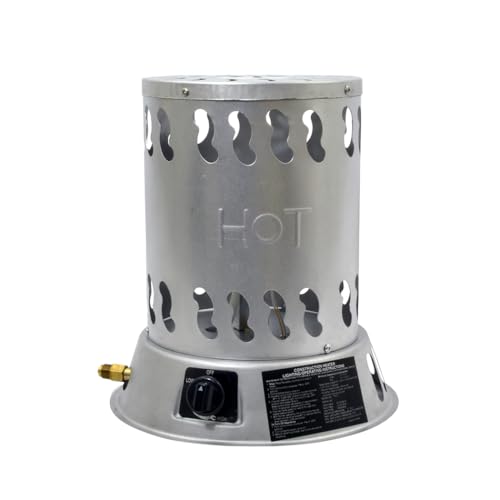
The MH25CVX is a 25,000 BTU propane convection heater designed for spaces like garages, workshops, and outdoor work sites. It can operate for extended periods on a propane tank and features a standing pilot light and a thermo-electric safety valve to cut off gas if the flame goes out, enabling operation without electricity. The package typically includes a 10-foot hose, regulator, and a P.O.L. tank connection for straightforward setup and reliable performance in off-grid situations.
Gasland MHA18BN Propane Radiant Heater

The Gasland MHA18BN is a portable propane radiant heater rated at 18,000 BTU, suitable for ventilated garages, workshops, and small-to-medium job sites. It emphasizes safety with tip-over and low-oxygen shut-off features and is designed to work without electricity, relying on a propane cylinder. Its mobile design and internal cabinet housing for the propane unit help keep work areas organized and heat efficiently localized where workers need it most.
Habitio 125,000 BTU Forced Air Propane Heater
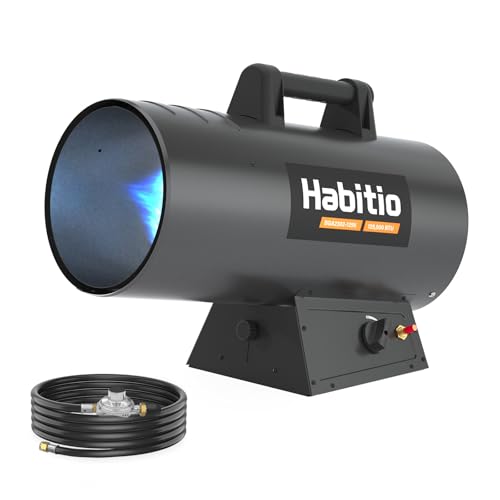
The Habitio 125,000 BTU propane heater delivers robust warmth for large job sites and open spaces. Its forced-air design quickly raises temperatures, and a 10-foot hose with regulator is included for easy connection to a propane source. Safety features include overheat protection and warnings for safe operation on job sites. Its rugged construction and high output make it suitable for construction crews needing rapid, wide-area heating in vented areas.
Buying Guide: Key Purchase Considerations
Selecting the right heater for a construction site involves evaluating power needs, space size, fuel availability, and safety requirements. Consider the following factors:
- Heat output vs. area: Match BTU or wattage to the square footage and insulation level. Larger spaces may require higher BTU models or multiple units.
- Fuel type and availability: Electric heaters require sufficient 240V or higher circuits, while propane heaters depend on gas supply and proper ventilation.
- Ventilation and CO safety: Propane heaters should be used in well-ventilated areas; consider units with oxygen depletion and tip-over safety features.
- Portability and setup: Heaters with wheels, handles, and included hoses/regulators ease movement around the site.
- Electrical requirements: For electric units, verify circuit breakers, outlets, and power stability to prevent tripping or overloads.
- Durability and construction: Rugged frames and protective guards help withstand the rough conditions of a construction site.
- Safety certifications: Look for CSA, UL, or similar certifications that indicate compliance with safety standards.
- Noise and operation: Some models generate more noise; consider the tolerance of workers and site regulations.
Comparison Snapshot
Electric models tend to offer steady warmth with clean output, suitable for enclosed or semi-enclosed spaces connected to stable power. Propane heaters excel in larger, open, or off-grid sites where electrical power is limited. For quick heat in a confined area, radiant propane units provide rapid warmth, whereas forced-air propane models distribute heat more broadly across a job site. Always prioritize models with built-in safety features and clear instructions for safe operation in work zones.